
The recent controversy surrounding donations to the Ram Mandir has reignited a national conversation about how religious institutions manage public contributions. Yet the issue extends far beyond one temple or one controversy. It raises a larger question about governance, accountability and the responsibility that comes with managing the faith and generosity of millions of Indians.
A Controversy That Reopened an Old Question
Few things test public confidence more than questions over money donated in the name of faith. The recent controversy surrounding alleged irregularities in donations at the Shri Ram Janmabhoomi Temple in Ayodhya has once again brought this uncomfortable reality into focus. What initially appeared to be an isolated case involving the alleged theft of devotees’ offerings soon developed into a larger public debate after arrests were made and senior office bearers of the Shri Ram Janmabhoomi Teerth Kshetra Trust resigned, citing moral responsibility. The Trust has maintained that donations remain fully accounted for and has supported the investigation being carried out by the authorities.
While the legal process will determine the facts of the case, the controversy has reopened a question that deserves attention beyond political slogans and social media campaigns. Should every religious institution that receives public donations, regardless of religion, voluntarily maintain the highest standards of financial transparency?
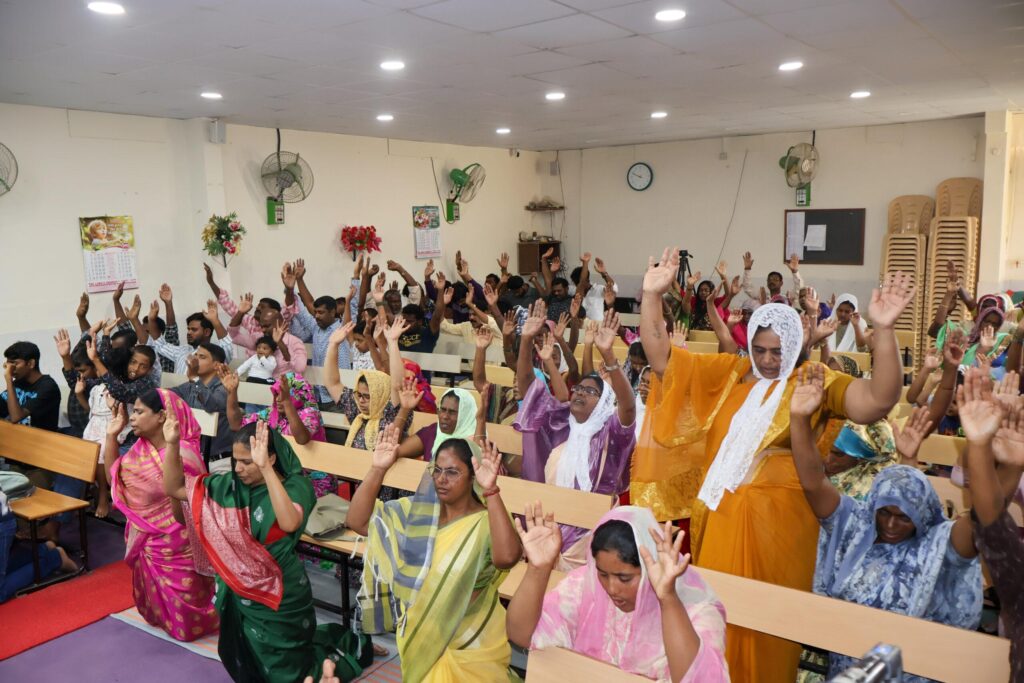
The answer matters because religious donations occupy a unique place in Indian society. Every day, millions of people visit temples, mosques, churches, gurdwaras and other places of worship carrying not only prayers but also offerings. Some place a few coins in a donation box, while others contribute jewellery, land or significant sums through online banking and digital payment platforms. These contributions are rarely viewed as ordinary financial transactions. They are expressions of gratitude, devotion, charity and hope.
Unlike taxes, religious donations are voluntary. Unlike commercial transactions, donors expect no financial return. Their only expectation is that the money will be used honestly and for the purpose for which it was given. That expectation forms the foundation of public trust.

A Tradition Older Than the Republic
Religious giving has shaped Indian society for centuries. Long before the emergence of modern governments or organised charitable foundations, places of worship served as centres of education, healthcare, culture and social welfare. Ancient temples were often supported through land grants made by kings and local communities. Revenue generated from these lands funded schools, libraries, irrigation systems and public kitchens while preserving art and architecture.
Islamic traditions developed a comparable institution through the concept of Waqf, under which land or property is permanently dedicated for religious or charitable purposes. Income generated from Waqf properties has historically financed mosques, educational institutions, orphanages and hospitals. Sikhism institutionalised community service through the tradition of Langar, ensuring that every visitor receives a free meal irrespective of religion, caste or economic status. Christian institutions across India have similarly established schools, colleges, hospitals and humanitarian organisations through donations from believers over many generations.
These traditions emerged independently, yet they share an important common principle. Wealth acquires greater meaning when it is used for the benefit of others. A devotee offering thanks after recovering from illness, a Muslim fulfilling the obligation of Zakat during Ramadan, a Sikh family contributing towards the Langar or a Christian supporting a parish school all participate in one of humanity’s oldest forms of organised philanthropy.
This historical perspective is important because it reminds us that religious donations have never been limited to rituals alone. They have often financed institutions that benefited society well beyond the boundaries of faith.
Managing Public Faith Also Means Managing Public Money
India is home to some of the wealthiest religious institutions in the world. Temples such as Tirumala Tirupati Devasthanams, Vaishno Devi Shrine and Siddhivinayak Temple receive substantial donations every year. The nationwide fundraising campaign for the construction of the Ram Mandir also attracted contributions from millions of households. Mosques, churches and gurdwaras similarly receive generous support from communities across the country and from members of the Indian diaspora.
Yet the systems governing these institutions are far from uniform. Some temples are managed by statutory boards established under state legislation, while others operate as independent charitable trusts. Mosques generally function through local committees, with Waqf properties administered under separate legal provisions. Churches are commonly administered through dioceses or registered charitable societies, and many gurdwaras function under elected management committees created through specific legislation.
This diversity reflects India’s constitutional commitment to religious freedom and the historical evolution of different religious traditions. However, it also means that standards of financial disclosure differ significantly from one institution to another.
Several large religious organisations voluntarily publish audited financial statements, annual reports and details of welfare activities. Tirumala Tirupati Devasthanams, for example, releases comprehensive reports that explain how donations are utilised for temple administration, educational institutions, healthcare, pilgrim facilities and charitable programmes. Such disclosures help reinforce public confidence because devotees can clearly understand how their contributions are being used.
Many smaller institutions, however, operate with limited administrative capacity. They often depend on local committees, volunteers or hereditary trustees who may not possess the same financial infrastructure. While the overwhelming majority function honestly, the absence of consistent accounting practices can create confusion and occasionally give rise to allegations of financial irregularities.
The issue, therefore, is not whether one religion manages donations better than another. The issue is whether institutions entrusted with public contributions should voluntarily adopt stronger governance practices that reflect the confidence placed in them by millions of donors.
The Constitution Protects Faith, But Accountability Also Matters
India’s Constitution guarantees religious freedom and allows religious denominations considerable autonomy in managing their own affairs. At the same time, courts have repeatedly recognised that while matters of faith remain protected, the secular aspects of administration, including financial management, may be subject to regulation in the public interest.
This distinction is important. Asking how donations are collected, recorded and spent does not interfere with religious beliefs or rituals. Rather, it addresses the administrative responsibilities of institutions that receive public money.
Understanding this difference allows the discussion to move away from unnecessary political or communal arguments. Financial transparency is not an attempt to regulate faith. It is an effort to strengthen confidence in the institutions that represent it.
Transparency Is Not a Religious Issue
Whenever questions are raised about the finances of a religious institution, the debate often takes a predictable turn. Allegations involving a temple are portrayed by some as an attack on Hinduism, while discussions surrounding Waqf properties or mosque finances are sometimes interpreted as targeting the Muslim community. Similar reactions have surfaced whenever controversies have emerged around churches or other religious bodies. Such responses may be politically convenient, but they rarely help address the actual issue.
Financial accountability should not be viewed through the prism of religion. The principle is universal. Every institution that receives public donations has a responsibility to account for how those resources are managed. A devotee contributing ₹100 to a local temple, a businessman donating to a mosque, a family supporting a church or a Sikh contributing towards a gurdwara’s langar all place the same trust in the institution they support. That trust deserves equal protection, irrespective of religious identity.
This conversation therefore should not revolve around which religion is under greater scrutiny. Instead, it should focus on creating governance standards that inspire confidence across all faiths. Equal treatment strengthens both religious freedom and public confidence because it ensures that accountability is based on principles rather than politics.
Can Technology Improve Accountability?
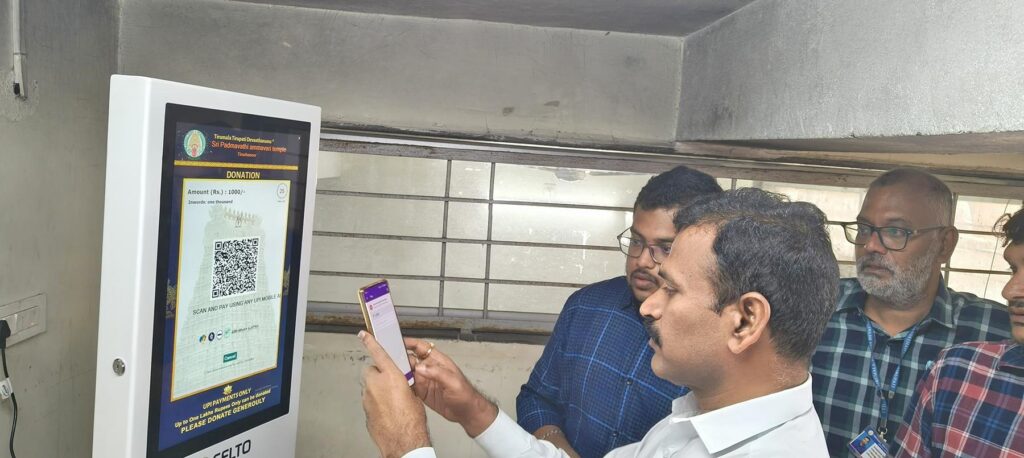
The rapid growth of digital payments offers religious institutions an opportunity that did not exist a decade ago. Millions of devotees now contribute through UPI, QR codes, mobile applications and internet banking. Unlike cash transactions, digital payments automatically generate electronic records, making financial management more accurate and transparent.
Many large temples, mosques and churches have already adopted digital donation systems. Some issue electronic receipts, while others allow devotees to contribute online from anywhere in the world. These developments have made donations more convenient, but they can also become powerful tools for improving accountability.
Imagine if every major religious institution maintained a publicly accessible annual report explaining how donations were utilised. Devotees could see how much was spent on maintaining the place of worship, supporting charitable activities, funding educational institutions, preserving heritage structures or providing relief during natural disasters. Such disclosures would not reveal the identity of individual donors or interfere with religious practices. Instead, they would reassure contributors that their faith had been honoured with responsible stewardship.
Technology alone, however, cannot eliminate misconduct. Strong internal systems remain equally important. Secure accounting software, surveillance during donation counting, periodic reconciliation of accounts, independent audits and clearly defined administrative responsibilities can significantly reduce opportunities for financial irregularities. More importantly, these measures also protect honest administrators by ensuring that allegations can be addressed with documentary evidence rather than speculation.
Learning from Good Practices
India does not have to search far for examples of sound financial governance. Several religious institutions already demonstrate that transparency and faith can comfortably coexist.
Large temple trusts such as Tirumala Tirupati Devasthanams and the Shri Mata Vaishno Devi Shrine Board publish audited financial statements and annual reports detailing their income, expenditure and welfare activities. Their experience shows that financial disclosure has not diminished public devotion. On the contrary, it has strengthened confidence among millions of devotees.
Similar practices exist internationally. The Vatican publishes annual financial reports outlining its income and expenditure. Many churches in Europe regularly present audited accounts to their congregations, while several international faith-based charities disclose funding sources, administrative costs and programme expenditures on their websites. These organisations recognise that openness strengthens credibility and encourages continued public support.
India need not replicate any particular international model. Its religious institutions operate within distinct historical and legal traditions. Nevertheless, the underlying lesson remains relevant: transparency is most effective when it is voluntary, consistent and easily accessible to the public.
A Practical Roadmap for Reform
Meaningful reform does not necessarily require sweeping new legislation. Many improvements can be introduced voluntarily by religious institutions themselves, demonstrating that accountability is an expression of ethical leadership rather than government compulsion.
The first step is the regular publication of annual financial reports. These reports should summarise donations received, major expenditure, charitable initiatives and significant development projects. They need not disclose the identity of individual donors, but they should provide sufficient information for the public to understand how resources are being utilised.
Independent financial audits should become standard practice for institutions receiving substantial public donations. External audits conducted by qualified professionals enhance credibility while protecting both administrators and devotees from unnecessary suspicion.
Religious institutions should also continue expanding digital payment systems and electronic record keeping. As online contributions become increasingly common, maintaining transparent digital records will become easier and more efficient than relying primarily on cash transactions.
Communication is equally important. Many controversies gain momentum because institutions remain silent while rumours spread rapidly through television debates and social media. Regular updates through official websites, annual reports and public statements can reduce misinformation and strengthen confidence long before questions arise.
Finally, the principle of equality must remain central. The standards expected from a temple should also apply to a mosque, a church, a gurdwara and every other institution receiving public donations. Accountability loses its credibility when it is selective.
A Debate Worth Having
The recent controversy surrounding the Ram Mandir donations has inevitably become part of India’s political discourse. Yet reducing it to another partisan confrontation would mean losing an opportunity to address a much broader issue that affects every religious community.
Religious institutions occupy a special place in Indian society because they represent far more than physical places of worship. They preserve culture, provide education, support healthcare, feed the hungry, offer shelter during crises and strengthen social solidarity. Millions of people continue to support these institutions because they believe their contributions serve a purpose larger than themselves.
That belief deserves to be protected.
The strongest institutions are not those that avoid scrutiny, but those that welcome it with confidence. Voluntarily publishing accounts, embracing independent audits and communicating openly with devotees are not signs of weakness. They are indicators of institutional maturity.
Faith has sustained India’s religious institutions for centuries. Transparency can ensure they continue to command that faith for generations to come.
Conclusion: Protecting Faith Through Accountability
The debate sparked by the Ram Mandir controversy should not end with the conclusion of a single investigation. Instead, it should encourage a wider national conversation about how every religious institution entrusted with public donations can strengthen its governance.
Religious freedom and financial accountability are not competing values. One protects the right to believe, while the other protects the trust of those who give. Together, they create institutions that are not only spiritually respected but also publicly accountable.
India has never lacked generosity. Every year, devotees quietly contribute thousands of crores of rupees to institutions they believe will serve both God and society. That generosity deserves to be matched by equally high standards of stewardship.
Ultimately, the question is not whether temples, mosques, churches or gurdwaras should be trusted. They already are. The real challenge is ensuring that this trust is continually earned through integrity, openness and responsible governance.
Faith inspires people to give. Transparency ensures that their faith is never misplaced.

Amrit Pandey is a political researcher and political communication professional specialising in elections, political behaviour and campaign strategy. He holds an MSc in Election Campaign and Democracy from the University of London and an MA in Data, Culture and Society from the University of Westminster.