The ruling Bharatiya Janata Party secured major gains in the Rajasthan urban local body elections on Monday. Official vote counting began across the state following multi-phase voting in 309 civic bodies. Party candidates established commanding leads across prominent municipal corporations and district councils. The outcome delivers a timely boost to the state government, as reported by The Indian Express.
The civic electoral exercise covered 10 municipal corporations, 51 municipal councils, and 248 municipal boards statewide. Thousands of ward councilors faced the electorate across two phases of polling. The State Election Commission reported peaceful voting and high voter turnout in urban wards. Ultimately, the ruling party converted its organizational outreach into decisive grassroots majorities.
Decisive Dominance Across Key Municipal Corporations
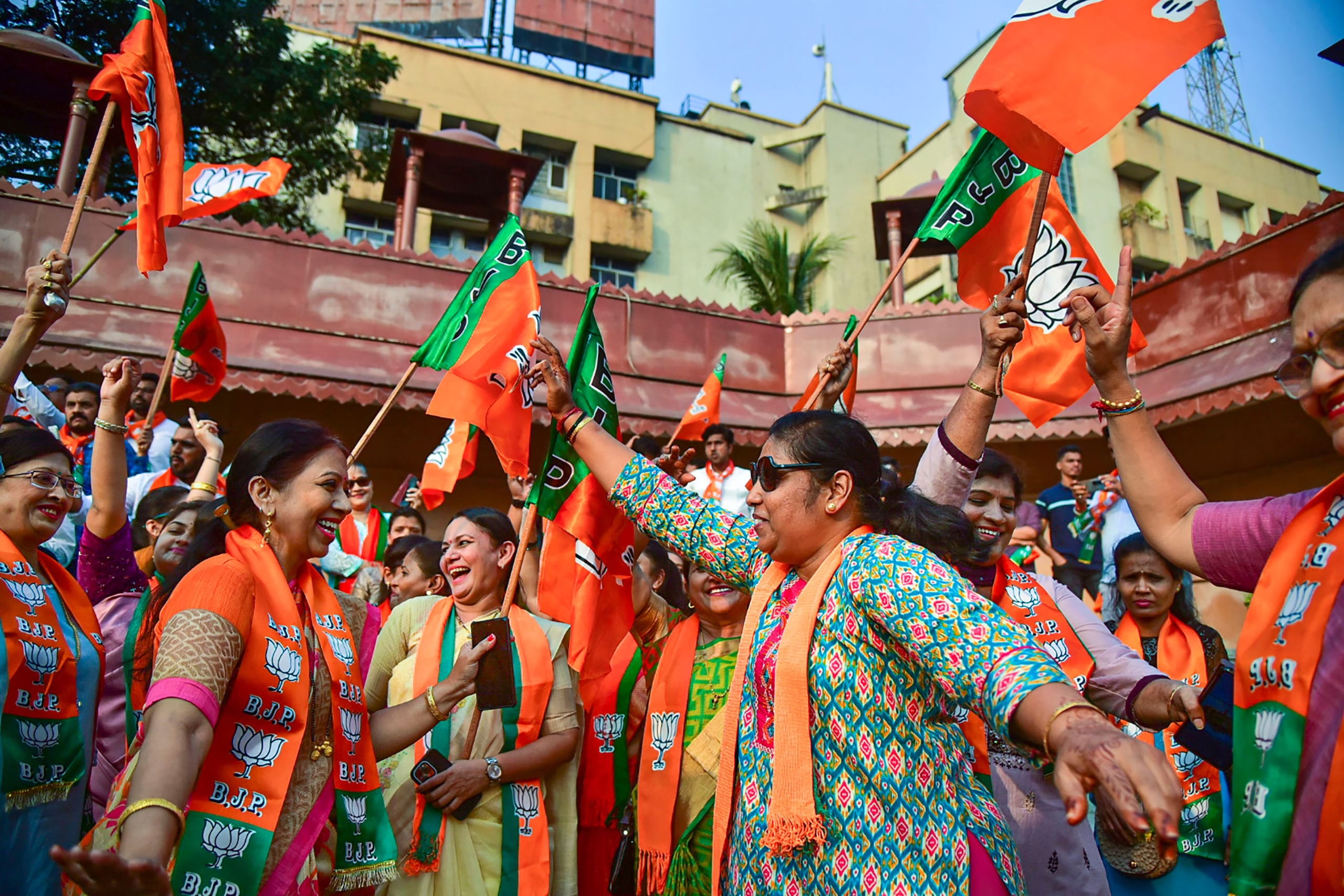
The BJP demonstrated formidable electoral strength across the state’s premier urban centers. In Jaipur, party nominees swept through core municipal corporation wards with wide victory margins. Similarly, the party registered comfortable wins across Udaipur, Kota, and Bikaner civic boards. Consequently, victorious workers gathered outside counting centers to celebrate the sweeping results, according to The Economic Times.
In Udaipur, the party established early dominance by capturing key central wards before midday. Party strategists attributed these gains to effective candidate selection and door-to-door campaigning. Furthermore, the civic leadership maintained strict focus on urban cleanliness, water supply, and road development. These municipal priorities resonated strongly with middle-class urban families across major cities.
A Major Endorsement for Chief Minister Bhajan Lal Sharma
Political analysts view the civic election triumph as a personal victory for Chief Minister Bhajan Lal Sharma. His administration took office with a mandate to revamp municipal infrastructure and basic governance. The municipal verdict confirms strong public approval for his policy rollout across urban constituencies. Therefore, the victory strengthens his political authority within the state party organization.
The Chief Minister campaigned actively alongside state party president and cabinet colleagues before voting day. He emphasized transparent governance, timely urban welfare schemes, and infrastructure investments during public rallies. In addition, the state administration resolved long-pending civic sanitation demands in peripheral towns. These localized policy interventions yielded rich electoral dividends at the ballot box, as highlighted by The Times of India.
Congress Fights in Pockets but Loses Ground in Cities
The opposition Congress mounted spirited counter-campaigns in several regional strongholds. In Jodhpur, the party retained a competitive presence across several established municipal wards. However, the opposition failed to halt the ruling party’s momentum in larger commercial hubs. Consequently, Congress candidates conceded several closely contested seats in semi-urban municipal boards.
Party state leaders acknowledged the disappointing urban figures while reviewing preliminary result tallies. Senior Congress leaders noted that localized factionalism harmed party prospects in critical wards. Furthermore, rebel candidates cut into traditional party vote shares across multiple smaller towns. Therefore, the opposition leadership announced plans to examine organizational lapses ahead of future panchayat polls.
Independent Contenders and Local Equations
Independent candidates and local citizen fronts also made an impact in several municipal boards. In several smaller tier-three towns, non-affiliated candidates captured balance-of-power ward seats, according to India Today. Disgruntled ticket aspirants who ran independently influenced outcomes in dozens of contested wards. Consequently, major parties initiated outreach to secure independent backing for municipal board chairmanships.
Nevertheless, the BJP maintained enough direct victories to form urban boards without external support. Local observers highlighted that voter trust favored candidates backed by the ruling establishment. Citizens prioritized smooth administrative coordination between municipal councils and the state secretariat. This pragmatic voting pattern minimized the disruptive leverage of rebellious independent blocs.
Consolidating the Urban Bastion for Future Contests
The decisive civic outcome reaffirms the ruling party’s enduring appeal across urban Rajasthan. Urban centers have historically served as the political bedrock for the saffron organization. The latest local election proves that the party retains its grip on urban voters. Furthermore, winning civic boards expands the party’s grassroots patronage networks for years to come.
Party leadership will now use this municipal momentum to prepare for upcoming rural panchayat contests. The victory provides fresh energy to booth-level volunteers and ward organizers statewide. Meanwhile, municipal authorities will begin swearing in new corporators and council presidents later this week. The results reaffirm public trust in the state’s governance agenda and infrastructure plans.

Curated news reports, in-depth analysis, and special features by India’s Opinion editorial team.