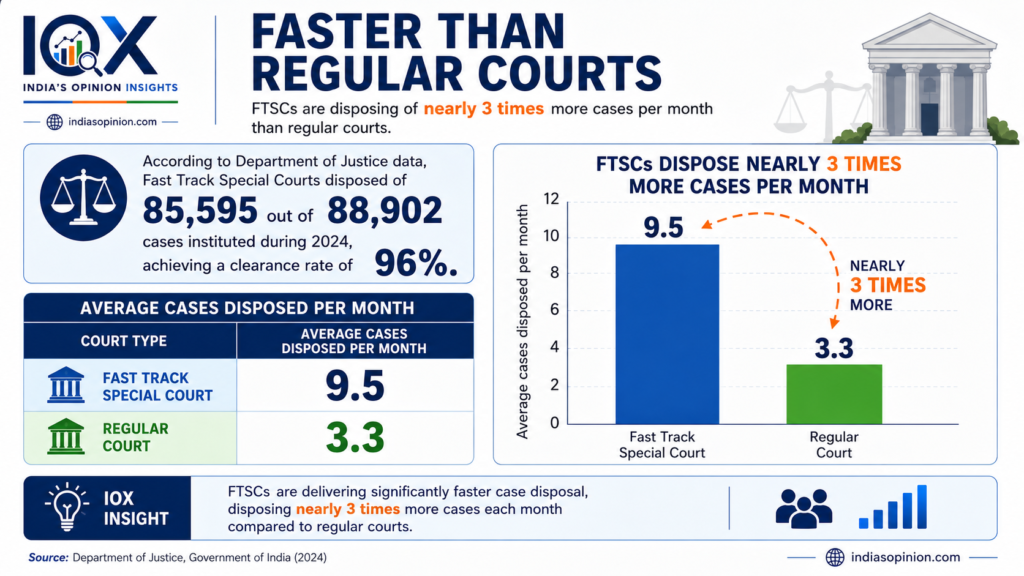
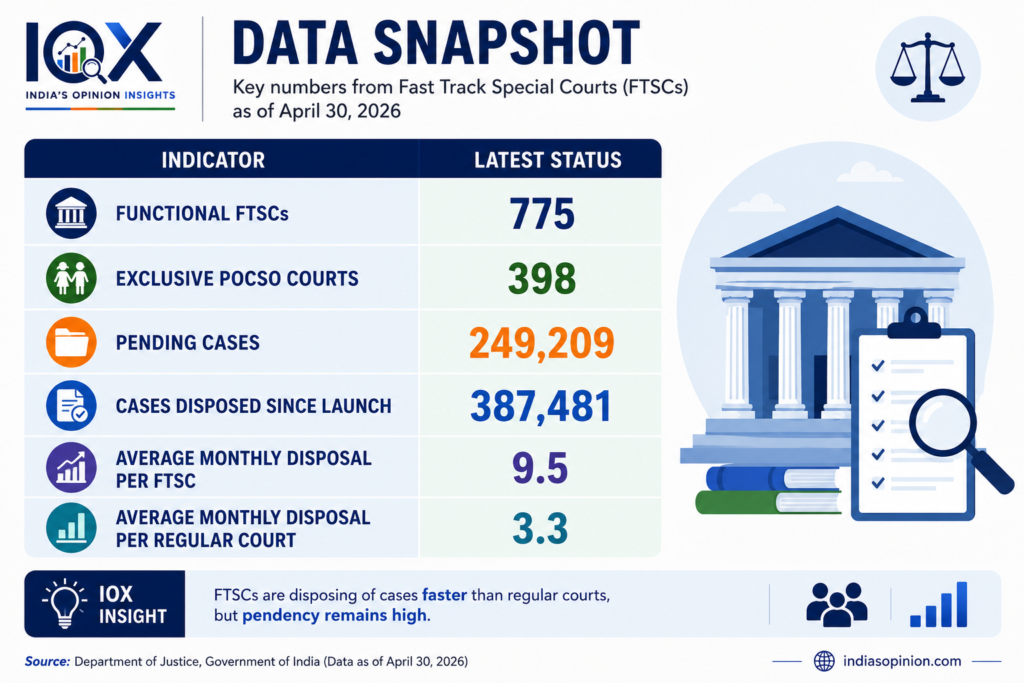
India’s rape and POCSO courts dispose of cases quicker than regular courts, but convictions remain inconsistent while pendency continues to rise.
India’s Fast Track Special Courts (FTSCs) were created with a clear objective: deliver quicker justice in rape and child sexual abuse cases. Nearly seven years after the scheme was launched, the data shows a mixed picture.
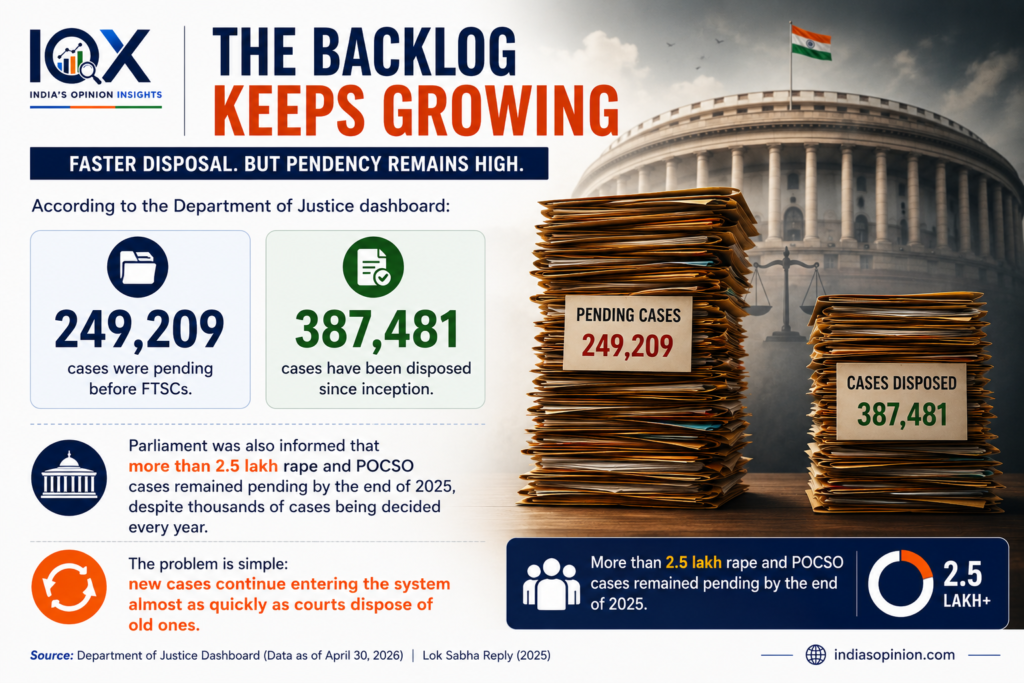
The courts are undoubtedly disposing of cases faster than ordinary courts. Yet, faster hearings have not translated into stronger convictions or lower pendency. With nearly 2.5 lakh cases still pending nationwide, the justice system continues to struggle with delivering timely and effective outcomes.
A System Built for Speed
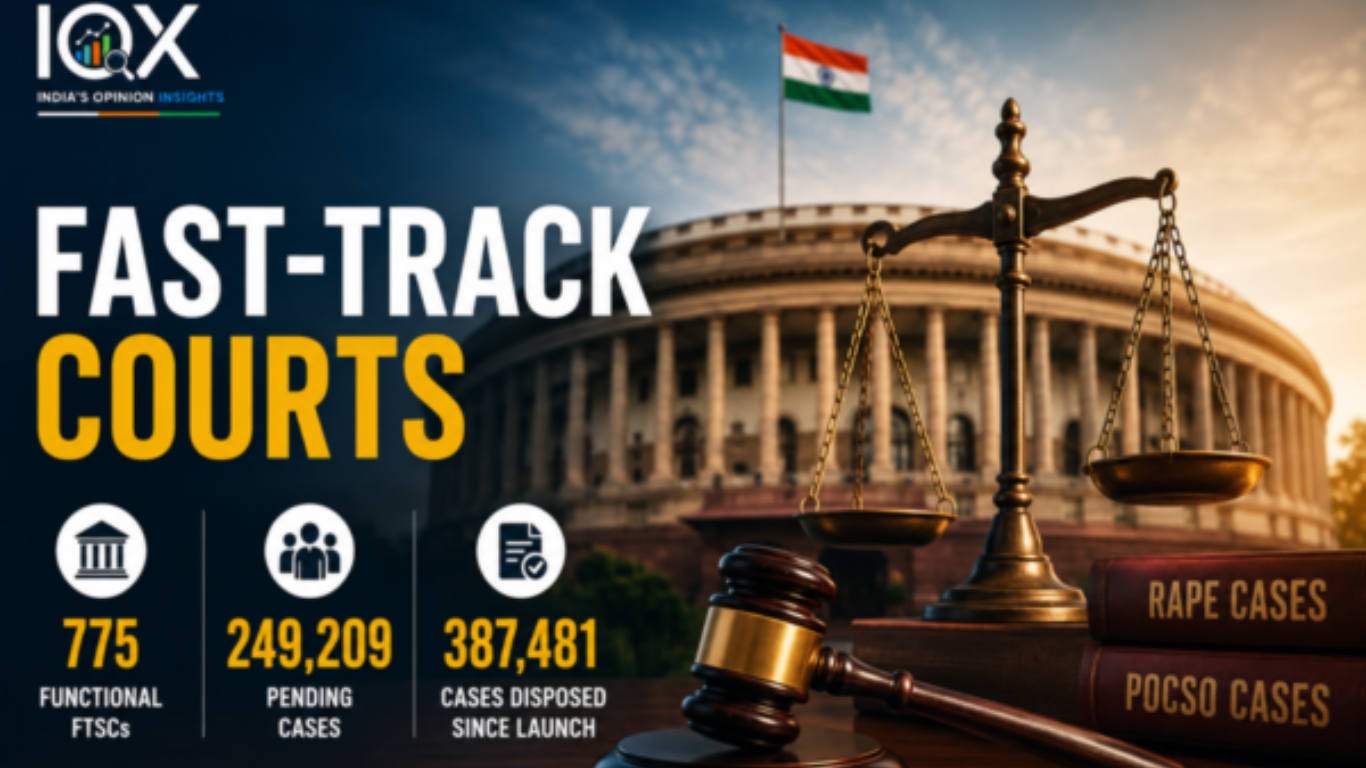
The Centrally Sponsored Scheme for Fast Track Special Courts was launched in October 2019 after nationwide concern over crimes against women and children. It focuses on cases under the Indian Penal Code related to rape and offences under the Protection of Children from Sexual Offences (POCSO) Act.
As of April 30, 2026:
- 775 Fast Track Special Courts are operational across 29 States and Union Territories.
- 398 of these are exclusive POCSO courts.
- Uttar Pradesh alone has 218 FTSCs, the highest in the country.
The scheme has now received a temporary extension until September 30, 2026, allowing states to continue operating these courts while the Centre reviews the programme.
But Convictions Tell a Different Story
Quick disposal does not necessarily mean justice has been delivered.
State-wise data reveals huge differences in conviction rates.
Some states report conviction rates below 10 percent, while others perform far better. In several instances, courts that take longer to complete trials actually record stronger conviction rates than states disposing of cases more quickly. Analysts have found little relationship between trial speed and conviction outcomes.
This suggests that faster hearings alone cannot overcome weaknesses in investigation, prosecution, forensic evidence, or witness protection.
Why Speed Alone Cannot Deliver Justice
Legal experts have repeatedly pointed to structural challenges that lie outside the courtroom.
These include:
- Vacancies among judges
- Delays in police investigations
- Slow forensic reporting
- Weak prosecution
- Witnesses turning hostile
- Inadequate court infrastructure
Even when courts are ready to hear cases quickly, delays during investigation and evidence collection often reduce the effectiveness of speedy trials.
What Happens Next?
The debate has gained fresh relevance after the Union government announced plans to establish fast-track courts for examination paper leak cases following the NEET controversy.
The experience of rape and POCSO courts offers an important lesson.
Creating specialised courts can improve judicial speed. But unless police investigations, prosecution quality, forensic capacity and judicial staffing improve simultaneously, faster hearings alone are unlikely to produce faster justice.

Data & Insights is India’s Opinion’s dedicated section for data journalism, election analysis, public policy, governance, economy, surveys and evidence-based reporting. Explore in-depth analysis, interactive charts, explainers and original research that turn complex data into meaningful insights.