
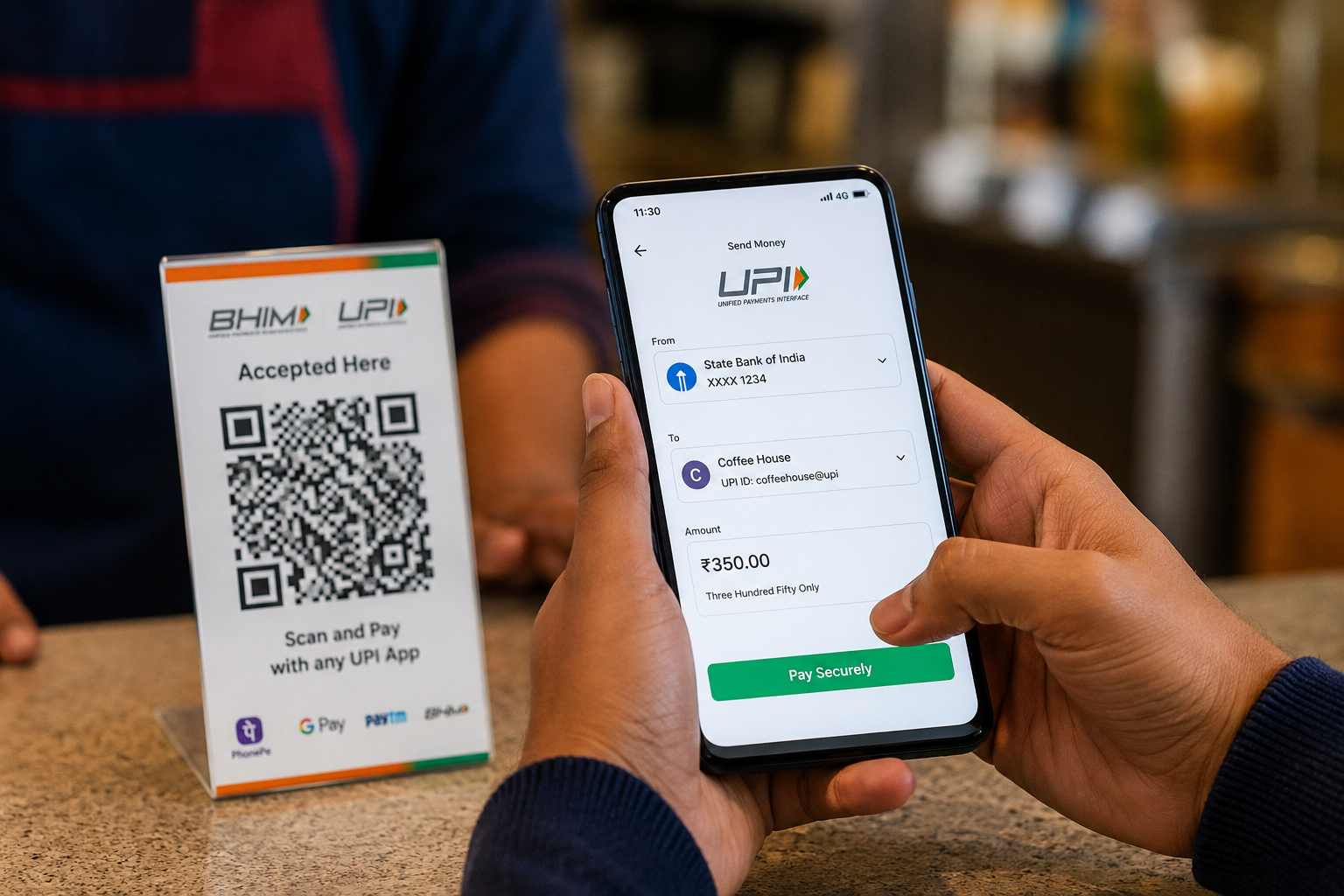
The Union government has officially clarified rules governing digital payment fees across the Unified Payments Interface (UPI) network. A fresh gazette notification explicitly bars banks from charging fees on transactions up to ₹2,000. However, the legal directive opens the door for introducing a Merchant Discount Rate (MDR) on transactions exceeding that amount. The policy change has triggered questions among millions of everyday digital payment users, according to The Indian Express.
The Ministry of Finance notified the updated framework under the Payment and Settlement Systems Act. Regulators designed the rule to protect ordinary consumers while providing financial relief to payment operators. Commercial banks and fintech platforms have long lobbied for revenue streams to sustain growing server networks. Consequently, authorities have structured a compromise that isolates common retail transactions from additional costs.
What the Government’s New Notification Means
The central directive establishes a statutory safeguard for all low-value digital transactions. Financial institutions cannot levy any processing fees or merchant charges on payments below the ₹2,000 limit. Furthermore, this category covers routine daily purchases at grocery stores, pharmacies, and local eateries. Therefore, neighborhood vendors and small retailers will never encounter transaction deductions at checkout counters.
By specifically defining the lower boundary, the notification creates legal room for commercial charges above it. Banks may now negotiate processing fees with large corporate retailers for high-value transactions. Meanwhile, industry analysts note that the government has not mandated an immediate fee rollout. Instead, the statutory amendment simply grants banks the legal authority to structure commercial merchant rates, as reported by Hindustan Times.
Understanding the Merchant Discount Rate
The Merchant Discount Rate represents the fee a business pays to financial institutions for processing digital payments. When shoppers swipe credit cards, acquiring banks deduct a nominal percentage before crediting the seller. In contrast, the Indian government waived all MDR charges on UPI transactions in late 2019 to accelerate digital adoption. Consequently, merchants received full payment values without bearing digital servicing overheads.
The zero-MDR policy spurred unprecedented financial inclusion across both urban and rural markets. However, fintech companies argue that maintaining secure server pipelines requires billions of rupees annually. A tiered MDR model allows system operators to collect modest revenues from large commercial enterprises. Furthermore, this mechanism mirrors traditional credit card fee structures without burdening smaller corner shops.
Will Consumers Ever Pay for UPI Transactions?
Individual customers will not pay any extra money when making merchant payments. The Ministry of Finance repeatedly confirmed that peer-to-merchant fees apply solely to commercial businesses. Furthermore, all peer-to-peer money transfers between friends and family members remain entirely cost-free. Therefore, your routine bank-to-bank transfers will never incur surprise balance deductions, according to EquityPandit.
Shoppers might wonder whether major retail chains will pass these operational expenses onto sticker prices. Large department stores and electronics retailers typically absorb transaction overheads within their standard operating margins. Moreover, competitive market pressures discourage retail outlets from adding surcharges on digital checkouts. Consumers can continue scanning QR codes with complete confidence across all commercial payment applications.
Why Banks and Fintech Companies Demand Changes
The Indian digital payments sector handles billions of individual financial transactions every month. Payment service providers must continuously upgrade cyber defense systems, cloud servers, and dispute-resolution teams. Previously, the Union budget provided an annual cash subsidy to partially offset operational losses for banks. However, banking executives maintained that public subsidies could not match the exponential growth of UPI volumes.
Data shows that transactions above ₹2,000 represent barely four percent of total monthly UPI volume. Nevertheless, these high-value transfers account for nearly two-thirds of the aggregate financial value moving through the network. Charging a modest interchange fee on this small sliver creates a sustainable commercial revenue model. Consequently, payment networks can reinvest earnings into stronger server stability and faster transaction speeds.
The Long-Term Impact on Digital Commerce
India’s digital payments revolution has established a benchmark for global financial technology. The new regulatory guidelines ensure that small-scale commerce continues to flourish without added costs. Meanwhile, established corporate enterprises will help finance the digital infrastructure they rely on daily. This balanced regulatory approach safeguards rapid innovation while ensuring long-term fiscal viability for banks.
Looking forward, the National Payments Corporation of India will monitor merchant fee caps closely. Regulatory guardrails will prevent predatory pricing and maintain smooth digital adoption across emerging retail sectors. Furthermore, transparent rules provide policy certainty for international investors backing Indian financial technology ventures. UPI remains the backbone of Indian commerce, balancing consumer convenience with sustainable economic growth.

Curated news reports, in-depth analysis, and special features by India’s Opinion editorial team.