
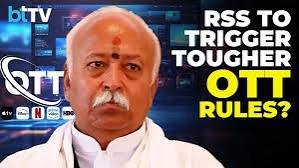
The Rashtriya Swayamsevak Sangh (RSS) has established an informal expert panel to examine digital entertainment programming. The Sangh committee will recommend statutory mechanisms to curb what it describes as widespread “cultural pollution.” Members plan to submit a comprehensive policy proposal to the Union government demanding an institutional censor body. The initiative follows growing concerns within traditional social organizations regarding unrestrained web content, according to The Indian Express.
The committee comprises prominent educationists, former university vice-chancellors, cultural scholars, and senior organizational functionaries. The working group convened its inaugural consultative session last month to outline core regulatory recommendations. Members expressed deep alarm over explicit violence, vulgar language, and religious misrepresentation in digital streaming shows. Consequently, the panel advocates for mandatory pre-certification frameworks similar to theatrical film certification.
Sangh Panel Targets Vulgarity and Moral Degradation
The advisory panel intends to draft actionable recommendations for the Ministry of Information and Broadcasting. Committee members argue that unmonitored digital streaming platforms undermine indigenous social ethics and civilizational ethos. The group seeks legally enforceable standards to replace existing self-regulatory publisher guidelines. Furthermore, the panel plans to engage regional cultural institutions to gather documented viewer grievances, as detailed by Jansatta.
The move aligns directly with past warnings issued by RSS Sarsanghchalak Mohan Bhagwat. In his annual Vijayadashami address in Nagpur, Bhagwat condemned digital content as a primary source of moral decay. He emphasized that obscene digital media enters private homes through personal mobile devices without institutional filters. Therefore, the Sangh leadership believes that statutory intervention has become essential to safeguard younger generations.
Feedback from Kutumb Prabodhan Driving Policy Shift
Extensive ground-level feedback from the Sangh’s Kutumb Prabodhan wing directly spurred the formation of this panel. Kutumb Prabodhan actively promotes traditional family values, inter-generational harmony, and domestic dialogue across rural and urban communities. Field volunteers repeatedly reported widespread parental distress regarding unrestricted content accessible to adolescents. In addition, grassroots coordinators noted that provocative online shows distort traditional familial relationships.
Sangh functionaries argue that digital media algorithms aggressively push sensationalized and divisive themes onto vulnerable youths. Volunteers highlighted frequent complaints regarding coarse language and sexually explicit themes in regional web series. Meanwhile, community leaders requested formal institutional mechanisms where citizens can register binding regulatory complaints. Consequently, the Sangh hierarchy decided to formalize these concerns into concrete policy proposals.
The Existing Regulatory Void in Digital Streaming
The theatrical film exhibition sector operates under the strict oversight of the Central Board of Film Certification (CBFC). The Cinematograph Act of 1952 requires every commercial film to secure statutory exhibition certificates before public screening. In contrast, over-the-top streaming platforms operate without any pre-screening clearance requirements. Digital content remains primarily governed by the Information Technology (Digital Media Ethics Code) Rules of 2021.
The IT Rules establish a three-tier grievance redressal mechanism anchored by self-regulatory industry bodies. However, conservative social organizations argue that self-regulation lacks punitive teeth and independent accountability. Panel members argue that self-regulatory appeals rarely result in meaningful content modifications or distributor penalties. Therefore, the committee insists that digital entertainment must face the same statutory scrutiny as mainstream cinema.
Government Crackdowns and Platform Blocking Actions
The Union government has previously acknowledged public unease regarding offensive digital media content. In July, Minister of State for Information and Broadcasting L. Murugan briefed Parliament on executive enforcement measures. Murugan revealed that authorities had disabled fifty streaming platforms over two years for distributing obscene materials. Furthermore, the government invoked the Bharatiya Nyaya Sanhita and the Indecent Representation of Women Act against non-compliant operators.
Government regulators continue monitoring recurring violations regarding national symbols and religious depictions. Senior ministers have repeatedly cautioned streaming executives against belittling Indian traditions under the guise of creative expression. In addition, authorities urged production houses to develop wholesome family-oriented entertainment programming. Nevertheless, the RSS panel argues that occasional executive blocking orders cannot replace an active statutory censor body.
Debate Between Creative Liberty and Cultural Preservation
The Sangh’s call for pre-screening censorship will inevitably provoke intense resistance from creative industry associations. Filmmakers and digital content creators maintain that creative freedom fosters nuanced artistic exploration and global competitiveness. Industry advocates caution that statutory pre-censorship will stifle creative experimentation and deter major foreign streaming investments. Furthermore, civil liberties advocates emphasize that adult viewers possess the constitutional right to curate their entertainment choices.
The upcoming proposal sets the stage for significant parliamentary debate over the future of Indian digital entertainment. The panel will submit its finalized draft charter to Union ministries following upcoming festive consultations. Lawmakers will need to balance constitutional free speech protections against growing demands for cultural safeguards. How the central government responds will shape the trajectory of India’s multi-billion-dollar streaming industry.
Curated news reports, in-depth analysis, and special features by India’s Opinion editorial team.