
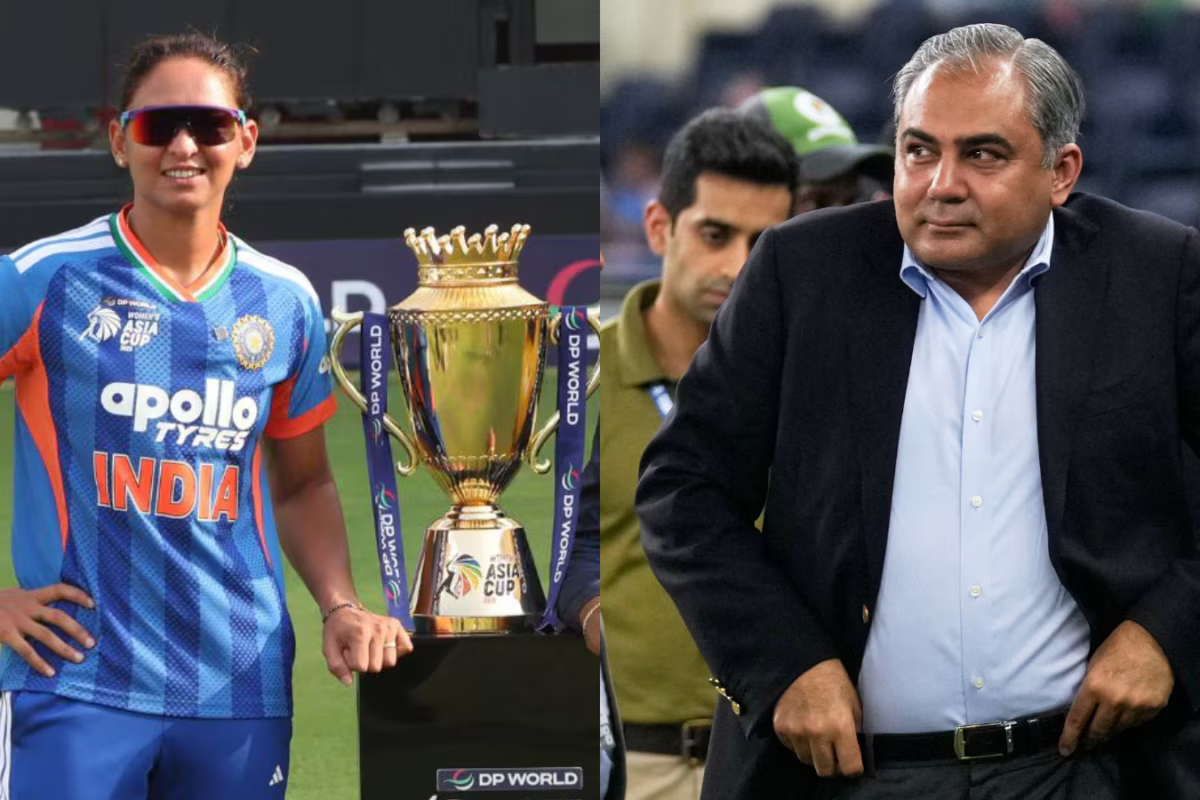
A major diplomatic controversy erupted following India’s victory in the Women’s Asia Cup final on Sunday. The Indian women’s cricket team declined to accept the championship trophy from Asian Cricket Council (ACC) president Mohsin Naqvi. The incident created awkward moments during the post-match presentation ceremony on live international television. However, fresh details reveal that the Board of Control for Cricket in India (BCCI) had warned regional organizers beforehand, as reported by The Indian Express.
Indian cricket administrators formally conveyed their non-negotiable position to the ACC leadership hours before the title clash began. The BCCI explicitly stated that Indian players would not accept silverware from Naqvi on stage. Naqvi currently serves dual roles as the Pakistan Cricket Board (PCB) chairman and Pakistan’s Federal Interior Minister. Consequently, the Indian board requested tournament organizers to designate an alternative dignitary for the trophy presentation.
Advance Notice Delivered to Asian Cricket Council
Senior BCCI officials maintained direct communication with ACC tournament directors throughout the final match day. The Indian board outlined clear diplomatic protocols regarding official interactions with Pakistani political figures. Officials reminded the regional council about established national policy guidelines governing bilateral sporting engagements. Therefore, tournament coordinators possessed ample advance notice to adjust their ceremonial arrangements, according to Hindustan Times.
Despite these clear written representations, protocol managers invited Naqvi onto the central stage as the final concluded. Indian team management immediately reminded local event coordinators about their documented reservations. However, stage directors proceeded with the original schedule without consulting team representatives. This administrative failure set the stage for an unprecedented diplomatic standoff in full public view.
Drama Unfolds on the Presentation Podium
The tense sequence played out immediately after Indian players received their individual championship medals. When organizers announced the trophy presentation, captain Harmanpreet Kaur and her teammates stood their ground near the dugout. The players visibly refused to walk up to the dais while Naqvi held the trophy. Furthermore, team officials gestured to event organizers to resolve the protocol breakdown away from the cameras.
The awkward standoff lasted several minutes while broadcasters scrambled to manage the commercial live feed. Tournament officials engaged in hurried discussions near the presentation backdrop. Eventually, organizers altered the protocol and brought forward alternative dignitaries to hand over the winners’ trophy. Consequently, the Indian team stepped forward to lift the coveted silverware amid loud cheers from traveling supporters.
Maintaining Consistency with Men’s Team Precedent
The women’s squad mirrored the firm stance taken earlier by the Indian men’s cricket team. During a previous continental championship, Indian male cricketers also declined to receive awards directly from Naqvi. The BCCI instructed both national squads to maintain unified diplomatic consistency on international podiums. In addition, player associations expressed complete solidarity with the national leadership’s protocol directives, as detailed by ABP Live.
BCCI officials defended the women’s team against external criticism following the viral broadcast. Board representatives emphasized that the players acted under strict institutional instructions rather than personal whim. The Indian cricket board remains adamant that sports bodies must respect sensitive national security realities. Therefore, Indian squads will continue to observe firm diplomatic protocols during multinational tournaments.
Geopolitical Sensitivities Behind the Protocol Stand
The diplomatic frostiness stems from Naqvi’s dual profile as an active minister in Pakistan’s federal cabinet. Indian sporting bodies deliberately avoid sharing formal ceremonial platforms with Pakistani state functionaries. Decades of cross-border terrorism and unresolved security tensions continue to stall bilateral sporting ties. Consequently, the Indian government strictly regulates diplomatic interactions involving official state representatives.
Indian cricket officials argued that handing over trophies constitutes an official ceremonial honor. Indian athletes cannot participate in photo opportunities that elevate politicians who oversee hostile security establishments. Furthermore, civil society voices in India overwhelmingly supported the team’s resolute refusal on social platforms. The board reiterated that patriotic considerations will always supersede routine sporting courtesies.
Broader Fallout for Regional Cricket Governance
The incident has exposed deepening friction within the Asian Cricket Council administration. Member boards frequently struggle to balance Indian commercial influence against Pakistani administrative appointments. Indian broadcast revenue powers almost the entire financial budget of the regional cricket body. Meanwhile, Pakistani administrators hold prominent governance chairs under rotating continental agreements.
Cricket analysts believe the ACC must reform its ceremonial protocols to avoid recurring television embarrassments. Neutral event managers should handle tournament ceremonies during politically sensitive matches. Furthermore, the council must ensure that host committees honor advance diplomatic notices from participating nations. The Women’s Asia Cup final proves once again that cricket and regional geopolitics remain inextricably linked across South Asia.

Curated news reports, in-depth analysis, and special features by India’s Opinion editorial team.