
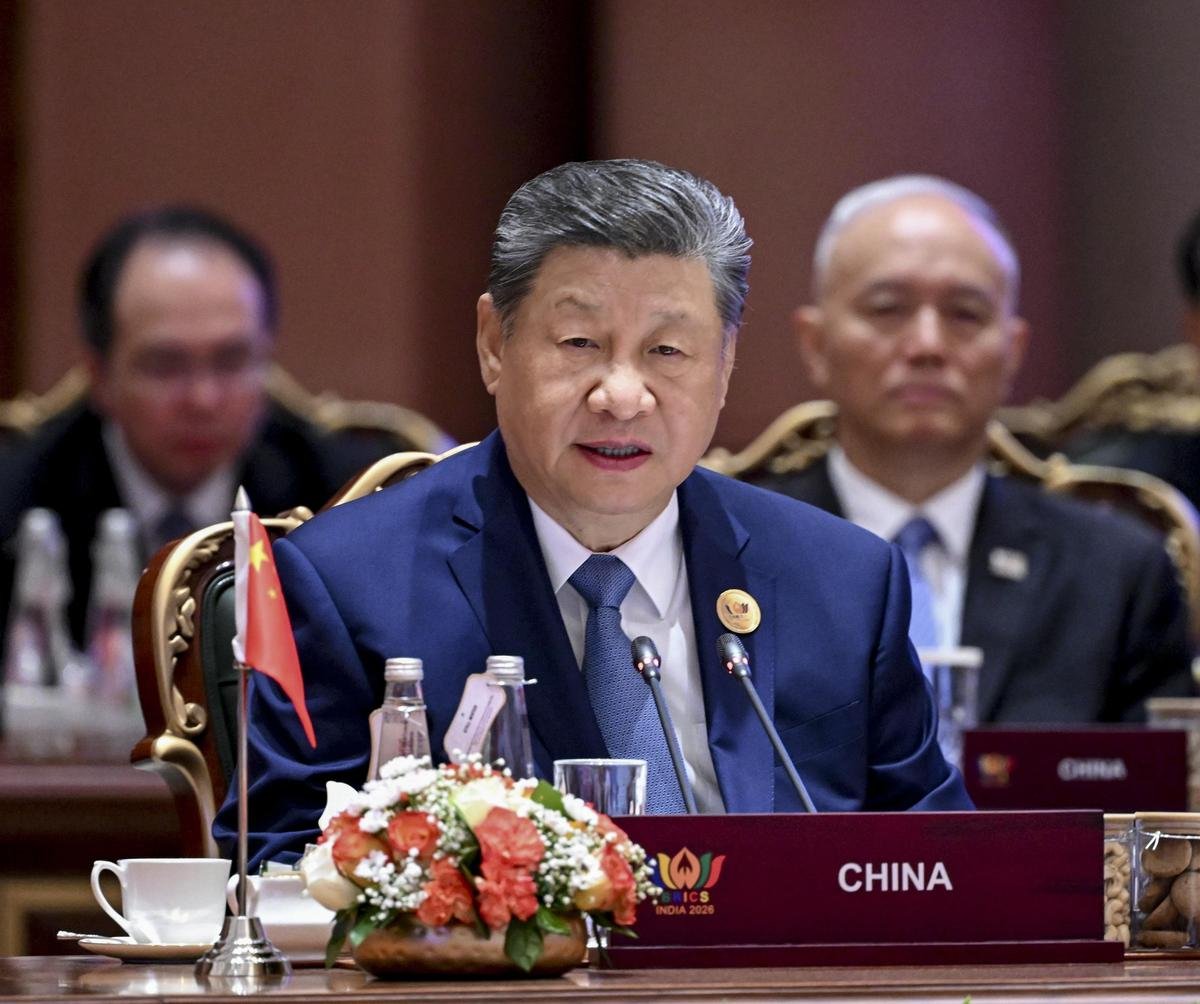
Chinese President Xi Jinping unveiled an ambitious technology roadmap at the 18th BRICS Summit in New Delhi. He proposed that China should lead the creation of a specialized open-source artificial intelligence ecosystem for member nations. The initiative seeks to establish collaborative AI research centers, shared model libraries, and unified technical standards across the Global South. This proposal raises fundamental questions regarding India’s strategic position within emerging technological alliances, as analyzed by The Indian Express.
The proposal arrives while global competition over foundational intelligence algorithms reaches unprecedented intensity. China wants to expand access to high-performance open computing frameworks for emerging economies. However, New Delhi views multilateral technology transfers through a strict national security prism. India must now weigh collective southern solidarity against its domestic digital sovereignty goals.
Beijing’s Push to Challenge Western Tech Hegemony
Beijing’s initiative directly targets the dominance of American proprietary technology giants like OpenAI, Google, and Microsoft. Western sanctions and export curbs currently restrict China’s access to advanced semiconductor hardware. Therefore, Chinese developers are pivoting toward powerful open-source foundation models to maintain international relevance. Beijing aims to export these open architectures across Asia, Africa, and Latin America, according to The Daily Star.
By creating a multilateral development zone, China hopes to establish its algorithms as global industrial benchmarks. The country plans to offer compute access and localized training models to partner nations. Furthermore, Beijing seeks to reduce the Global South’s reliance on Western cloud systems. Consequently, this initiative positions China as a primary technology patron for developing nations.
India’s Sovereign Tech Ambition Through the IndiaAI Mission
India pursues a distinct domestic path focused on sovereign technological autonomy. The Union Cabinet approved the comprehensive IndiaAI Mission with a budget exceeding ₹10,300 crore. The initiative funds massive domestic compute clusters, sovereign dataset repositories, and indigenous foundational models. In addition, New Delhi prioritizes multilingual artificial intelligence tailored for diverse vernacular languages.
Indian policy planners want to build domestic intellectual property rather than importing foreign digital frameworks. Indian startups and premier research institutes already develop open-source foundational systems. Therefore, New Delhi hesitates to subordinate its thriving software sector to a China-led ecosystem. Indian policymakers prefer building independent technological capabilities that serve domestic developmental priorities.
Security Apprehensions and Past Digital Sanctions
Deep-seated security concerns complicate any potential digital integration between India and China. Border tensions along the Line of Actual Control continue to cast a shadow over bilateral relations. In recent years, India banned hundreds of Chinese mobile applications over serious data privacy concerns. New Delhi also excluded Chinese telecommunications vendors from its critical national communications networks.
Indian intelligence agencies remain vigilant against algorithmic bias, covert digital surveillance, and data harvesting. Allowing foreign-designed foundation models into critical public infrastructure poses significant national vulnerabilities. Furthermore, Indian cybersecurity frameworks require strict data localization protocols. Consequently, Indian regulators will scrutinize any Chinese-led software framework with immense caution, as highlighted by The Hindu.
Balancing Western Alliances with Multipolar Diplomacy
India maintains extensive technological partnerships with leading Western democracies. New Delhi actively collaborates with the United States through the Initiative on Critical and Emerging Technologies (iCET). American semiconductor firms and cloud hyperscalers invest billions of dollars across Indian technology hubs. Furthermore, India cooperates closely with Quad partners on semiconductor supply chain resilience.
Joining a rival technology bloc could complicate these lucrative Western commercial and strategic linkages. However, India cannot afford to disconnect itself completely from Global South technology conversations. New Delhi desires a prominent leadership role among emerging economies without antagonizing Western allies. Therefore, Indian diplomats will likely pursue a nuanced middle path that preserves maximum strategic flexibility.
Shaping Equitable Global AI Governance
The final BRICS New Delhi Declaration reflected India’s balanced diplomatic approach. The document endorsed shared principles of open research, technological safety, and inclusive global growth. However, the text emphasized that multilateral cooperation must respect national sovereignty and independent regulatory regimes. Prime Minister Narendra Modi consistently advocates for ethical, human-centric artificial intelligence frameworks.
India argues that artificial intelligence must remain accessible, safe, and transparent for all developing countries. Moving forward, New Delhi will participate in multilateral dialogues while protecting its strategic interests. India will support global open research but avoid reliance on any single superpower’s technological stack. Ultimately, India will champion open-source innovation on its own terms while securing its digital borders.

Curated news reports, in-depth analysis, and special features by India’s Opinion editorial team.