Diplomatic negotiators at the 18th BRICS Summit achieved a historic breakthrough this weekend. The delegations of Iran and the United Arab Emirates bridged sharp geopolitical divides to endorse a joint declaration. The consensus followed six months of intense regional conflict across West Asia. Host nation India steered the marathon negotiations toward common ground, as reported by The Indian Express.
Both Middle Eastern powers joined the expanded economic alliance as full member states earlier in 2024. However, deep strategic differences over maritime safety, regional sovereignty, and military strikes threatened to derail the final summit text. Diplomatic delegations worked through long nights to find mutually acceptable phrasing. Ultimately, high-level statesmanship helped both nations present a united stance before the global community.
Over 100 Hours of Grueling Sherpa Negotiations
The path to consensus required over 100 hours of round-the-clock deliberation among senior diplomatic sherpas. Indian Sherpa Sudhakar Dalela led multiple consultative sessions to align conflicting national priorities. Negotiators from both Gulf states initially rejected several draft paragraphs dealing with regional conflicts. Therefore, Indian diplomats acted as persistent mediators to identify common ground.
The negotiating teams scrutinized every sensitive word and punctuation mark across the document. Representatives debated language regarding cross-border strikes, civilian safety, and maritime shipping lanes. Meanwhile, negotiators kept open lines with their foreign ministries back home to secure real-time clearances. Consequently, the exhausted teams achieved unanimous textual agreement just hours before the leaders took the stage.
Crafting the Delicate Ceasefire Compromise
The final declaration includes a balanced paragraph addressing the ongoing conflict across the Middle East. The document calls for an immediate, durable, and comprehensive ceasefire to end human suffering. Furthermore, the text stresses unconditional respect for the national sovereignty and territorial integrity of all states. This balanced framing allowed both Tehran and Abu Dhabi to sign the document without compromising core national positions.
The joint declaration also addresses vital global economic concerns arising from regional conflict. The member nations highlighted the urgent need to maintain unobstructed maritime navigation through critical energy corridors. In addition, the text flags the devastating humanitarian consequences of attacks on civilian infrastructure. Therefore, the compromise reflects shared economic anxieties alongside urgent calls for humanitarian de-escalation, according to The Indian Express Editorial.
Strategic Nudges from Moscow and Beijing
Senior diplomats from Russia and China played decisive backchannel roles throughout the negotiation process. Both Beijing and Moscow maintain strong strategic and commercial partnerships with Iran and the UAE. Consequently, Chinese President Xi Jinping and Russian President Vladimir Putin encouraged both delegations to demonstrate political flexibility. They urged both Gulf partners to avoid public disharmony within the newly expanded bloc.
These big-power nudges prevented negotiations from collapsing over contentious red lines. Chinese diplomats emphasized the long-term benefits of collective economic solidarity among developing economies. Meanwhile, Russian officials urged focus on multilateral financial cooperation rather than bilateral grievances. These timely interventions created the necessary political space for practical compromises on sensitive clauses.
Top-Level Engagement Between Pezeshkian and Gulf Envoys
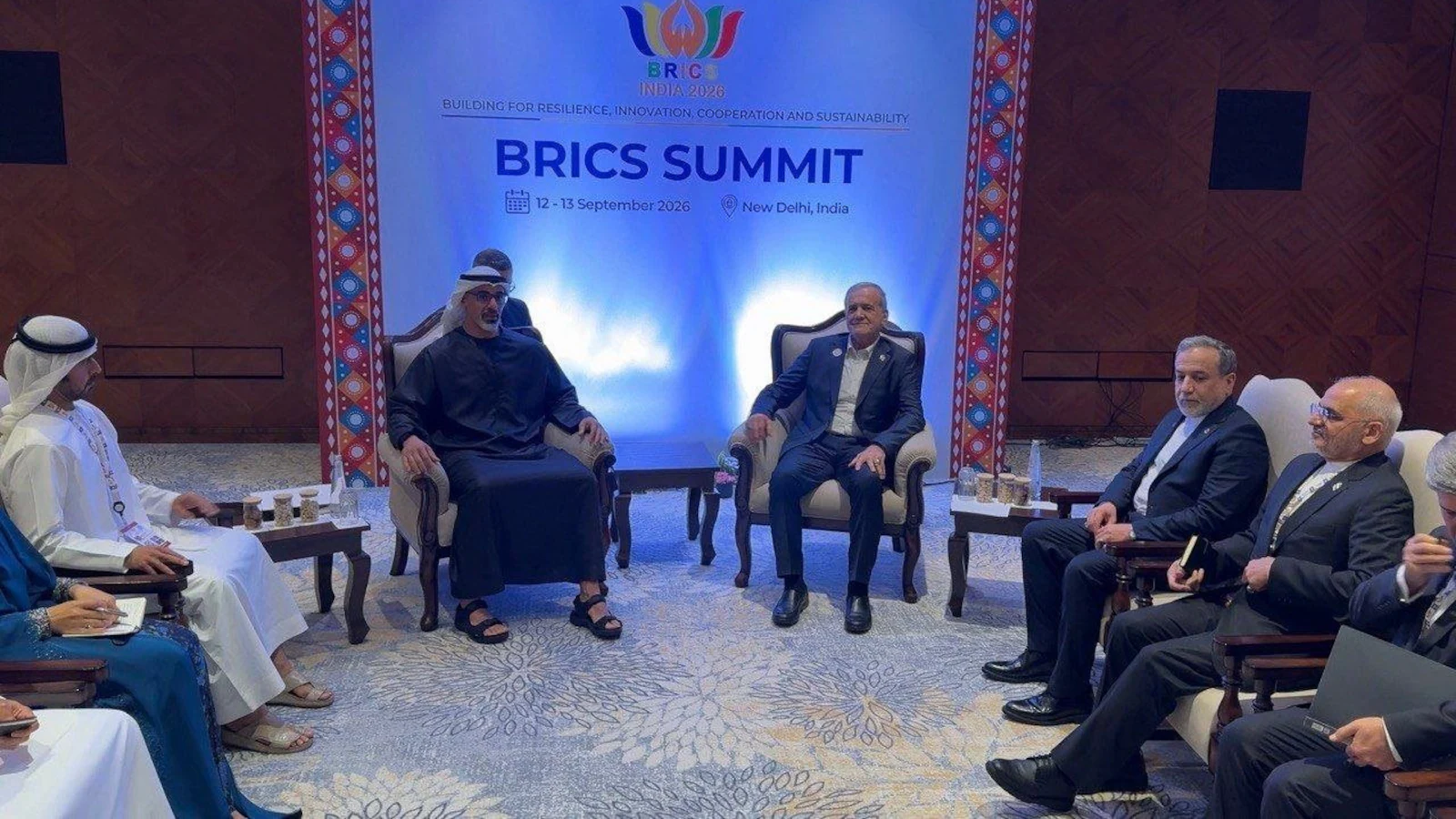
Direct interactions among top political leaders provided the final momentum needed to seal the consensus. Iranian President Dr. Masoud Pezeshkian held constructive informal exchanges with visiting UAE dignitaries in New Delhi. Pezeshkian stated publicly that both regional neighbors agreed to put past differences aside and look to the future. This forward-looking approach reassured Gulf diplomats regarding Iran’s willingness to de-escalate diplomatic frictions.
The personal rapport established during the New Delhi meetings helped defuse simmering diplomatic suspicions. Both leaderships recognized that prolonged bilateral friction harms regional trade and investment flows. Furthermore, direct dialogue demonstrated that emerging global platforms can facilitate direct conflict resolution. Consequently, bilateral handshakes transformed theoretical diplomatic language into genuine political cooperation.
A Major Diplomatic Victory for the Expanded Alliance
The successful adoption of the New Delhi Declaration marks a watershed moment for the 11-member bloc. Critics previously argued that expanding the alliance would paralyze its decision-making capacity. However, the Iran-UAE agreement proves that diverse emerging economies can forge consensus on complex crises. The outcome reinforces the alliance’s status as an effective forum for Global South diplomacy.
The New Delhi consensus provides a functional blueprint for future conflict de-escalation in the Middle East. International observers praised the host nation for steering difficult diplomatic negotiations to a successful finish. Furthermore, the breakthrough demonstrates that collective economic self-interest can overcome deep geopolitical rivalries. The summit concluded with member states reaffirming their shared commitment to a peaceful, multipolar world.

Curated news reports, in-depth analysis, and special features by India’s Opinion editorial team.