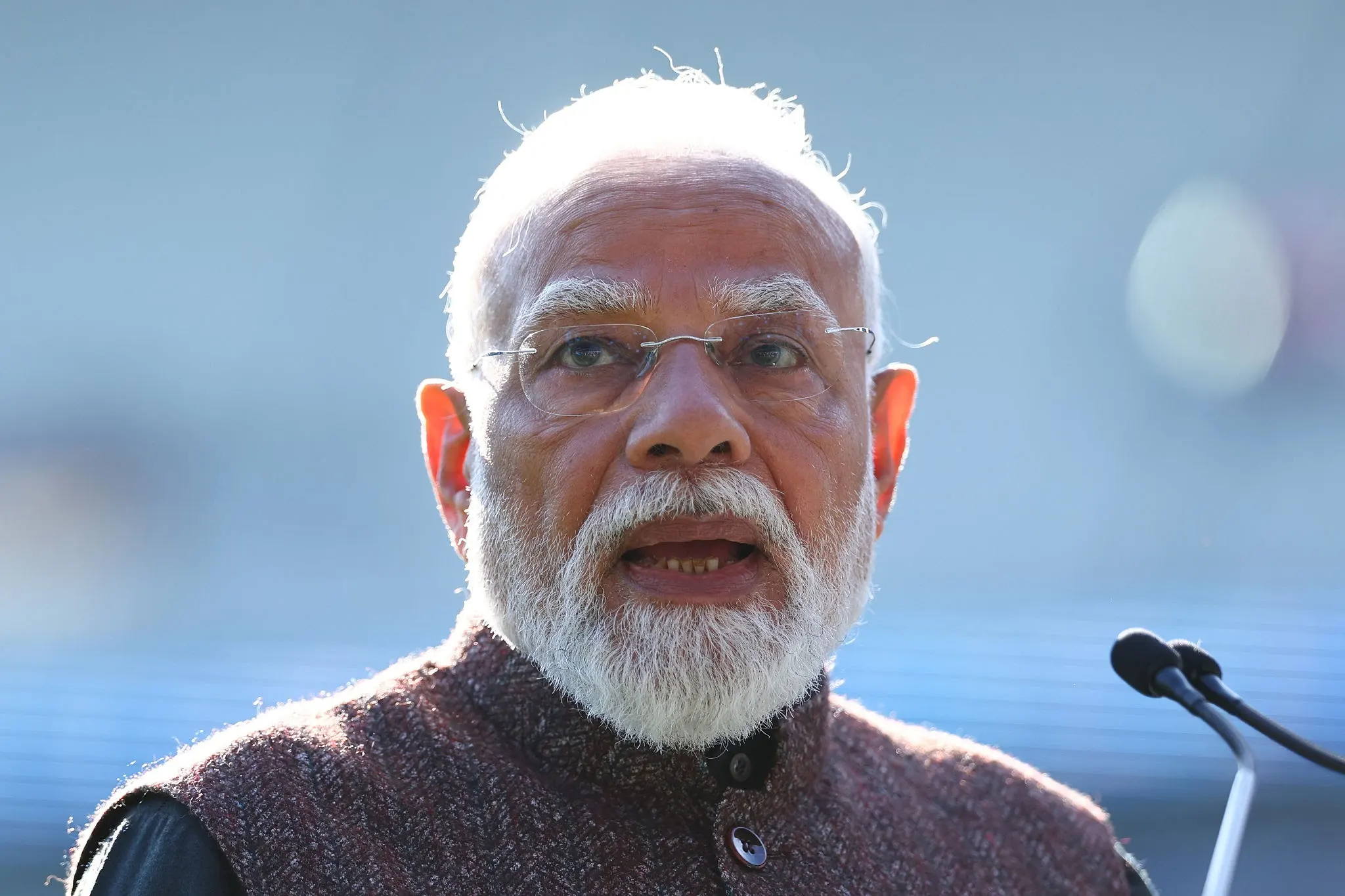
Prime Minister Narendra Modi remains the clear front-runner in the latest India Today-CVoter Mood of the Nation survey. However, his lead comes with a noticeable decline in support.
The August 2026 poll puts Modi at 48.7% as the preferred choice for the next prime minister, down from 57.7% in January. Congress leader Rahul Gandhi remains in second place with 27.1%, according to the survey.
The gap between the two leaders remains wide. However, the fall in Modi’s numbers adds a new dimension to the national political conversation. The survey also produced a surprise. Tamil Nadu Chief Minister and Tamilaga Vettri Kazhagam leader C. Joseph Vijay secured 9.2%. This placed him third in the PM preference question.
Modi preferred PM, but the margin is changing
The latest figures do not suggest that Modi has lost his position as the dominant choice among respondents. His 48.7% share remains substantially higher than Gandhi’s 27.1%.
Yet the movement since January deserves attention. A decline of nine percentage points in the survey’s preferred-PM measure is too large to dismiss as a minor fluctuation.
Polling numbers, however, should not be read as a direct measure of future election results. The next Lok Sabha election is not due until 2029, and voters’ preferences can change considerably before an election.
The survey instead offers a snapshot of public sentiment during the period when interviews were conducted. The August edition was conducted by CVoter between July 1 and August 25.
India Today said 25,184 people were directly surveyed. In addition, another 91,795 interviews collected through CVoter’s regular tracking over six months were also used in compiling the findings.
Modi preferred PM as Vijay enters national conversation
Vijay’s third-place finish is one of the more striking findings in the survey.
The actor-turned-politician entered electoral politics only recently. Yet he has already secured a measurable share of national respondents in a question traditionally dominated by established political leaders.
His 9.2% support places him ahead of Trinamool Congress chief Mamata Banerjee at 2%. He is also ahead of Samajwadi Party chief Akhilesh Yadav at 1.7% and Aam Aadmi Party leader Arvind Kejriwal at 1.2%, according to the survey.
The finding does not establish that Vijay has developed a nationwide electoral base. Tamil Nadu remains the core of his political organisation, and the next national election is still years away.
It does, however, show that his political profile has moved beyond Tamil Nadu. His emergence could become more relevant if his party expands its organisation or builds alliances outside the state.
The survey also asked respondents which opposition leader would be best suited to lead an opposition alliance. Gandhi led that question with 29%, while Vijay received 12.2%.
Modi preferred PM despite wider political competition
The survey’s numbers point to an opposition challenge that remains fragmented. Gandhi’s 27.1% puts him comfortably ahead of other established opposition leaders in the PM preference question.
Yet he remains more than 21 percentage points behind Modi. That gap matters because a national contest requires an opposition coalition. Only a coalition can convert individual support into a common political platform.
The figures also suggest that the opposition’s challenge is no longer simply about finding a single alternative to Modi.
New regional leaders are competing for public attention, particularly among voters looking beyond the BJP and Congress.
Vijay’s appearance near the top of the list illustrates that shift. His rise could complicate calculations for both national parties if his political influence expands beyond Tamil Nadu.
What the poll says about Modi’s political position
The fall in Modi’s preferred-PM rating comes despite his continued first-place position.That distinction is important.
A decline in popularity does not automatically mean a collapse in electoral support. The survey question measures who respondents prefer as prime minister, not which party they would vote for in a Lok Sabha election.
Political preferences can also move for several reasons, including economic concerns, government performance, opposition campaigning and changing regional issues.
The poll therefore provides evidence of movement in public sentiment, but it cannot by itself identify why Modi’s rating declined.
Other questions in the wider Mood of the Nation survey can provide additional context about how voters view the government, the opposition and national issues.
Those measures should be considered alongside, rather than substituted for, the PM preference figure.
The next test will be electoral, not just numerical
For now, Modi remains the leading choice in the survey by a substantial margin.
Gandhi occupies second place, while Vijay’s emergence introduces a younger and more regionally rooted political figure into the national conversation.
The bigger question is whether the decline from 57.7% to 48.7% represents a temporary movement or the beginning of a longer-term shift in public sentiment.
One survey cannot answer that. However, future editions of the Mood of the Nation and other independent polls will show whether the trend persists.
State elections will provide another test because they can reveal how national popularity translates into actual voting behaviour.
For the BJP, the latest survey offers both reassurance and a warning. Modi continues to lead the preferred-PM race, but the size of that lead has narrowed.
For the opposition, the numbers show that Gandhi remains the principal challenger. Meanwhile new regional figures are beginning to compete for national attention.
With the 2029 Lok Sabha election still ahead, the political significance of the survey will depend less on the headline number. Instead, it will depend on whether this change in voter sentiment continues in subsequent polls.
Umar Khan is a writer driven by curiosity and a passion for understanding the world. Through thoughtful analysis and evocative storytelling, he seeks to make complex ideas accessible, inspire meaningful conversations, and encourage fresh perspectives on the people, places, and issues that shape our shared future.