
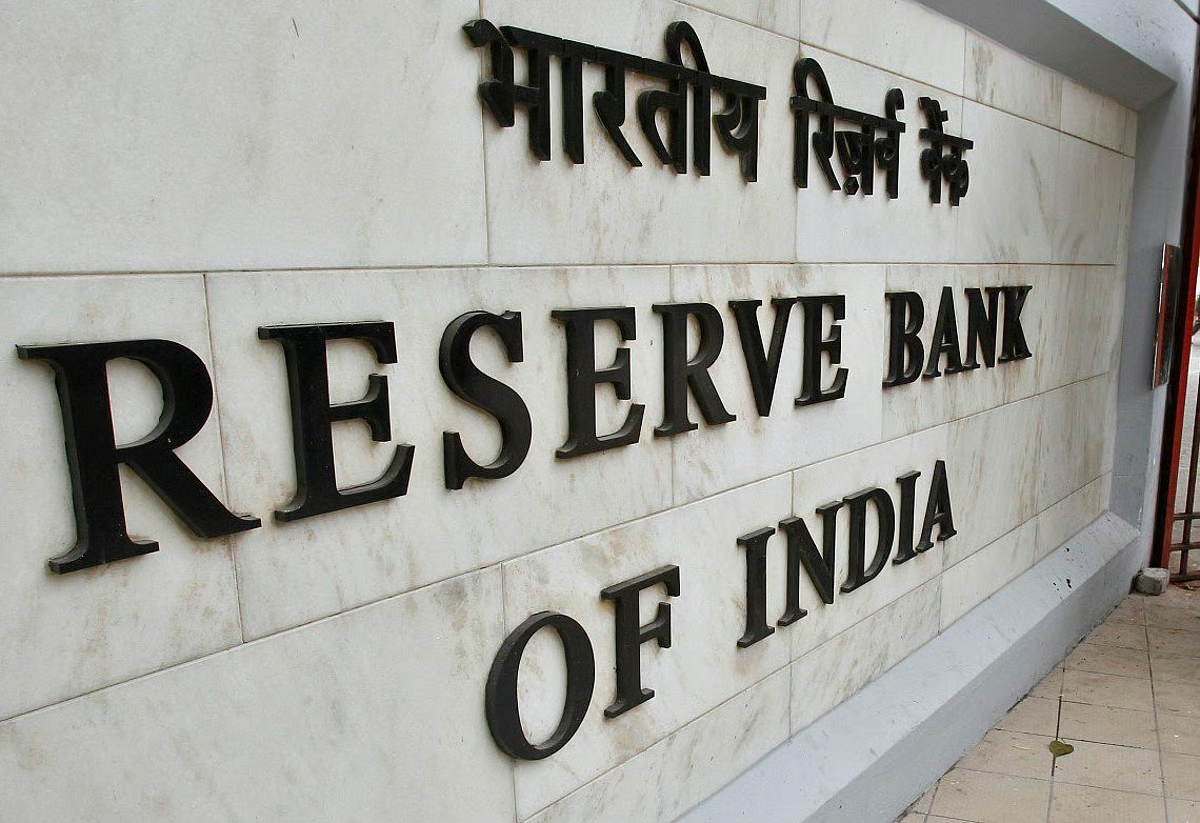
The Reserve Bank of India’s Monetary Policy Committee meets from August 3 to August 5, with Governor Sanjay Malhotra set to announce the decision on the final day. Most economists expect the central bank to hold the repo rate at 5.25 percent, extending a pause that has now lasted three consecutive policy reviews.
The RBI last moved rates in December 2025, cutting the repo rate by 25 basis points to reach its current level. Since then, the MPC has kept rates unchanged through each subsequent meeting, and August looks set to make it four.
Why Economists Expect a Hold
The case for standing pat rests on a mix of persistent inflation risk and unresolved external pressure. ICRA Chief Economist Aditi Nayar said core inflation remains under control, which makes a status quo on rates the most appropriate call for now. She added that the central bank is still likely to communicate caution through its policy guidance rather than signal any dovish shift.
SBI Research struck a similar note. The research arm expects India’s GDP growth for the April-June quarter to surpass 7 percent, outperforming expectations even as the global economy remains clouded by geopolitical tensions and a slowdown in the United States.
But it flagged inflation as the real constraint, projecting CPI inflation to stay above 5 percent over the next two quarters, with the full-year FY27 average likely hovering around the same mark.
Given that combination, SBI Research concluded the RBI is unlikely to adopt an explicitly dovish stance, pointing to elevated oil prices, pressure on the rupee, and volatile capital flows as the factors keeping the central bank cautious.
The Oil and Rupee Angle
Crude oil prices have stayed a persistent worry through this cycle, feeding directly into how the MPC is expected to frame its guidance. RBI Governor Malhotra has repeatedly stressed that inflation remains the central bank’s top priority, with the progress of the monsoon flagged as a crucial swing factor for the months ahead.
On the currency side, there’s been some recent relief. India saw capital inflows of $35 billion in July, which helped push foreign exchange reserves up by $12.5 billion as of July 24. A $13 billion reduction in three-month forward positions by the end of June also eased pressure in the forward market.
The rupee had faced its sharpest strain back in March, and the RBI has since worked to manage that volatility through its forward market strategy, aimed at easing the impact of hedging activity from exporters and importers.
Even with that improvement, SBI Research’s broader read is that persistent imbalances in the global currency market, combined with fluctuating crude prices and continued uncertainty over global capital flows, make an accommodative pivot unlikely at this meeting.
With the MPC’s three-day deliberations beginning August 3, all eyes will be on Governor Malhotra’s August 5 announcement and, just as importantly, on the tone of the accompanying guidance.
A rate hold looks like the consensus outcome, but whether the RBI leans hawkish or leaves room for a cut later in the year will depend on how inflation, oil prices and the monsoon’s progress play out over the coming weeks.

Curated news reports, in-depth analysis, and special features by India’s Opinion editorial team.