
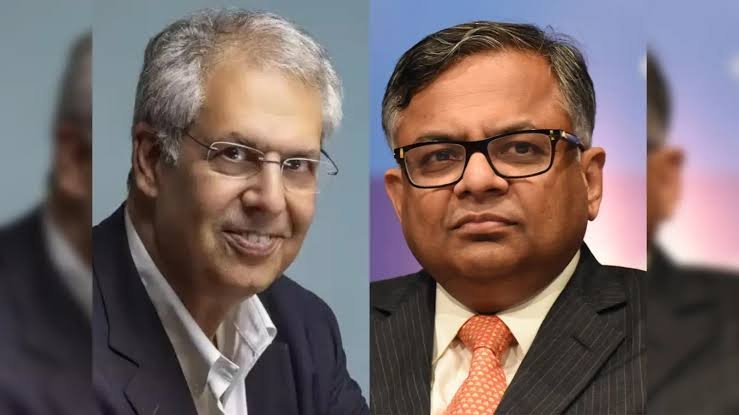
The board of Tata Sons has approved a fresh five-year leadership term for Natarajan Chandrasekaran. Directors voted in favor of his reappointment as executive chairman during a pivotal Mumbai board meeting on Thursday. However, Tata Trusts chairman Noel Tata formally dissented against extending the incumbent chief’s mandate. The decisive resolution grants Chandrasekaran executive authority over the salt-to-software conglomerate until 2032, according to The Indian Express.
The majority of independent and executive directors rallied behind Chandrasekaran during the confidential proceedings. Board members cited the imperative need for organizational continuity amidst sweeping global industrial transformations. Furthermore, directors praised his aggressive expansion across advanced semiconductors, commercial aviation, and renewable technology. Consequently, the holding company reaffirmed absolute faith in his ongoing modernization initiatives across group subsidiaries.
A Dramatic Turnaround at Bombay House
Thursday’s reappointment marks a dramatic reversal following months of intense boardroom maneuvering. In August 2026, Chandrasekaran had informed fellow directors about his intention to step down. Lingering leadership friction emerged within the empire following the passing of patriarch Ratan Tata. However, leading institutional shareholders urged the experienced veteran to reconsider his departure, reports Hindustan Times.
Chandrasekaran first assumed executive leadership of the holding company in early 2017. He successfully stabilized the conglomerate following the unprecedented boardroom dismissal of Cyrus Mistry. Furthermore, his tenure orchestrated the consolidation of fragmented operating businesses into unified market powerhouses. His third five-year term now establishes one of the longest chairmanships in modern corporate history.
Noel Tata’s Push for Succession Restructuring
Noel Tata approached the reappointment resolution with an alternative vision for group governance. As head of Tata Trusts, he oversees the sixty-six percent controlling equity block in Tata Sons. Specifically, he argued that Bombay House required an external search committee and comprehensive succession review. Therefore, he proposed a shorter transition term rather than an automatic five-year extension, as detailed by The Times of India.
The disagreement represents the most significant leadership rift inside the group in recent years. Representatives of philanthropic trusts sought enhanced supervisory oversight across capital allocation strategies. Meanwhile, operational directors stressed that abrupt executive changes could destabilize billion-dollar capital expenditure programs. Ultimately, the broader board concluded that strategic stability outweighed procedural succession deliberations at this juncture.
Navigating the Mandatory Stock Exchange Listing
The boardroom gathering also resolved a long-standing regulatory dilemma concerning public listing requirements. The Reserve Bank of India designated Tata Sons as an upper-layer core investment company. Under banking regulations, systemically significant non-banking lenders must list their shares on public stock exchanges. The board officially decided to pursue public listing rather than petitioning regulators for legal exemptions.
A public market debut will unlock immense shareholder valuation across domestic bourses. Analysts estimate that the landmark listing could easily rank among the largest share offerings in Asia. In addition, listing requirements will enforce rigorous financial transparency and independent board disclosures upon the historic conglomerate. Consequently, investors expect the public debut to reshape India’s primary equity capital markets fundamentally.
Steering India’s Largest Corporate Empire Forward
Chandrasekaran now commands an undisputed mandate to complete critical flagship projects across key subsidiaries. The group continues investing heavily in domestic semiconductor fabrication facilities located in Gujarat and Assam. Furthermore, management is aggressively restructuring Air India into a world-class international full-service carrier. These ambitious industrial ventures demand massive capital commitments and relentless execution discipline over the coming decade.
Market participants and institutional investors welcomed the decisive resolution of leadership uncertainty. Clear leadership authority prevents costly executive paralysis during sensitive macroeconomic headwinds. Meanwhile, both executive management and philanthropic trusts pledged cooperative alignment to uphold the founder’s ethical legacy. Chandrasekaran’s renewed mandate ensures steady

Curated news reports, in-depth analysis, and special features by India’s Opinion editorial team.