Six months of military conflict between the US and Iran squeezed global fuel supplies and drove up energy prices worldwide. However, America’s largest oil corporations turned this major disruption into an era of extraordinary earnings.
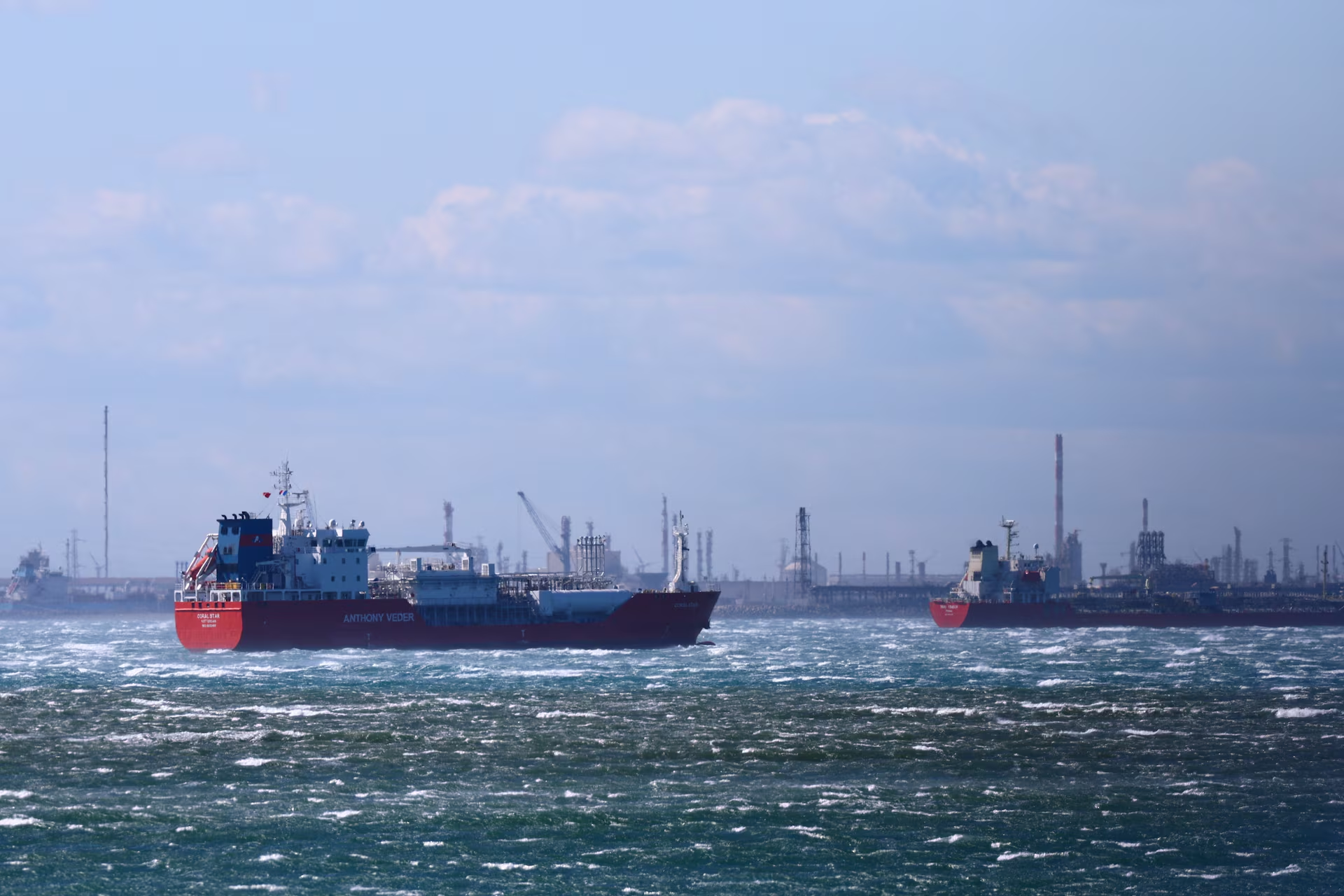
The Strait of Hormuz sits at the center of this supply crisis. The narrow waterway previously carried nearly 20 percent of global oil and gas shipments. Fighting effectively shut down most maritime traffic through the channel, causing immediate global supply shortages.
International crude benchmark Brent crude climbed rapidly from $70 per barrel to over $100 throughout March, April, and May, briefly touching $126. The price spikes triggered severe downstream impacts:
Record Earnings for American Energy Giants
The surge in crude and fuel prices generated unprecedented revenue for major US producers.
Exxon Mobil reported that its second-quarter profit doubled to $14.53 billion. Record diesel production supported the earnings, pushing total revenue up 42 percent to $116.02 billion.
Chevron posted a near-quadrupling of its quarterly profit to $12.07 billion. Its revenue jumped 56 percent to reach $70.06 billion. European producers experienced similar gains, with six major European energy firms generating $22 billion in combined first-quarter profit.
Why Refining Margins Drove Profit Growth
Oil companies do not directly set crude market rates. Global supply, demand, and trader speculation determine oil prices. During the second quarter, US oil prices fluctuated between $68 and $115 per barrel.
Integrated companies with large refining divisions benefited the most. Refineries process raw crude into usable end products like petrol, diesel, and jet fuel.
Chevron’s refining profits rose sixfold compared to the previous year, despite processing lower physical volumes of oil. Refining capacity globally remains severely constrained, especially as major suppliers like Russia and China restrict fuel exports.
US refiners with secure access to crude expanded their market share. US prices for diesel and jet fuel rose roughly 41 percent after the Strait of Hormuz closure.
Criticism and Proposed Windfall Taxes
Surging corporate profits alongside global economic hardship drew sharp criticism from public interest groups and lawmakers.
Fossil fuel policy experts pointed out that energy firms earned record returns while ordinary consumers faced power cuts, food inflation, and higher transportation costs.
In the US Congress, Democratic lawmakers introduced legislation proposing a windfall tax on major oil producers from 2026 onward. The bill targets firms producing or importing over 300,000 barrels per day. The proposal aims to collect excess profits and distribute the revenue directly to consumers struggling with inflation.
However, oil industry executives pushed back against proposed taxes. Exxon Chief Executive Darren Woods warned investors that past European windfall taxes forced the company to cancel planned energy investments.
Unequal Impact Across the Global Market
The financial gains remain unevenly distributed across the global energy market.
Producers operating in North America and regions outside the Persian Gulf sold crude at premium rates without suffering supply chain blockages. Conversely, Middle Eastern producers struggling with transport blockages, damaged infrastructure, or security threats saw revenues decline while operational costs climbed.
Ordinary consumers continue to bear the ultimate burden of the crisis. Gasoline prices in the US rose from under $3 per gallon before the strikes to $4.11 per gallon, increasing everyday costs across the global supply chain.

Curated news reports, in-depth analysis, and special features by India’s Opinion editorial team.