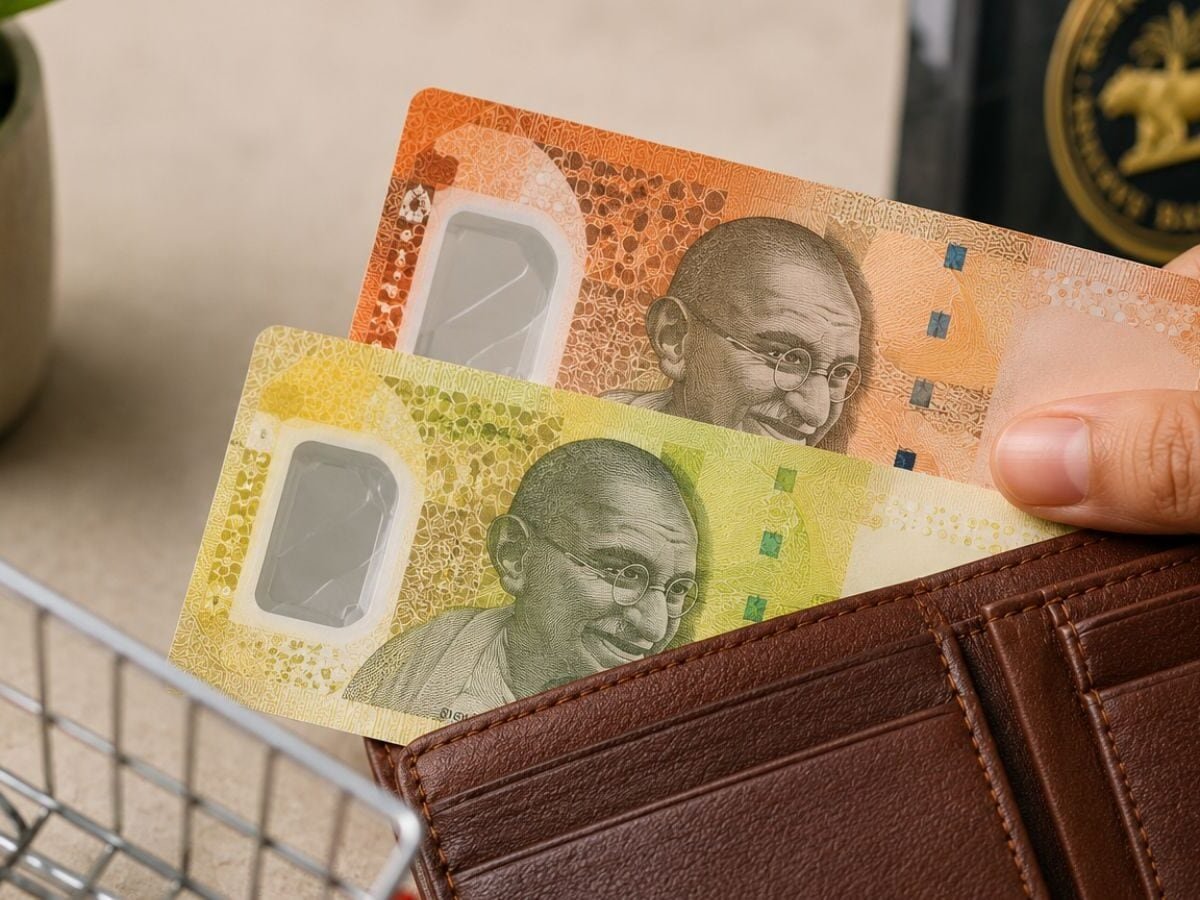
India is set to take its biggest step yet towards introducing plastic currency. This comes after the Centre approved the Reserve Bank of India’s proposal to conduct field trials of polymer banknotes in ₹10 and ₹20 denominations. This initiative marks a milestone regarding India polymer notes in the country.
The decision marks the revival of a proposal that has remained under discussion for more than a decade. However, the government has made it clear that the move is only a pilot project and does not signal the replacement of India’s existing paper currency.
Parliament was informed that the RBI will initially print about two billion polymer notes for field testing under different climatic and circulation conditions. This test run of India polymer notes will help authorities understand their practicality. Only after these trials will any decision on wider adoption be taken.
India Polymer Notes Begin RBI Field Trials
The field trials aim to determine whether polymer notes can withstand India’s demanding conditions better than conventional cotton-based paper notes. With India testing polymer notes in lower-value denominations such as ₹10 and ₹20, authorities are focusing on notes that change hands frequently. Therefore, they wear out much faster than higher-value currency.
Polymer banknotes are designed to last longer, resist water, dirt and tearing, and include advanced security features that make counterfeiting more difficult. Countries including Australia, Canada and the United Kingdom already use polymer currency because of its longer lifespan and improved durability. This has motivated the consideration of India polymer notes for greater resilience and security.
The RBI has explored polymer currency before. A limited trial of ₹10 plastic notes was conducted in selected Indian cities in 2013. However, the project did not expand into nationwide circulation. The latest decision reflects renewed interest as printing costs rise and billions of worn-out notes require replacement every year.
The central bank has also invited global suppliers to provide specialised polymer substrate sheets with embedded security features. This indicates that preparations for India polymer notes have moved beyond the planning stage.
The government has stressed that the pilot should not be confused with demonetisation or a currency replacement programme. Existing paper notes will remain legal tender, and there is no proposal to withdraw them from circulation.
Instead, the RBI will study how polymer notes perform in everyday use before deciding whether the technology should be adopted more widely. Officials will examine durability, printing quality, public acceptance, and long-term costs. The fate of India polymer notes will be decided only after this review and analysis. Only after this review will they take the next step.
Why India Polymer Notes Could Last Longer
Economists say polymer notes could reduce replacement costs over time because each note survives much longer than paper currency. Their improved resistance to moisture and physical damage may also reduce the volume of soiled notes that must be destroyed each year. The durability of India polymer notes could mean fewer note replacements in the long term.
Security experts point to transparent windows and other built-in features that are harder to duplicate, making counterfeit production more difficult.
At the same time, the transition would require new printing processes and investment in specialised materials. As a result, any nationwide rollout of India polymer notes would happen gradually rather than overnight.
What Happens Next for India Polymer Notes
The success of the pilot will determine whether India polymer notes become a permanent part of the country’s currency system. For now, the RBI is testing a limited number of ₹10 and ₹20 notes while maintaining that paper currency will continue to circulate normally.
The results of these trials are expected to shape India’s future currency strategy. In conclusion, India polymer notes could represent the next major upgrade to the rupee if the pilot proves successful.

Curated news reports, in-depth analysis, and special features by India’s Opinion editorial team.