
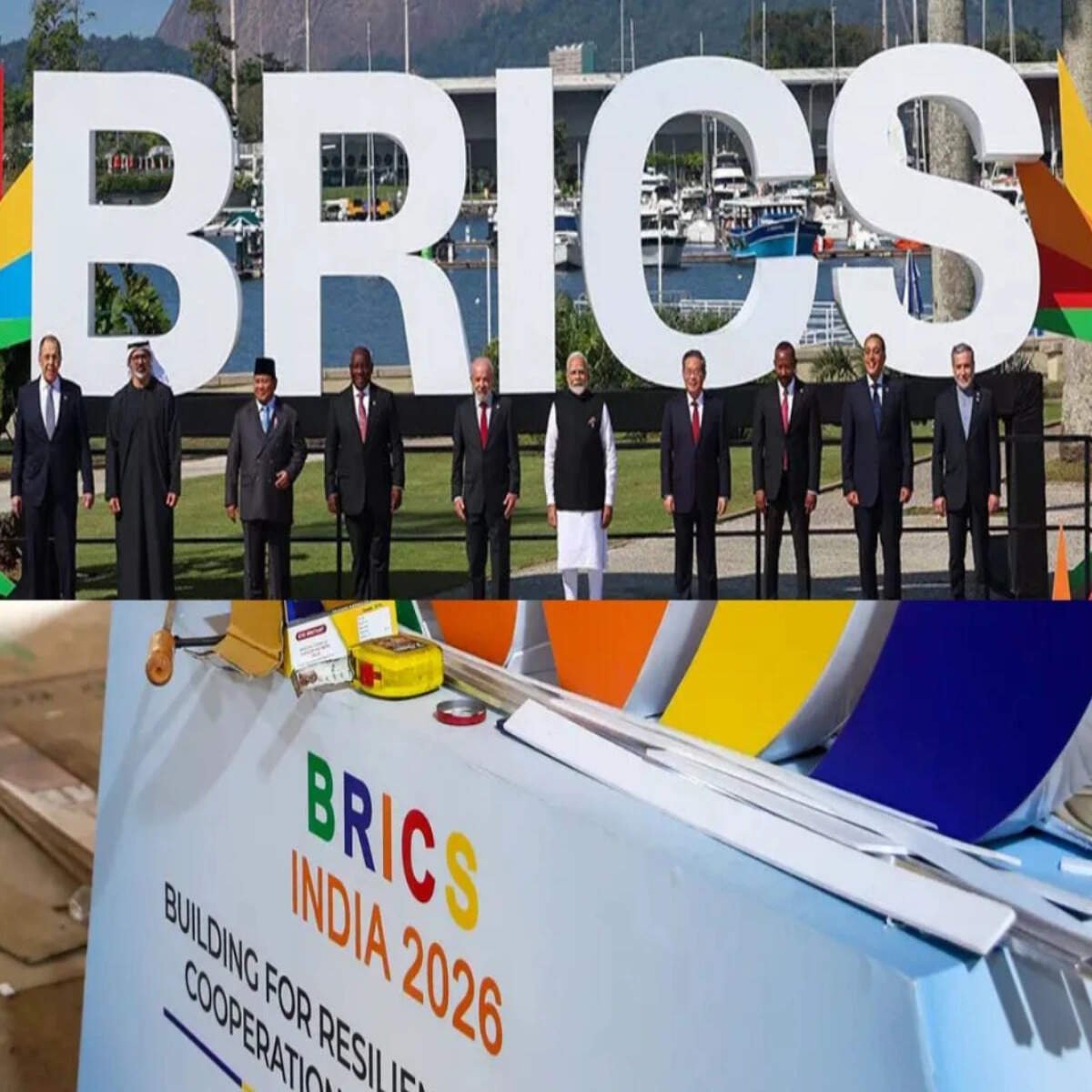
India is pushing a new financial proposal ahead of the BRICS summit in New Delhi on September 12 and 13, seeking closer links between the central bank digital currencies of member states. The proposal could make cross-border payments faster and cheaper, but political and technical obstacles remain.
The BRICS digital currency proposal comes as India chairs the grouping in 2026. The expanded bloc now includes 11 members, bringing together major emerging economies with very different financial systems, currencies and geopolitical interests.
The idea does not amount to a new BRICS currency replacing the US dollar. According to Reuters, Indian officials involved in the discussions see the initiative primarily as a way to improve international payments rather than create a common reserve currency.
What is the BRICS digital currency proposal?
The BRICS digital currency plan centres on connecting existing official digital currencies issued by participating central banks.
Central bank digital currencies, or CBDCs, are digital forms of national currencies issued by monetary authorities.
Unlike private cryptocurrencies, they remain under the control of central banks and operate within national monetary systems.
India has already developed the digital rupee through the Reserve Bank of India.
Other BRICS members are pursuing their own digital-payment and CBDC projects at different stages.
Linking these systems could allow businesses in one member country to make cross-border payments more directly.
The goal would be to reduce delays, transaction costs and dependence on complicated correspondent banking arrangements.
However, the proposal remains at the discussion stage. Reuters reported that limited adoption of digital currencies around the world could make implementation difficult.
Why India wants faster BRICS payments
The BRICS digital currency initiative builds on work that predates India’s current presidency.
At the 2025 BRICS summit in Rio de Janeiro, member states endorsed further discussions on cross-border payments and greater interoperability between their payment systems.
The official declaration called for faster, lower-cost, more accessible, transparent and secure transactions.
The declaration also recognised that better payment links could support trade and investment between BRICS members and other countries.
For India, the proposal fits into a broader effort to promote efficient digital payments.
India’s UPI system has already become a major part of the country’s domestic payments infrastructure, while agreements with several countries have expanded its international reach.
A BRICS-wide arrangement would be much more complicated. Each member operates under different banking regulations, currency controls, cybersecurity standards and monetary policies.
Is this an alternative to the US dollar?
The BRICS digital currency debate has often been linked to the wider discussion about de-dollarisation.
That connection needs careful qualification.BRICS countries have discussed greater use of local currencies and alternative payment mechanisms for years.
The 2024 Kazan Declaration backed faster and more inclusive cross-border payment instruments and encouraged settlements in local currencies.
It described the BRICS Cross-Border Payments Initiative as voluntary and non-binding.But that is different from creating a single currency.
Russia has also recently said it does not seek “de-dollarisation” as a formal objective and remains open to different payment methods.
India’s current approach appears more practical than ideological. Reuters reported that New Delhi does not intend to replace the dollar through the CBDC proposal.
Instead, the emphasis is on making transactions between BRICS economies easier.
That distinction could help India build consensus among members with very different views of the global financial system.
Why the BRICS digital currency plan faces hurdles
The biggest challenge is that technology alone cannot solve political disagreements.
BRICS now includes countries with competing strategic interests. India and China have improved some aspects of their relationship, but mutual distrust remains after years of border tensions.
Reuters reported that India has been reluctant to deepen certain forms of financial connectivity with China because of national security concerns.
Iran and the United Arab Emirates present another complication. Their financial relationships have also been affected by geopolitical tensions, making a common payment architecture harder to design.
Currency imbalances create another problem.Suppose a Brazilian company imports heavily from India.
A payment network can transfer money, but it cannot automatically resolve the underlying imbalance between the two countries’ currencies and trade flows.
Reuters reported that currency-swap arrangements could be needed to make a broader CBDC network work effectively.
What could change for businesses?
If implemented successfully, the BRICS digital currency system could reduce some of the friction surrounding international trade.
A small exporter could potentially receive payment from a foreign buyer without relying on several layers of intermediary banks.
Faster settlement could also reduce the period during which businesses face exchange-rate risk.
Banks could benefit from improved interoperability between national payment systems.
Governments could gain additional options for settling legitimate trade and investment transactions.
The gains would depend heavily on the system’s design.A network that connects incompatible currencies without common technical standards would create new complications rather than remove them.
Participants would need rules covering identity verification, fraud prevention, cybersecurity, data protection and dispute resolution.
The system would also need to comply with each country’s financial regulations.
What BRICS has already agreed on
The BRICS digital currency proposal is part of a much wider financial agenda.
The bloc’s 2025 leaders’ declaration instructed finance ministers and central bank governors to continue discussions on its Cross-Border Payments Initiative.
The document also welcomed technical work examining possible ways to improve interoperability between national payment systems.
Earlier BRICS documents also discussed BRICS Clear, a possible cross-border settlement and depositary infrastructure.
Participation in those initiatives has been described as voluntary.This history shows that the current proposal did not appear suddenly.
BRICS has spent several years exploring ways to reduce payment friction and increase the use of local currencies.
The CBDC proposal represents a newer technological route toward some of those goals.
Could it weaken the dollar?
The BRICS digital currency initiative could eventually reduce the need for dollars in some bilateral transactions, but that would not automatically threaten the dollar’s global position.
The US currency remains deeply embedded in international trade, financial markets, banking and central-bank reserves.
A payment network is also different from a reserve currency.For BRICS members, the more immediate objective is likely to gain additional payment options.That distinction matters for India.
New Delhi has maintained strong economic relationships with the United States while also seeking greater financial cooperation with other emerging economies.
A system that improves payment efficiency without requiring members to abandon the dollar could therefore be easier to negotiate.
What happens next?
The BRICS digital currency proposal is still far from becoming a fully functioning multinational payment network.
The September summit could produce political support, technical discussions or a roadmap, but implementation would require years of coordination.
The key test will be whether BRICS members can agree on common standards while retaining control over their own currencies and financial systems.
For India, the proposal offers a way to promote its digital-payment expertise while strengthening economic ties across the Global South.
For the wider bloc, it represents an attempt to make cross-border commerce more efficient without necessarily creating a common currency.
Whether that ambition becomes a working financial network will depend less on the technology itself than on trust between the countries expected to use it.

Curated news reports, in-depth analysis, and special features by India’s Opinion editorial team.