
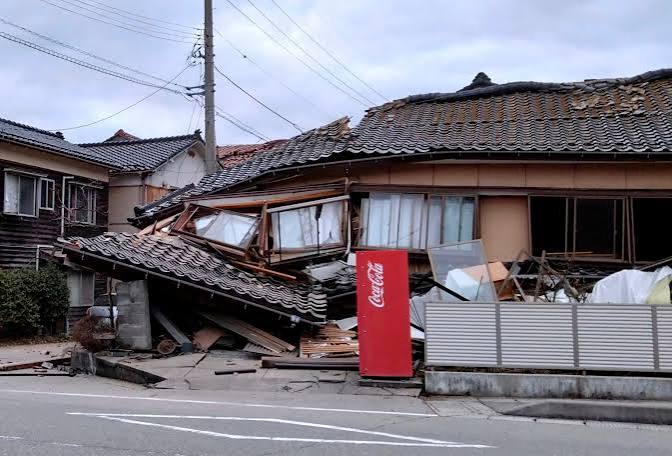
A powerful Japan earthquake struck the southern island of Kyushu on Tuesday, prompting authorities to issue a tsunami advisory, suspend transport services, and deploy emergency teams. Officials urged residents to stay away from coastal areas while engineers inspected roads, rail lines, airports, and public infrastructure for damage.Reuters
Japan earthquake shakes Kumamoto
The Japan earthquake had a preliminary magnitude of 7.1, according to the Japan Meteorological Agency (JMA). The U.S. Geological Survey later estimated the event at magnitude 6.8. The epicentre lay near Kumamoto Prefecture, a region that experienced a devastating series of earthquakes in 2016.Reuters
Authorities issued a tsunami advisory for Ariake Bay and nearby coastal waters. Forecasts suggested waves of up to one metre, although officials said no destructive tsunami had been observed in the initial hours after the quake. Residents in low-lying coastal communities were advised to move to higher ground until the advisory was reviewed. AP News
Emergency response after Japan earthquake
Prime Minister Sanae Takaichi instructed emergency agencies to assess damage and coordinate rescue operations. Local governments opened emergency response centres while firefighters and police inspected buildings, bridges and public facilities.
Rail operators temporarily suspended Shinkansen services for safety checks. Flights at Aso Kumamoto Airport also paused as engineers inspected runways and airport infrastructure. Around 40,000 homes reportedly experienced power outages in parts of Kyushu.
Japan’s Nuclear Regulation Authority said inspections found no abnormalities at nearby nuclear facilities. Officials stressed that monitoring would continue as aftershocks remained possible.
Why the Japan earthquake matters
The Japan earthquake occurred along one of the world’s most active seismic zones. Japan sits on the Pacific Ring of Fire, where several tectonic plates meet. The country experiences thousands of earthquakes every year, although only a small number cause widespread damage.
Kumamoto remains closely associated with the destructive 2016 earthquake sequence that killed hundreds of people and caused extensive damage across the region. That history has made emergency preparedness a priority for local authorities and residents.
The JMA warned that strong aftershocks could continue for the next several days. Disaster management officials asked residents to monitor official alerts, avoid damaged structures, and follow evacuation instructions if fresh warnings are issued.
As inspections continue, authorities are expected to release updated information on casualties, infrastructure damage and transport restoration.
The Japan earthquake serves as another reminder of the country’s constant exposure to seismic hazards and the importance of rapid emergency preparedness.Featured Image Suggestion: Cracked road with emergency responders after the Kyushu earthquake, showing damaged infrastructure and rescue vehicles.

Curated news reports, in-depth analysis, and special features by India’s Opinion editorial team.