
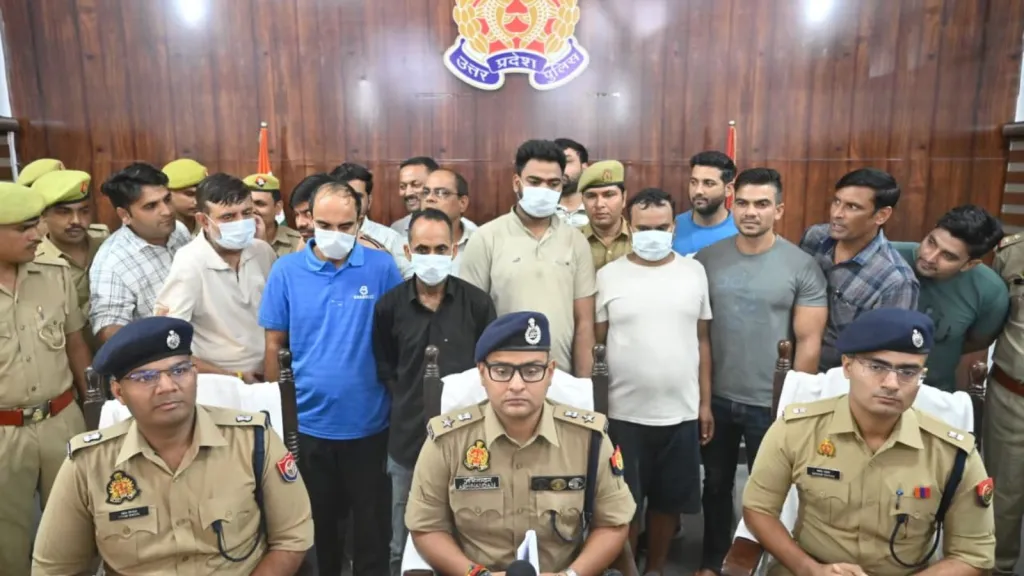
Uttar Pradesh Police busted an interstate counterfeit currency syndicate operating an illegal minting factory. Law enforcement officers arrested key gang members during a targeted raid in western Uttar Pradesh. The syndicate allegedly manufactured and circulated counterfeit ₹20 coins worth an estimated ₹70 crore over several years. Investigators disclosed the extensive operation on Monday following preliminary interrogations, according to The Indian Express.
The counterfeit network operated across multiple northern states, including Uttar Pradesh, Haryana, and Delhi-NCR. Police seized industrial stamping machinery, hydraulic presses, and thousands of finished counterfeit coins. The suspects used sophisticated metal dies to replicate genuine Reserve Bank of India designs. Consequently, traders and shopkeepers accepted the fake coins without raising suspicion.
How the Clandestine Minting Factory Operated
The criminal syndicate established a discreet manufacturing facility inside an isolated rural property. The operators masked heavy machine noises behind high boundary walls and agricultural sheds. They procured heavy hydraulic presses to imprint metallic blanks with exact denominations and national emblems. Furthermore, the gang hired skilled lathe workers to cut precision metal dies.
The manufacturing process utilized bimetallic alloy sheets matching the color and weight of legal tender. The inner core and outer ring mimicked genuine nickel-brass composition remarkably well. Meanwhile, the gang sourced scrap brass and iron sheets from industrial salvage yards across Delhi-NCR. Therefore, the production cost per counterfeit coin remained well below five rupees.
Exploiting Wholesale Mandis and Small Retailers
The syndicate carefully developed an expansive underground distribution chain to push the coins into open circulation. Unlike high-denomination currency notes, ordinary citizens rarely inspect metallic coins for subtle security flaws. The gang targeted busy vegetable mandis, weekly rural markets, and toll plazas. Consequently, millions of counterfeit coins slipped easily into routine day-to-day transactions.
The masterminds offered huge commissions to intermediary couriers and regional retail conduits. Agents purchased bags containing fake coins worth ₹1,000 for just ₹600 in genuine currency. Furthermore, couriers distributed smaller batches to auto-rickshaw drivers, tea stall vendors, and liquor shops. This widespread retail dispersion allowed the syndicate to circulate ₹70 crore worth of fake coins undetected.
Massive Seizure of Industrial Stamping Machinery
Specialized tracking units raided the illegal production unit following actionable intelligence from informant networks. Officers cordoned off the premises and arrested several operators working the assembly lines. Police recovered heavy stamping machines, cutting tools, and specialized coin-embossing instruments. In addition, search teams seized raw metal discs and sacks of freshly minted coins.
Technicians also recovered discarded batches where metal stamping showed minor alignment defects. The gang regularly melted defective coins to reuse base alloys for subsequent production runs. Meanwhile, forensics teams cataloged the confiscated industrial hardware for technical court presentation. Investigators described the recovery as one of the largest coin-counterfeiting busts in regional history.
Financial Investigation and Inter-State Distribution Links
Police teams are now investigating the wider financial network bankrolling the illegal operation. Interrogations revealed that the gang maintained active distribution agents across western Uttar Pradesh and neighboring states. Investigators are tracking banking transactions and digital payment trails belonging to the kingpins. Furthermore, police seek to identify scrap metal dealers who knowingly supplied specialized metal discs.
Senior officers confirmed that teams will conduct coordinated raids across several satellite distribution points. Police have invoked severe provisions of the Bharatiya Nyaya Sanhita related to counterfeiting government currency. In addition, the state administration is moving to seize properties acquired through illicit counterfeit earnings. Police leadership affirmed that dismantling the entire distribution network remains an urgent priority.
Public Advisory on Identifying Counterfeit Coins
Authorities urged business owners and local shopkeepers to exercise greater vigilance while handling metallic currency. Although the fake coins closely resembled official currency, subtle differences exist upon close examination. Genuine coins feature crisp, deeply engraved serrations and clear national emblem contours. In contrast, counterfeit coins frequently show irregular milling along edges and slightly lighter weights.
Bank branches across western districts have received alerts to scan incoming coin deposits from retail businesses. Financial institutions will use automated weight-sorting machines to isolate suspicious metallic batches. Meanwhile, police requested citizens to report any individual offering coin bags at steep discounts. The decisive crackdown brings an end to a sophisticated economic fraud targeting daily wage earners.

Curated news reports, in-depth analysis, and special features by India’s Opinion editorial team.