
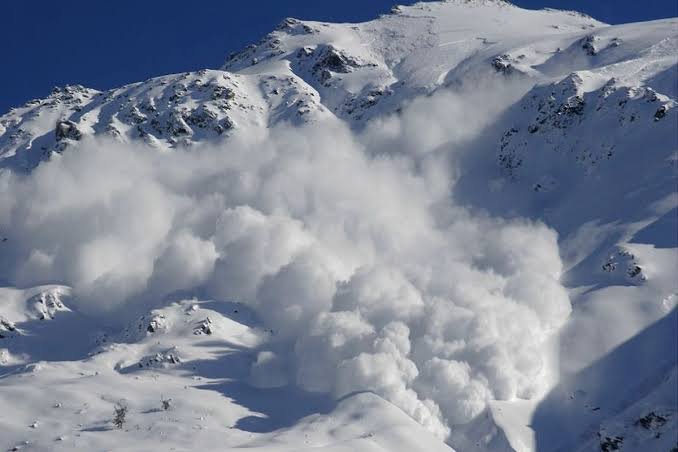
A rescue operation on one of Pakistan’s highest mountains has turned into a recovery mission after an avalanche left 10 climbers missing. Four bodies have now been located on Broad Peak, while rescuers continue searching for the remaining six climbers amid difficult weather conditions.
The avalanche struck the mountain on Thursday as an international climbing team attempted to ascend Broad Peak in Pakistan’s Karakoram range.
The climbers lost communication with their base camp after the avalanche, prompting authorities and mountaineering organisations to launch a search operation.The discovery of four bodies marks a grim development in the operation.
Authorities were working to retrieve the bodies from the mountain, while poor weather continued to make the search dangerous.
Pakistan avalanche strikes Broad Peak
The avalanche occurred on Broad Peak, which rises to about 8,047 metres and ranks among the world’s highest mountains.
The mountain is part of the Karakoram range, an area known for difficult terrain, extreme weather and demanding climbing conditions.According to the Alpine Club of Pakistan, the climbing team lost contact after the avalanche.
Army helicopters joined the search and rescue operation, but weather conditions limited their ability to reach the affected area.Rescuers have had to work under rapidly changing mountain conditions.
Heavy snow, strong winds and the risk of further avalanches can make approaching the disaster site extremely dangerous.
Four bodies located, six climbers remain missing
Search teams located four bodies at the avalanche site on Friday. Officials said efforts were underway to retrieve them from the mountain.
The identities of all four victims had not immediately been confirmed by authorities.
Earlier reports identified some members of the expedition, but officials were still working through the identification process.Six climbers remain unaccounted for.
The continuing search has therefore become a race against time.At high altitude, prolonged exposure to freezing temperatures can quickly reduce the chances of survival.
Rescue teams must also balance the urgency of the operation against the danger posed by unstable snow and worsening weather.
International team caught in avalanche
The expedition included climbers from several countries, making the disaster an international mountaineering incident.
Among those reported missing is British-Nepali mountaineer Nirmal “Nimsdai” Purja, one of the world’s best-known high-altitude climbers.
Purja has climbed all 14 of the world’s 8,000-metre peaks and has gained international recognition for his mountaineering achievements.
Other members of the expedition included climbers from Nepal, Pakistan, Oman and the United States, according to reports published after the avalanche.
The international composition of the team has drawn attention from mountaineering communities in several countries, with families and fellow climbers waiting for further information from the rescue operation.
Weather complicates rescue efforts
The biggest immediate challenge is the weather.Officials said poor conditions were hampering helicopter operations on Friday.
Ground teams have therefore played an important role in reaching the avalanche area and locating those caught in the disaster.
Helicopter access is especially important on Broad Peak because of the altitude and difficult terrain. Aircraft can move rescuers and equipment much faster than teams travelling across steep and snow-covered slopes.
But helicopters cannot operate safely in all conditions. Strong winds, cloud cover and poor visibility can prevent flights or force aircraft to turn back.
That has left rescuers dependent on conditions improving enough to continue the operation.
Broad Peak remains one of Pakistan’s major climbing challenges
Broad Peak is one of the world’s 14 mountains higher than 8,000 metres. Its summit reaches roughly 8,047 metres above sea level.
The mountain lies in the Karakoram, a region that includes several of the world’s highest peaks.
But climbing in the Karakoram carries serious risks.
Avalanches represent one of the greatest dangers. Snow can become unstable because of weather changes, snowfall, temperature shifts and the structure of the mountain slopes.
At extreme altitude, rescue operations become more difficult because both rescuers and survivors face reduced oxygen levels and severe cold.
Search operation continues
Pakistan’s authorities and mountaineering organisations are continuing efforts to locate the remaining missing climbers.
The Alpine Club of Pakistan has been involved in coordinating the response with government authorities and rescue agencies. Army helicopters have also supported the search.
The immediate priority is to determine whether any of the six missing climbers can still be found alive.
Rescuers must also recover the bodies already located and establish the identities of those who died.The operation could continue to depend heavily on weather conditions over the coming hours.
Families wait for answers
For the families of the missing climbers, the uncertainty remains particularly difficult.
Until rescuers locate the remaining members of the expedition, authorities cannot provide definitive information about their fate. The identification of recovered bodies will also take time, particularly in a remote and dangerous mountain environment.
Mountaineering organisations are closely monitoring developments as rescue teams continue their work.The disaster is also a reminder of the risks faced by climbers attempting the world’s highest peaks.
Even experienced mountaineers can face sudden changes in conditions, while an avalanche can transform a climbing route within seconds.
The discovery of four bodies has made the situation more urgent, but the rescue mission is not over. Six climbers remain missing on Broad Peak, and teams are still searching despite the severe conditions. The coming hours will determine whether rescuers can reach the remaining climbers and bring the operation to a close.India’s Museums Are Changing How We Experience History

Curated news reports, in-depth analysis, and special features by India’s Opinion editorial team.