
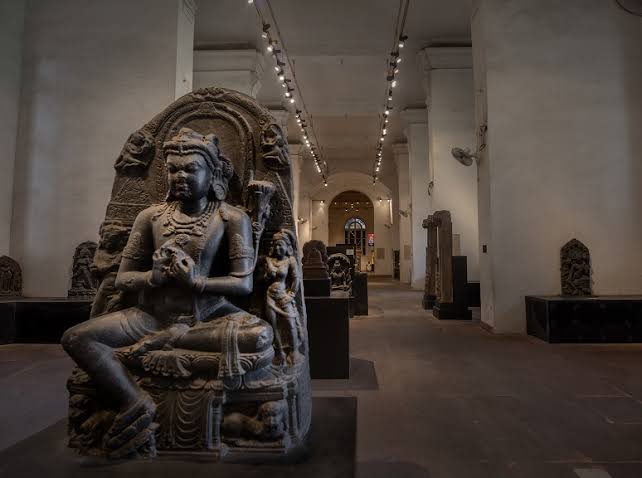
India’s museums are entering a new phase as institutions across the country rethink how people encounter history, art and cultural heritage. The change comes as museums face pressure to attract younger visitors, improve accessibility and protect fragile collections.For decades, many Indian museums followed a familiar model.
Visitors walked through galleries, read labels and viewed objects behind glass. That model is now evolving.Digital displays, audio guides, redesigned galleries and interactive exhibitions are changing the museum experience.
The shift also reflects a wider question: how can museums preserve the past while speaking to a generation raised on smartphones and visual media?
Why India’s museums are changing
India has one of the world’s richest cultural collections. Its museums hold archaeological objects, paintings, sculptures, manuscripts, textiles and objects connected to everyday life.Yet the quality of the visitor experience has varied widely.
Some institutions have faced concerns over outdated displays, limited accessibility and inadequate public engagement.The government has also pushed museum modernisation through projects linked to the Ministry of Culture.
These efforts focus on conservation, infrastructure, digitisation and improved visitor facilities.
The need for change extends beyond technology. Museums must also decide whose stories they tell and how they present them.
A modern museum cannot rely only on the importance of its collection. It must help visitors understand why an object matters.
Digital technology is reshaping museum visits
Technology now plays a larger role in museum design. Digital screens can provide additional historical context without overcrowding display cases.Virtual tours and online collections can also reach people who cannot visit a museum in person.
This matters in a country where major cultural institutions remain concentrated in certain cities.Some museums have introduced interactive displays, multimedia presentations and digital archives.
These tools can make complex historical subjects easier to understand.Still, technology does not automatically improve a museum.
Poorly designed screens can distract visitors from the original object.The strongest exhibitions use technology as a supporting tool. The artefact remains the centre of the experience.
Digital access cannot replace physical collections
Online exhibitions have expanded access to culture. They also help researchers, students and international audiences explore collections remotely.But a digital image cannot fully reproduce the experience of seeing an original sculpture, manuscript or painting.
Material, scale and craftsmanship often carry information that a screen cannot show.This creates a balance that museums must manage carefully.
Digital access should expand public engagement without weakening the importance of physical conservation.
Museums are becoming more visitor-focused
The new museum model places greater emphasis on how visitors move through an exhibition.
Clearer information, better lighting and improved accessibility can make a major difference.
Families, school groups, older visitors and people with disabilities may all require different forms of support.The change also affects exhibition writing.
Long academic descriptions often fail to engage general audiences.Shorter labels, visual explanations and multilingual content can make collections easier to understand.
This approach does not mean reducing history to simple stories. It means presenting complex information in a form that more people can follow.
The challenge of preserving India’s cultural heritage
Modernisation cannot be separated from conservation.India’s museums hold objects that may be hundreds or thousands of years old.
Temperature, humidity, light and pollution can damage these collections.Conservation requires trained professionals, specialised facilities and sustained funding.
Digitisation can help create records of collections. It cannot replace the physical work needed to protect original objects.Museums also face the challenge of documenting collections properly.
Accurate records help researchers and reduce the risk of objects becoming disconnected from their historical context.
A debate over access, interpretation and ownership
Museum reform also raises difficult questions.
Who decides how history should be displayed? Which communities should have a voice in interpreting cultural objects? How should museums address contested histories?These questions have no single answer.
A museum may present an object as a work of art, an archaeological discovery, a religious artefact or evidence of social history. Each approach can shape how visitors understand the past.
Curators therefore carry a major responsibility. Their choices influence which stories receive attention and how audiences interpret them.
The debate becomes even more complex when museums display objects connected to colonial-era collections or disputed ownership claims.
Young audiences are changing museum expectations
Young visitors increasingly expect museums to offer more than static displays.
They look for engaging storytelling, visual experiences and opportunities to explore subjects at their own pace.This does not mean every museum needs to become an entertainment centre.
The challenge lies in combining public engagement with historical accuracy.
Schools and universities also have a role to play. Regular educational visits can help young people see museums as places for discovery rather than compulsory excursions.
A stronger connection between museums and education could help create long-term audiences.
What comes next for India’s museums
India’s museums are likely to continue expanding their digital services and redesigning visitor spaces. The success of these efforts will depend on more than new technology.
Institutions will need trained staff, careful conservation policies and credible historical interpretation.
They will also need to reach audiences beyond major metropolitan centres.The future of India’s museums will ultimately depend on how well they connect preservation with public access.
A museum must protect the past, but it must also make that past meaningful to people living in the present.The next stage of museum development will therefore be judged not only by new buildings or digital screens.
It will be judged by whether more people can enter these institutions, understand their collections and see their own history reflected in the stories being told.
Umar Khan is a writer driven by curiosity and a passion for understanding the world. Through thoughtful analysis and evocative storytelling, he seeks to make complex ideas accessible, inspire meaningful conversations, and encourage fresh perspectives on the people, places, and issues that shape our shared future.