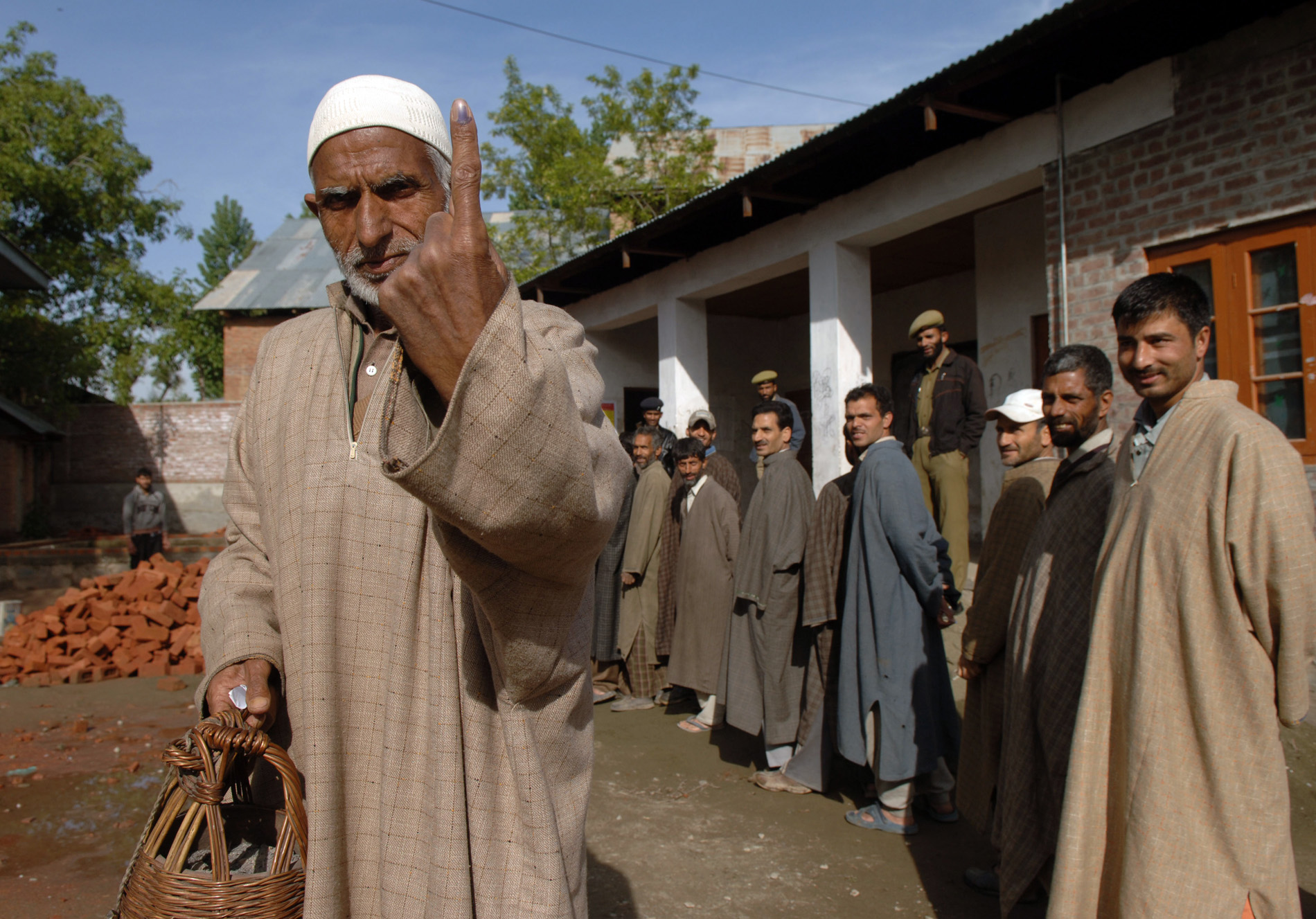
Voters in the Pakistan-occupied Kashmir region are heading to the polls this summer. They will elect members of the territory’s Legislative Assembly. Those members will then choose a prime minister to form the local government.
The vote won’t settle the decades-old dispute over Kashmir, a territory claimed in full by both India and Pakistan. However, both countries will be watching closely. The result feeds directly into their competing narratives over the region. The campaign has already been overshadowed by controversy over 12 assembly seats reserved exclusively for refugees from India-occupied Kashmir living elsewhere in Pakistan. Critics say those seats give non-residents outsized influence over local politics.
The election also lands at a difficult moment for Islamabad. Pakistan’s government is managing a fragile economic recovery after years of high inflation and a balance-of-payments crisis. It has also required successive IMF bailouts. Moreover, it is also handling heightened tension with India following military clashes in 2025. There is also unrest along its northern border with Afghanistan.
How the vote works
The election happens once every five years and will decide 45 of the 53 seats in the Legislative Assembly. Of those directly elected seats, 33 come from constituencies within the territory. Meanwhile, 12 are chosen by voters registered as refugees from India-occupied Kashmir living elsewhere in Pakistan. Eight further seats are reserved, five for women and one each for a religious scholar, a technocrat, and an overseas Kashmiri. These are filled by the newly elected lawmakers roughly in proportion to each party’s strength.
The local government handles areas like health, education and security. However, Pakistan’s federal government keeps control over defence, foreign affairs and key constitutional matters relating to Kashmir. This limits how much autonomy the elected assembly actually has.
Polling was originally set for a single day but is now happening in three phases: July 27 in Mirpur division, August 2 in Muzaffarabad division and the refugee constituencies, and August 10 in Poonch division. The Election Commission said the staggered schedule followed consultations with political parties. It was driven partly by security concerns in Poonch, where unrest had persisted for weeks.
What’s driving the campaign
The 12 refugee-only seats remain the sharpest point of dispute. Critics want them abolished, arguing they hand non-residents disproportionate say over local affairs. On the other hand, Pakistan defends the seats as constitutionally protected representation for displaced Kashmiris. This is tied to its longstanding position that the entire former princely state of Jammu and Kashmir remains disputed.
Cost of living has become just as central an issue. Rising electricity prices, unemployment and inflation have fuelled public anger. As a result, many residents want a larger share of revenue from the hydropower projects built in the territory.
That anger has powered the rise of the Joint Awami Action Committee, a coalition of traders, lawyers, transport workers and students pushing for lower electricity and food prices, governance reforms and greater accountability. The movement has triggered deadly protests and legal battles. Additionally, it has pushed the debate well beyond party politics into questions about the territory’s relationship with Islamabad. The local government, backed by Islamabad, has responded with a crackdown. This has included arrests of activists, restrictions on demonstrations and clashes with security forces.
Why the result matters for Pakistan
The vote arrives amid heightened India-Pakistan tension following last year’s military clashes. It also comes alongside deteriorating security on Pakistan’s western border with Afghanistan, where cross-border militant attacks have strained ties with the Taliban government.
For Islamabad, this is a test of both its authority in the territory and its broader case on the Kashmir dispute. A peaceful vote with strong turnout would let the government argue its governance remains credible despite months of unrest. However, disputes over the process, or continued protests, could instead fuel calls for constitutional reform and greater local autonomy. It’s also the first major political test for Islamabad since two years of protests exposed deep frustration over living costs. Prolonged unrest could weigh on investor confidence as the government tries to lock in a fragile economic recovery.
What it means for India
The election is unlikely to have direct political consequences inside India, which doesn’t recognise Pakistan’s control of the territory. India maintains that the entire former princely state, including the Pakistan-administered portion, is part of India.
But the conduct of the vote will likely feed into India’s own narrative on Kashmir. Any allegations of polling irregularities or renewed unrest would probably be cited by Indian officials as evidence of governance failure. India’s Ministry of External Affairs has already used the unrest to criticise Islamabad. In mid-July, spokesperson Randhir Jaiswal said the protests were a direct consequence of what he called Pakistan’s decades-long exploitation and administrative oppression in the territory. He also called on the international community to hold Islamabad accountable.
The roots of the dispute
Kashmir sits in the Himalayas, bordered by India, Pakistan and China, and is currently split among all three. India administers Jammu and Kashmir and Ladakh. Additionally, Pakistan controls Pakistan-occupied Kashmir and Gilgit-Baltistan. China holds Aksai Chin and the Trans-Karakoram Tract.
The dispute traces back to the 1947 partition of British India, when the rulers of more than 560 princely states had to choose between joining India or Pakistan. The Hindu ruler of Muslim-majority Jammu and Kashmir initially wanted independence. However, after tribal fighters entered the region from Pakistan in October 1947, Maharaja Hari Singh signed the Instrument of Accession to India in exchange for military help. India considers that accession legally final; Pakistan disputes its validity and wants the territory’s future decided through a UN-backed plebiscite.
The two countries now face off along the roughly 460-mile Line of Control, a boundary the UN originally set as part of a ceasefire after the 1947 war. India accuses Pakistan of sponsoring militants active in Kashmir, a charge Islamabad denies. Instead, Islamabad accuses India of mistreating Kashmiri Muslims and describes the militants as freedom fighters. India maintains that these groups are trained and funded by Pakistan’s military. Furthermore, their leaders live freely inside the country.
With polling staggered across three dates through August 10, the final composition of the assembly, and how cleanly each phase is conducted, will shape which narrative gains ground once counting is complete. Whether the Joint Awami Action Committee’s momentum translates into actual seats, or whether established parties hold their ground, will be one of the clearest signals of how deep the cost-of-living discontent runs beyond the protest movement itself.

Curated news reports, in-depth analysis, and special features by India’s Opinion editorial team.