
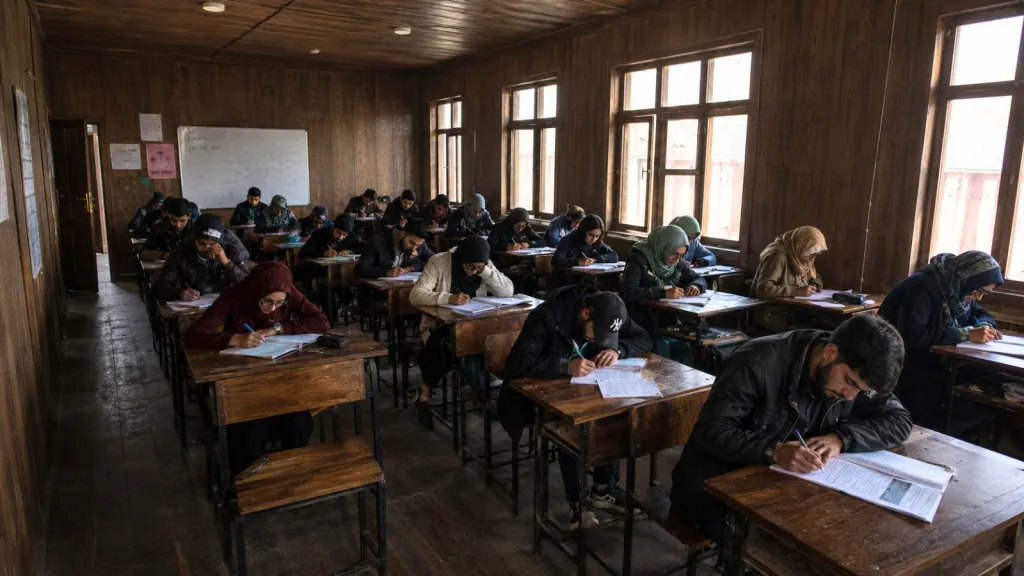
Classrooms across the Kashmir Valley came back to life on Monday. Schools reopened after a 20-day closure. This closure was triggered first by a punishing heatwave and then by relentless rain. In Jammu, the story took a different turn: authorities have ordered that any school building damaged by recent rains stay locked until it’s cleared as safe.
Why Kashmir schools shut in the first place
The closures began on July 6, when an unusually intense summer forced the administration to announce a 13-day break across the Valley. The heat eventually broke around July 18. However, relief was short-lived. Heavy rainfall and flood-like conditions followed almost immediately. This situation pushed the government to extend the holidays twice more—first to July 22, then to July 26.
With weather conditions finally improving over the weekend, officials confirmed there would be no further extension. Students returned to classrooms on Monday morning as scheduled.
While Kashmir reopened, Jammu division moved to lock down anything unsafe. Divisional Commissioner Ramesh Kumar directed district authorities during a review meeting to identify school buildings damaged by the rains. They were asked to lock them immediately and keep them closed until repairs are complete and the structures are certified fit for use.
Deputy commissioners across the division have been tasked with carrying out that inspection process. Officials said student safety would remain the administration’s top priority as repair work gets underway.
A rising toll from the rains
The same review meeting took stock of the human cost of the past week’s weather. Officials said at least 27 people have died and six remain missing in rain-related incidents across Poonch, Rajouri, Doda and Ramban districts since July 19. Landslides and flash floods have battered these districts through the period. Rescue operations in some areas are still ongoing.
Kumar directed authorities to prioritise restoring damaged roads, power supply and other public infrastructure across the affected districts. District administrations have also been told to speed up ex-gratia payments to affected families. In addition, they must ensure adequate stocks of foodgrains, LPG cylinders and essential medicines are in place.
With fresh rainfall forecast for July 29 and 30, officials have also been asked to closely track water levels in rivers, streams and nallahs. They must issue timely alerts if conditions turn dangerous again.
Kashmir’s return to routine offers a brief sense of normalcy. However, Jammu’s situation remains far more precarious. With more rain forecast within days and repair work only just beginning on damaged school buildings, the coming week will test whether the region’s infrastructure and relief measures can hold up before the next spell arrives.

Curated news reports, in-depth analysis, and special features by India’s Opinion editorial team.