
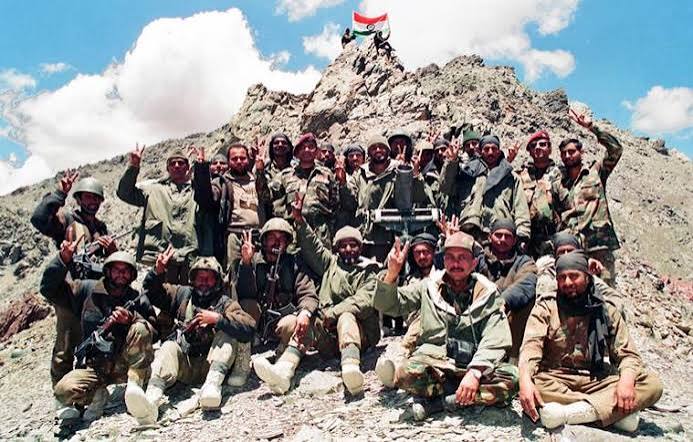
India is observing Kargil Vijay Diwas 2026 on July 26. The day marks the 27th anniversary of India’s victory in the 1999 Kargil War.
The anniversary remains closely linked to the soldiers who fought at extreme heights. Many battles took place in steep and icy terrain. Indian troops faced difficult weather, thin air and heavily defended mountain positions.
The day also carries a wider message. The Kargil War exposed serious gaps in intelligence and surveillance. Its lessons later influenced India’s approach to military preparedness and border security.
Kargil Vijay Diwas 2026 marks India’s 1999 victory
The Kargil conflict began in May 1999. Pakistani soldiers and armed intruders occupied positions on the Indian side of the Line of Control.The intruders held high-altitude positions in the Kargil-Drass sector.
Their location gave them a major tactical advantage.India launched Operation Vijay to recapture the occupied positions. The fighting continued for more than two months.
Indian forces eventually regained control of the positions. The operation ended on July 26, 1999.The date later became Kargil Vijay Diwas.
The day now honours the soldiers who fought and died during the conflict.
Why Kargil Vijay Diwas remains important
The Kargil War was fought at some of the world’s most difficult military terrain. The conflict took place at altitudes of around 16,000 feet.Soldiers had to climb steep slopes under enemy fire.
They also fought in freezing conditions.The Indian Army faced a difficult task. Many positions had to be attacked from below.The terrain made every advance dangerous.
Even small gains often required intense combat.Official government records state that 527 Indian soldiers were killed during the war. The same record lists 1,042 Pakistani soldiers as killed.
Operation Vijay and the battle for the mountain peaks
Operation Vijay became the central military campaign of the Kargil War. Indian forces launched operations to remove the intruders.
The campaign involved several major battles. Tololing and Tiger Hill became among the best-known locations.
The Indian Army slowly recaptured key positions. Each victory helped restore control over the mountain ridges.The operation demanded coordination between different parts of the armed forces.
The Indian Air Force also played a major role through Operation Safed Sagar.The campaign became a defining moment in India’s military history. It also showed the demands of high-altitude warfare.
The soldiers behind the victory
The war produced several stories of exceptional bravery. Many soldiers received India’s highest military honours.
Captain Vikram Batra became one of the most recognised faces of the conflict. His actions during the fighting earned him the Param Vir Chakra.Grenadier Yogendra Singh Yadav also received the Param Vir Chakra. He fought during the assault on Tiger Hill.Rifleman Sanjay Kumar received the same honour.
His actions during the conflict became part of the war’s history.The stories of these soldiers remain central to Kargil Vijay Diwas. They also represent the sacrifices made by thousands of others.
Kargil Vijay Diwas also recalls the war’s strategic lessons
The conflict exposed weaknesses in intelligence coordination. It also raised questions about surveillance along difficult mountain borders.The Kargil Review Committee later examined the events surrounding the war.
Its findings led to a wider debate about national security reforms.The war changed India’s focus on intelligence sharing. It also increased attention on surveillance and border infrastructure.The lessons did not end with the battlefield.
They shaped debates about military modernisation and defence preparedness.That legacy remains relevant during every Kargil Vijay Diwas. The anniversary honours the past while reminding policymakers about future security risks.
The human cost of the Kargil War
The war left a deep impact on soldiers’ families. Many families lost sons, husbands and fathers.The conflict also affected veterans who returned from the battlefield. Their experiences helped shape public understanding of the war.
For many families, Kargil Vijay Diwas is more than a national ceremony. It is also a personal day of remembrance.Memorials across India honour the soldiers who died in Operation Vijay.
The Kargil War Memorial in Dras remains one of the most important sites of remembrance.The memorial stands close to the battlefield. Visitors can see the mountains where many soldiers fought.
Kargil Vijay Diwas 2026 and the memory of sacrifice
The 2026 observance comes 27 years after the end of the war. Official commemorations continue to honour the soldiers of Operation Vijay.Prime Minister Narendra Modi paid tribute to the armed forces on July 26. He praised the courage and commitment of the soldiers who defended India during the conflict. PM India
The government’s 2026 backgrounder also described the day as a tribute to the soldiers of Operation Vijay. It linked the anniversary to military preparedness and national security. Press Information Bureau
The meaning of the day has therefore expanded over time. It remains a remembrance of victory and sacrifice. It also serves as a reminder of the cost of failing to detect security threats.Kargil Vijay Diwas 2026 will continue to bring the 1999 conflict back into public memory. The ceremonies will honour the fallen soldiers. The larger challenge is to preserve the lessons of the war.
The mountains of Kargil remain a symbol of the conflict. The soldiers who climbed them left behind a legacy that reaches beyond one military operation. Their sacrifice continues to shape how India remembers the war and prepares for the security challenges ahead.

Umar Khan is a writer driven by curiosity and a passion for understanding the world. Through thoughtful analysis and evocative storytelling, he seeks to make complex ideas accessible, inspire meaningful conversations, and encourage fresh perspectives on the people, places, and issues that shape our shared future.