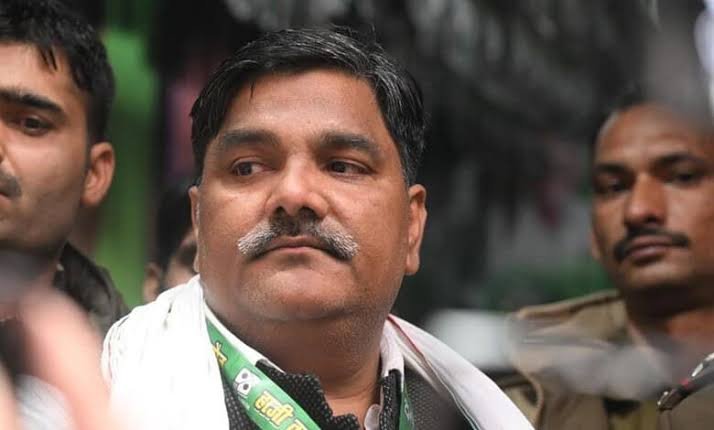
More than six years after Intelligence Bureau officer Ankit Sharma was found dead in a drain during the 2020 Delhi riots, a court has handed down its sentence. The Karkardooma Court on Friday sentenced former AAP councillor Tahir Hussain and four others to life imprisonment in the case. This was one of the most high-profile prosecutions to emerge from the riots.
Additional Sessions Judge Praveen Singh pronounced the order. Along with Hussain, the court sentenced Nazim, Qasim, Anas and Javed to life terms. All five had been brought to court earlier in the day ahead of the pronouncement.
How the Case Reached This Point
The verdict caps nearly six years of legal proceedings, during which the court worked through witness testimonies, forensic evidence and electronic records. On July 13, 2026, the court convicted the five men on charges including murder, kidnapping, rioting and promoting communal enmity. They were convicted under Sections 302, 365, 147, 148, 149, 153A and 188 of the Indian Penal Code.
The court acquitted six of the eleven original accused, citing insufficient evidence against them. It also cleared Hussain of the separate charge of criminal conspiracy under Section 120B. This was a point his defence would later lean on during sentencing arguments.
The sentencing hearing itself, held on July 27, saw sharp arguments from both sides. Delhi Police pushed for the maximum punishment, describing Sharma’s killing as “cold-blooded” and “brutal.” Prosecutors pointed to the 51 injuries found on his body as evidence of the attack’s severity. In addition, they argued that no one had made any attempt to get him to a hospital afterward.
The prosecution’s broader argument was that Sharma’s killing couldn’t be viewed in isolation. It had to be assessed against the backdrop of large-scale communal violence that claimed 53 lives during the riots.
Prosecutors said Sharma hadn’t provoked the accused in any way, and that no mitigating circumstances existed to justify leniency. They argued the balance of sentencing principles warranted capital punishment.
The Defence’s Case Against Death
Lawyers for Hussain and the other convicts pushed back hard against the death penalty request. They argued capital punishment can only be awarded in the rarest of rare cases. In addition, they argued this should happen after weighing aggravating and mitigating factors carefully.
The defence leaned heavily on two points: that prosecutors had failed to establish any criminal conspiracy, given that Hussain had already been acquitted on that specific charge. They also noted that six of the original eleven accused had walked free after trial. Lastly, they argued that the judgment itself didn’t attribute any specific overt act directly to Hussain.
Ankit Sharma, 26, was found dead in a drain near his home in the riot-hit Chand Bagh area in February 2020. A post-mortem examination found he had sustained 51 injuries and died of haemorrhage. His father’s complaint led to Hussain being booked for the killing.
At the time, Hussain was a sitting AAP councillor in the East Delhi Municipal Corporation. The party suspended him over his alleged role in the violence, which killed at least 42 people and injured around 200 in its initial wave.
Police later described a “deep rooted conspiracy” behind both the riots and Sharma’s murder in their charge sheet. In it, they alleged Hussain had led and instigated the mob that targeted him across February 24 and 25 in Chand Bagh.
Hussain evaded arrest for eight days after being named in the case. He eventually attempted to surrender at the Rouse Avenue court, which dismissed his plea on jurisdictional grounds. Delhi Police arrested him from the court premises shortly after, in March 2020. He has remained in judicial custody since.

Curated news reports, in-depth analysis, and special features by India’s Opinion editorial team.