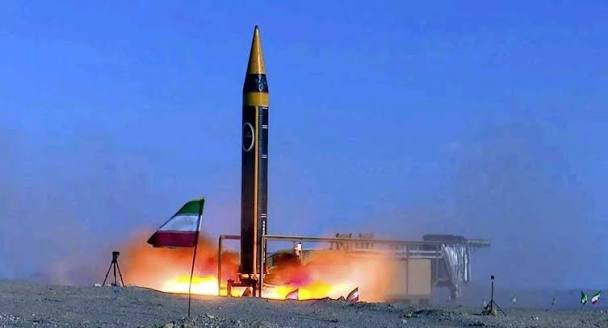
The Iran conflict took a sharp turn on Tuesday. The US military intercepted a barrage of ballistic missiles fired by Iran in what US Central Command described as an attempted “surprise attack” on American forces in the Middle East. This happened hours before US and Saudi Arabian forces carried out joint strikes against Iran-aligned militias in Iraq.
“At 5:45 p.m. ET today, Islamic Revolutionary Guard Corps forces launched multiple ballistic missiles from Iran in an attempted surprise attack on US forces based in the Middle East,” CENTCOM said in a statement. “All Iranian missiles were successfully intercepted. US forces remain vigilant and at a high state of readiness.” CENTCOM did not disclose which locations Iran had targeted.
Rising tensions after reported Iranian missile fire
Regional outlets and security sources indicated Iran launched missiles toward targets it accused of threatening its security interests. As a result, this triggered rapid responses and heightened alert levels across nearby countries.
The timing is notable. The attempted attack came roughly a day after President Donald Trump said the US had halted its strikes on Iran. This raised hopes that the latest round of hostilities might be winding down. However, Iran’s missile launch appears to have reversed that trajectory within 24 hours.
Oil prices jumped on the news, a familiar market reaction whenever the conflict escalates given the region’s role in global energy supply.
Why Saudi Arabia’s involvement stands out
Separately, Saudi Arabia’s Ministry of Defense said its forces carried out “limited, targeted strikes” alongside the US on Wednesday against Iran-backed militias in Iraq. Riyadh linked these operations to recent attacks on Saudi oil facilities.
The kingdom said it had earlier intercepted and destroyed several drones launched from Iraq targeting oil facilities in eastern Saudi Arabia.
CENTCOM confirmed the joint operation, saying US and Saudi fighter aircraft struck multiple logistics and weapons sites across eastern Iraq. Importantly, Saudi Arabia’s direct participation is significant. The kingdom has largely tried to avoid being pulled fully into the broader conflict since it began earlier this year.
Diplomatic fallout and the risk of wider conflict
Trump met with Israeli Prime Minister Benjamin Netanyahu at the White House on the same day the missile attack occurred. Netanyahu described the meeting as “one of the best conversations” the two leaders have had. He cited close coordination on Iran and other regional security matters.
Tuesday’s events add to what has already been a turbulent year for the region. The current round of hostilities traces back to US and Israeli strikes on Iran in late February. Those were followed by months of retaliatory Iranian missile and drone attacks on Israel, Gulf states and US military installations across the region. This included strikes on Qatar, Saudi Arabia, Jordan and Oman.
With Iran’s attempted strike intercepted and the US and Saudi Arabia now conducting joint operations against Iran-backed militias, the question is whether Tuesday’s exchange marks a contained flare-up or the start of another extended cycle of strikes. Notably, this is the kind that has repeatedly interrupted attempts at a ceasefire this year.
Markets and regional governments will be watching closely for CENTCOM’s next statement, and for whether Iran attempts to retaliate further against the newly expanded US-Saudi cooperation.

Curated news reports, in-depth analysis, and special features by India’s Opinion editorial team.