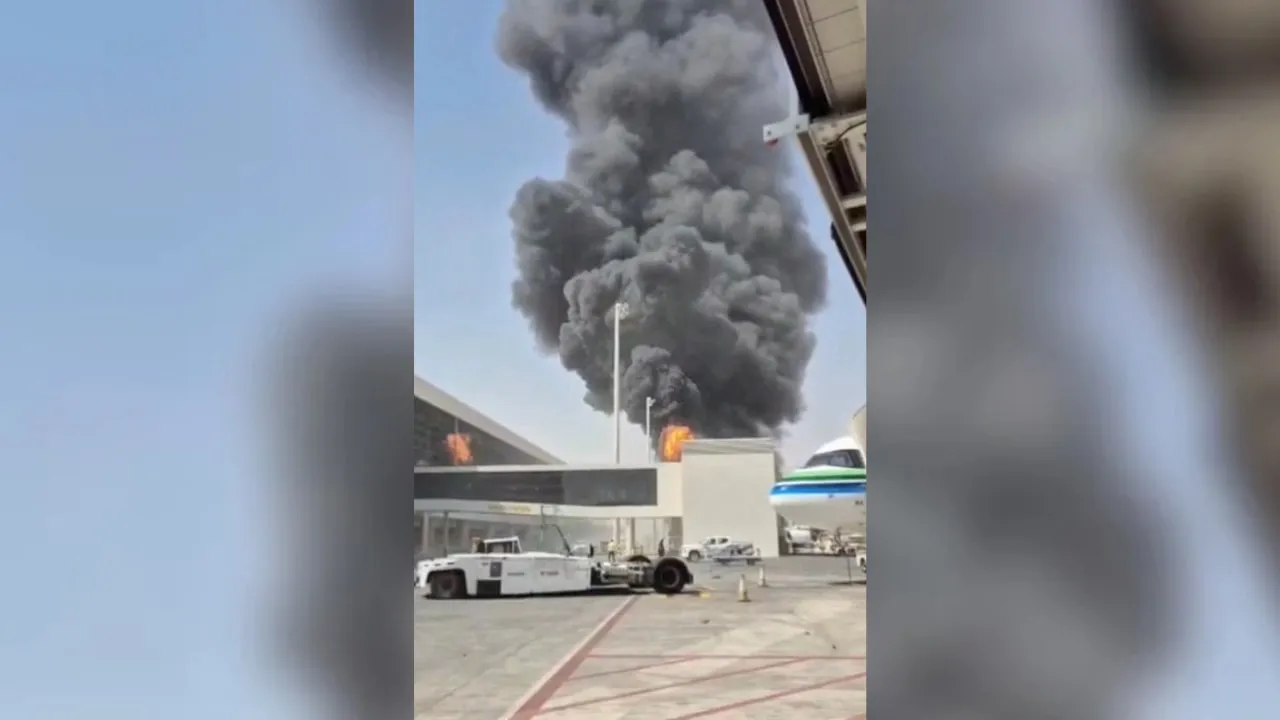
A major missile and drone assault struck King Khalid International Airport in the Saudi Arabian capital of Riyadh, killing at least 12 people and injuring 309 others. Yemen’s Iran-aligned Houthi movement claimed responsibility for the cross-border operation. The strike severely damaged commercial terminal facilities, triggered panic among travelers, and prompted civil aviation authorities to suspend all flight operations immediately.
Airport rescue teams and emergency personnel rushed to the scene to extinguish localized blazes and evacuate hundreds of stranded passengers. According to official casualty figures verified by The Washington Post, the dead include airport staff and international transit passengers. Consequently, multiple global carriers canceled regional flights to Riyadh, while foreign embassies across the Gulf kingdom issued urgent security alerts advising citizens to shelter in place.
Trump Weighs Direct US Military Involvement
In Washington, Donald Trump termed the deadly strike on Riyadh’s primary civilian hub a terrible escalation. Speaking to reporters, Trump announced that he will decide very quickly whether the United States will participate directly in retaliatory military action alongside Saudi armed forces. He stressed that Washington maintains backchannel contacts with the Houthi leadership but warned that attacks against regional civilian infrastructure cross acceptable boundaries.
Trump suggested that the broader conflict involving Iran and regional proxies would reach a conclusion soon, though he refrained from laying out an operational blueprint. Furthermore, as reported by The Indian Express, Trump emphasized that the United States is evaluating joint target lists with Riyadh. Therefore, American defense officials are preparing contingency options ranging from precision Tomahawk missile strikes on missile-launch sites in Yemen to expanded naval interdiction efforts.
Saudi Coalition Vows Resolute Counter-Offensive
Saudi defense authorities condemned the airport attack as a blatant war crime targeting unprotected civilians. Military radar units intercepted a second ballistic projectile southeast of Riyadh, while another drone crashed near industrial zones adjacent to Dammam’s airport in the Eastern Province. The Royal Saudi Air Force and allied coalition forces immediately launched wide-ranging punitive airstrikes across rebel-held sectors in northern and western Yemen.
Coalition spokespersons stated that air raids destroyed over 130 Houthi command nodes, missile storage depots, and drone assembly hangars within hours. In addition, field reports published by The Guardian confirmed that Yemeni government ground units pushed forward near the strategic Bab al-Mandab strait to cut off insurgent maritime supply routes. Consequently, Saudi military leadership reaffirmed its determination to eliminate cross-border projectile threats and secure vital civilian skies.
Strait of Hormuz Turmoil and Global Energy Shock
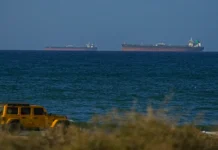
The strikes on Riyadh coincided with escalating maritime security crises across Persian Gulf shipping lanes. Iran’s Islamic Revolutionary Guard Corps (IRGC) announced that an oil supertanker struck a naval mine while transiting the Strait of Hormuz, crippling the vessel’s propulsion. Meanwhile, United Arab Emirates search-and-rescue teams successfully evacuated 22 mariners from a separate commercial tanker that caught fire following an explosion in open waters.
These simultaneous disruptions sent severe shockwaves through global commodity markets. International Brent crude futures jumped past the $100 per barrel threshold, fueling concerns over supply disruptions through critical Middle Eastern transit choke points. Moreover, major consuming economies, including India and European nations, face acute inflationary pressures as freight insurance rates and energy import bills climb sharply.
Diplomatic Backchannels Amid Escalating War
While military tensions intensified across multiple fronts, discreet diplomatic efforts emerged in Moscow and regional capitals. The Kremlin confirmed that Russian President Vladimir Putin relayed Tehran’s diplomatic perspectives regarding a possible framework to wind down hostilities directly to Donald Trump. However, deep mistrust between Washington, Riyadh, and Tehran complicates immediate peace talks.
On the other hand, regional analysts warn that direct US military strikes inside Yemen could trigger expanded proxy retaliation against energy refineries and international shipping. For now, Saudi authorities remain focused on restoring operations at King Khalid International Airport and bolstering layered air defenses around core population centers. As international leaders urge restraint, all eyes remain fixed on Washington’s upcoming decision regarding military strikes against the Houthi command structure.

Curated news reports, in-depth analysis, and special features by India’s Opinion editorial team.