
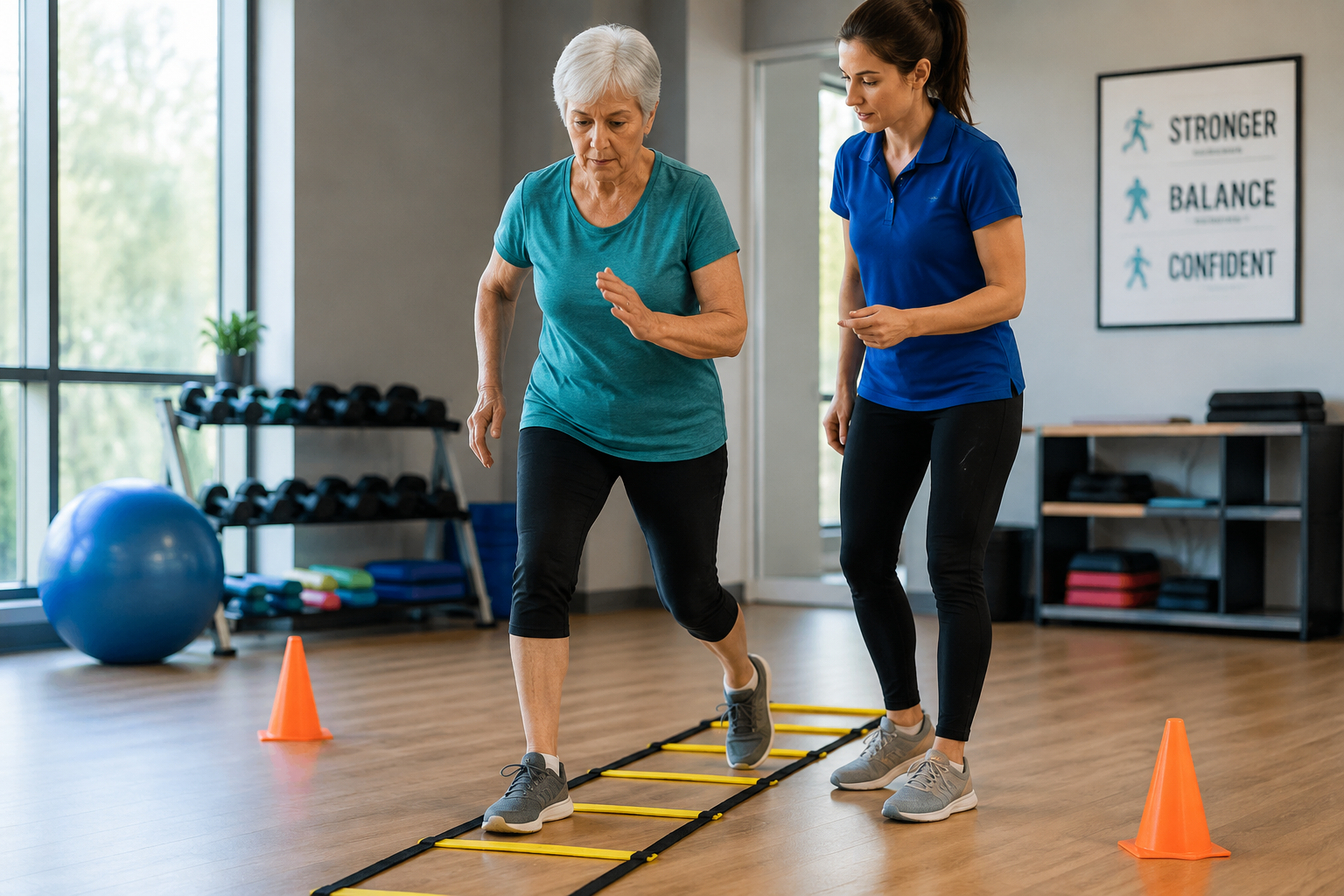
As people age, staying active involves more than maintaining muscle strength. The ability to respond quickly to a sudden loss of balance can also affect whether a stumble becomes a fall.That makes reaction-time training a useful addition to an exercise routine for older adults.
Research suggests that exercises involving rapid stepping, changing direction and responding to movement can improve reaction time and balance. Some studies also link these programmes with fewer falls.The goal is not to make older people move like athletes.
It is to help the nervous system and muscles work together when something unexpected happens.
Why reaction time changes with age
Reaction time tends to slow with age because several systems involved in movement change over time. The brain must identify a stimulus, decide how to respond and send instructions to the muscles.Vision, balance, muscle strength and coordination also influence that response.
Research has found an association between greater variability in reaction-time performance and falls among older adults.
A systematic review covering 2,810 participants found that all included studies examining reaction-time variability and falls reported an association with higher fall risk.
This does not mean slow reactions alone cause falls.Falls usually result from several factors working together, including poor balance, weakness, environmental hazards, medication effects and mobility problems.
That is why reaction-time training works best as one part of a broader exercise programme.
How reaction-time training can improve balance
A person who trips does not have time to consciously plan every movement. The body must react quickly.
Stepping exercises can train this response. A person might step forward, backward or sideways after receiving a signal. More advanced exercises can involve changing direction or responding to an unexpected cue.
A systematic review and meta-analysis of seven randomised trials involving 660 older adults found that stepping interventions reduced both the rate of falls and the proportion of people who fell.
The researchers also found improvements in stepping reaction time, single-leg stance and mobility measures.
The review estimated that stepping interventions reduced fall rates by about 50%. The authors said improvements in reaction time, gait and balance recovery could help explain the result.
Fast stepping has a practical purpose
The value of reaction-time training becomes clearer when exercises resemble everyday situations.Imagine walking across a room when a foot catches on a rug. A quick corrective step may help restore balance.
Similar situations can occur when someone steps off a curb, turns suddenly or encounters an unexpected obstacle.
Training these movements does not guarantee protection from falls.However, it can give the body more practice responding to sudden changes.
Which exercises can older adults try?
Reaction-focused exercises do not need expensive equipment. They can include simple movements performed in a safe environment.
One option is controlled step-and-reach training. Stand near a sturdy support and practise stepping in different directions toward a target. Return to the starting position before repeating the movement.
Another option involves responding to a verbal or visual cue. A partner can call “left”, “right”, “forward” or “back”, prompting a controlled step.Ball exercises can also combine movement and reaction. Catching and throwing a ball requires the eyes, brain and muscles to coordinate quickly.
The CDC’s compendium of fall interventions includes programmes that combine balance, coordination, stepping, direction changes, ball activities, strength work and aerobic exercise.
Reaction-time training should not replace strength work
Older adults still need strength and balance exercises.Strength supports everyday activities such as standing from a chair, climbing stairs and carrying objects. Balance exercises help the body maintain stability during movement.
Evidence from the Cochrane review shows that balance and functional exercises reduce fall rates. Programmes combining balance, functional and resistance exercises can also reduce falls.This makes a mixed programme more useful than focusing on reaction speed alone.
A weekly routine might therefore combine resistance exercises, balance work, walking or other aerobic activity, and short reaction-focused sessions.
How to add reaction exercises safely
Safety should come before speed.Beginners should perform reaction-time training near a stable surface that they can hold if necessary.
The floor should be clear, footwear should provide adequate grip and exercises should start slowly.The first goal should be accurate movement rather than maximum speed.
Once a person can perform the movement confidently, the challenge can increase through faster cues, greater direction changes or more complex tasks.Older adults with a history of falls, major balance problems or medical conditions affecting movement should seek professional advice before starting unfamiliar exercises.
A physiotherapist or qualified exercise professional can also adjust exercises to match an individual’s mobility and balance.
Why the exercises should become more challenging
The nervous system responds to practice, but repeating an easy movement forever may provide limited challenge.
A person who becomes comfortable stepping to a predictable cue can gradually introduce different directions. Later, the cue can become less predictable.
Dual-task exercises provide another challenge. For example, a person might walk while responding to a simple verbal instruction.
A 2025 systematic review and meta-analysis found that dual-task exercise improved dynamic balance and functional mobility in older adults and was associated with reduced falls.
That approach reflects real life, where people often walk while talking, carrying something or paying attention to their surroundings.
The bigger goal is safer movement
The strongest evidence does not suggest that one exercise can prevent every fall. Instead, research supports programmes that challenge balance and functional movement while also developing strength and coordination.
Reaction exercises fit into that model because they target a skill that traditional strength training may not fully address: responding quickly when circumstances change.
For older adults, the aim is not simply to react faster. It is to move with greater control when the unexpected happens.As exercise programmes increasingly focus on healthy ageing, reaction work deserves a place alongside strength, balance and aerobic activity.
A few carefully chosen drills can make a routine more functional without turning it into an intense athletic workout. The key is gradual progression, regular practice and appropriate supervision when needed.

Umar Khan is a writer driven by curiosity and a passion for understanding the world. Through thoughtful analysis and evocative storytelling, he seeks to make complex ideas accessible, inspire meaningful conversations, and encourage fresh perspectives on the people, places, and issues that shape our shared future.