
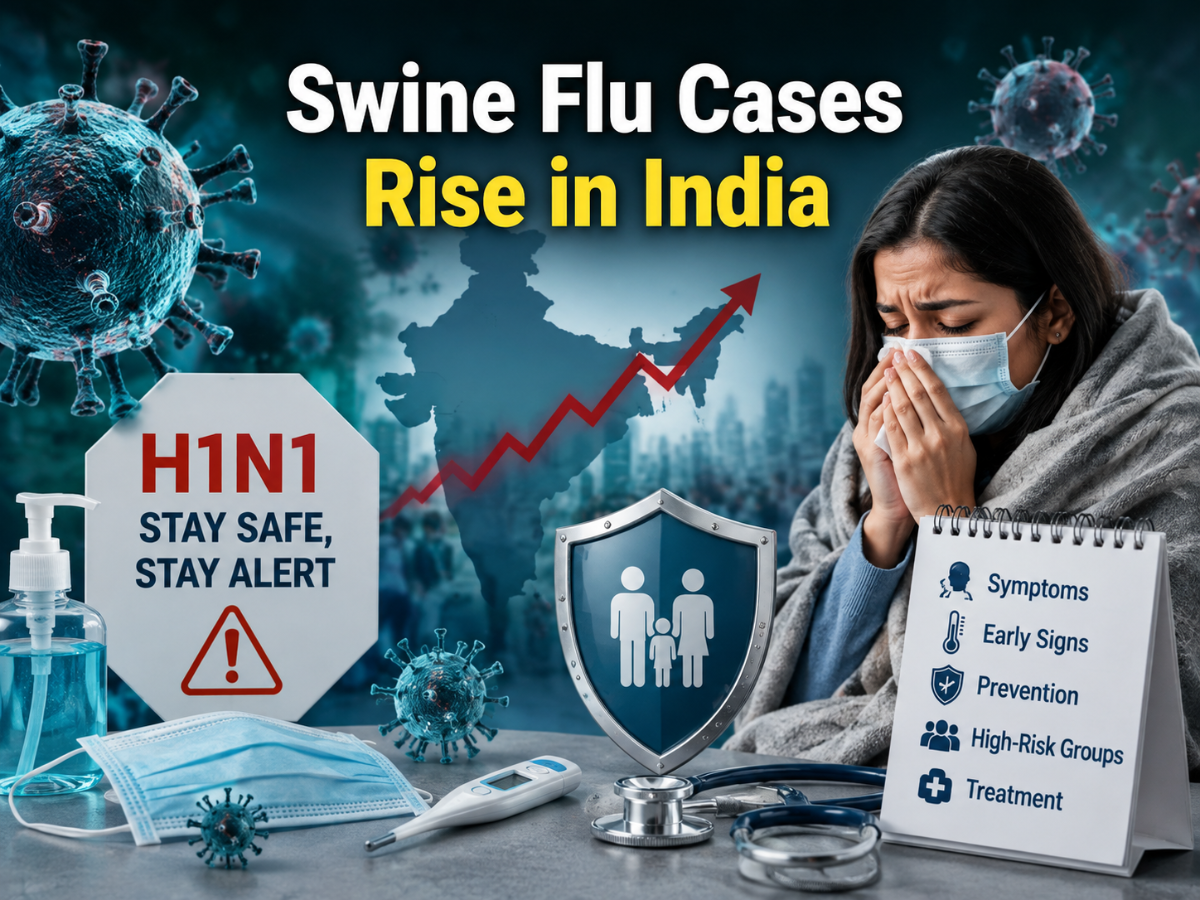
Major Indian metropolitan cities are witnessing a sharp spike in seasonal influenza infections. Delhi and Bengaluru have reported a heavy surge in H1N1 swine flu cases over recent weeks. Delhi alone has registered 1,777 H1N1 cases so far this year. However, the Indian Council of Medical Research (ICMR) clarified that no new mutant strain has emerged.
Health experts are urging the public to understand the key differences between H1N1 and COVID-19 to avoid panic and seek timely care.
What Is Driving the Seasonal Surge in Major Metros?
Seasonal influenza viruses thrive during the humid monsoon and post-monsoon months. Changing weather patterns and increased indoor gatherings accelerate droplet transmission in crowded urban centers.
ICMR scientists confirmed that the circulating virus belongs to the standard A/Missouri/11/2025 (H1N1) pdm09 strain. This strain closely matches the current annual flu vaccines recommended for this season.
Municipal health departments have stepped up hospital surveillance, daily monitoring, and public awareness drives to keep caseloads under control.
Key Differences Between Swine Flu and COVID-19
Although both infections target the human respiratory system, they stem from entirely different virus families. H1N1 is an Influenza A virus, while COVID-19 is caused by the SARS-CoV-2 coronavirus.
Swine flu symptoms appear very quickly, usually within one to three days after exposure. In contrast, COVID-19 symptoms often take up to five days or longer to show up.
COVID-19 frequently causes a sudden loss of taste and smell, which is rare in swine flu. Furthermore, H1N1 triggers severe chills, high fever, and intense body aches right from day one.
Treatment Protocols, Vaccine Timing, and High-Risk Care
Doctors emphasize that early medical evaluation ensures fast recovery and prevents severe complications. Targeted antivirals like Oseltamivir work effectively against H1N1 when administered within 48 hours of symptom onset.
In contrast, COVID-19 requires different antiviral medications and specific supportive therapies. Health experts strongly advise high-risk groups to take their annual quadrivalent flu shots before October.
Young children, senior citizens, and people with respiratory conditions must wear masks in crowded areas and avoid self-medication.

Curated news reports, in-depth analysis, and special features by India’s Opinion editorial team.