Gen Z Indian fashion trends are changing what traditional wear means
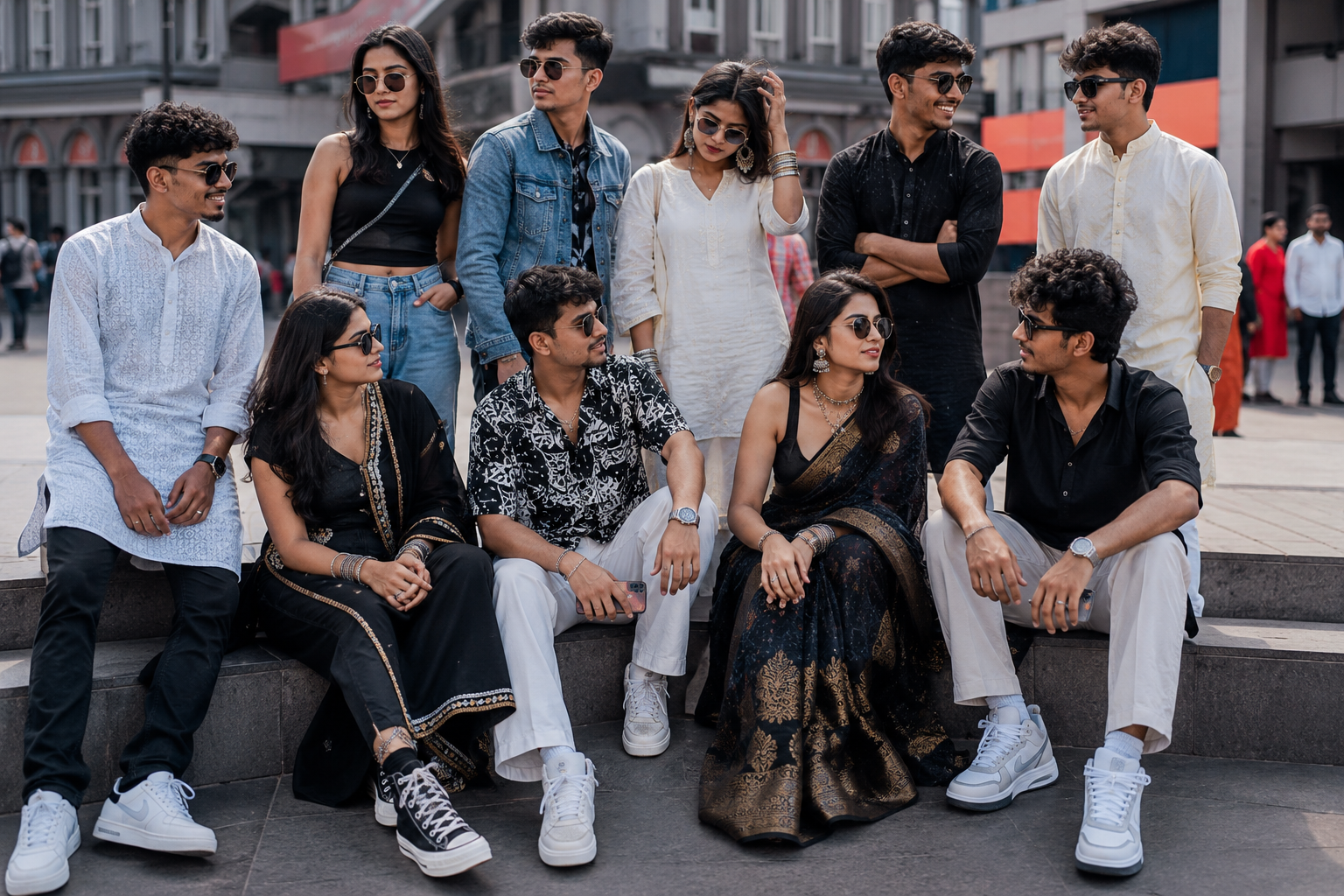
Indian traditional clothing is no longer waiting for a wedding invitation. Gen Z Indian fashion trends are bringing a fresh perspective to style across cities, as young Indians are pairing kurtas with sneakers, wearing ethnic prints in modern silhouettes and mixing traditional jewellery with jeans, cargos and contemporary outfits.
The shift reflects a wider change in how India’s Gen Z approaches clothing.For many young consumers, Indian wear is no longer tied to strict rules about age, occasion or gender.
It has become a way to show personality.Recent fashion coverage has highlighted combinations such as halter-neck kurtas with ripped jeans, corset tops featuring Indian prints and block-printed co-ordinated outfits styled with chunky jewellery and traditional footwear.
These combinations show how young shoppers are reshaping traditional Indian wear through experimentation.
Indian Gen Z fashion is moving beyond the traditional and western divide
For decades, Indian wardrobes often separated ethnic and western clothing.A kurta belonged to one category. Jeans and T-shirts belonged to another.
Traditional jewellery was usually reserved for festivals, weddings or family occasions.Gen Z is challenging that division.A kurta can now be worn with cargo trousers. A saree can be styled with contemporary accessories. A traditional print can appear on a modern co-ord set. The outfit does not need to fit one fixed category.
This approach gives young shoppers more freedom. It also reflects how they consume culture. Indian music, global fashion, regional traditions and online trends now exist in the same digital space.
The result is not simply westernisation. In many cases, young Indians are bringing traditional elements back into everyday fashion on their own terms.
Desi fashion is becoming part of everyday streetwear
The rise of desi-inspired streetwear shows this change clearly.Young consumers are styling jhumkas with casual outfits, pairing Indian textiles with oversized silhouettes and using traditional motifs in everyday clothing.
Fashion publications have described this growing style as a fusion of heritage and streetwear.The change also carries a cultural message.
Traditional clothing is no longer being treated only as something inherited from older generations. Young people are modifying it, reinterpreting it and wearing it in settings where it was once considered unusual.
That process can make heritage clothing feel more relevant to a younger audience.
Comfort has become a major force in Gen Z Indian fashion trends
Style alone does not explain the change.Young consumers also want clothing that works across different parts of their lives. An outfit may need to suit college, a café, a social gathering and a casual evening out.That has increased interest in versatile clothing.
A recent report on Bengaluru’s fashion culture found growing demand for versatile pieces, inclusive sizing, premium fabrics and clothing that combines comfort with style.
The report also identified a growing interest in wardrobes built around personal identity rather than simply following every new trend.
This shift matters because it challenges the idea that fashion must be uncomfortable to look polished.Oversized fits, relaxed silhouettes and practical footwear have become easier to combine with Indian clothing.
The result is a style that can look expressive without becoming difficult to wear.
Social media is influencing fashion, but young consumers are not copying everything
Instagram, Pinterest and short-form video platforms have changed how people discover clothes.A style can move from one city to another within days.
A regional textile can reach a national audience. A new way of styling a kurta can quickly attract attention beyond its original community.Yet fashion stylists say the process is becoming more personal.
The New Indian Express reported that clients often bring saved posts and online references but increasingly want to adapt those ideas rather than copy them exactly. Stylists described a growing interest in clothing that reflects individual identity.That distinction is important.
Social media may provide the inspiration, but the final outfit often depends on climate, budget, body type, location and personal taste.
This is why the same trend can look very different in Delhi, Bengaluru, Mumbai, Lucknow or smaller Indian cities.
Bengaluru shows how Indian fashion is becoming more personal
Bengaluru has emerged as an important example of this shift.
A 2026 City Style Quotient study cited by The New Indian Express named the city India’s “Trend Uptake Leader and Conscious Style Capital”. The study placed Bengaluru third overall behind Mumbai and Delhi.
Fashion professionals quoted in the report linked the city’s style culture with comfort, individuality, homegrown labels and more thoughtful buying decisions.The city also reflects a wider change in consumer behaviour.
Some shoppers are showing more interest in clothing that they can wear repeatedly and style in different ways. Others are exploring independent Indian designers and local labels.This does not mean fast fashion has disappeared. It remains widely available and popular.
The change is more subtle. Some consumers now appear more willing to question whether a purchase fits their lifestyle before buying it.
Homegrown Indian labels are gaining attention
The growth of local fashion labels has also changed the choices available to young shoppers.
Independent designers can offer regional fabrics, local craftsmanship and designs that sit between conventional ethnic wear and global streetwear.
For Gen Z consumers, that combination can be attractive because it offers something beyond the standard choices available from large international brands.
Bengaluru fashion professionals cited in recent reporting said local designers using Indian textiles, natural fabrics and craftsmanship connect with consumers who want originality and clothing suited to local conditions.This trend is not limited to one city.
Young designers and small fashion businesses across India are increasingly using social media to reach customers directly.
That has lowered some of the traditional barriers between a designer, a brand and its audience.
The fashion industry faces a new challenge
The growing influence of Gen Z creates a difficult question for fashion companies.
Should brands focus on fast-moving trends, or should they design clothing that consumers can wear for longer?The answer may be a mixture of both.Young shoppers still respond to new aesthetics.
At the same time, reports from fashion professionals suggest that some consumers are showing stronger interest in versatility, quality and personal style.This creates pressure on brands to offer more than a seasonal trend.
A successful collection may need to look current while remaining practical. It may need to work with different wardrobes and suit more than one occasion.
For Indian brands, the opportunity lies in understanding that traditional and modern fashion are no longer opposites.
What comes next for Gen Z Indian fashion trends
The next phase of Indian youth fashion may become even more individual.Young shoppers are unlikely to abandon global influences. They are also unlikely to stop experimenting with Indian clothing.Instead, the strongest trends may come from the space between the two.
A traditional textile could appear in a modern silhouette. A western outfit could be styled with Indian jewellery. A familiar kurta could become part of a completely new everyday wardrobe.
The biggest change is not a particular garment. It is the freedom to decide what that garment means.
For India’s Gen Z, fashion is increasingly becoming less about following a fixed dress code and more about building a personal identity from different cultural influences.
That shift will continue to shape Indian clothing, retail and design as young consumers become an even larger force in the market.

Curated news reports, in-depth analysis, and special features by India’s Opinion editorial team.