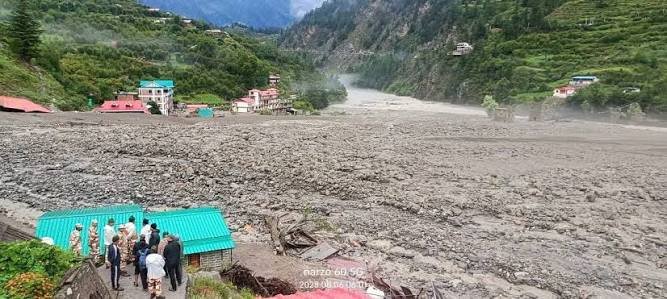
A catastrophic flash flood has struck northern Nepal’s Rasuwa district, leaving widespread destruction along the Himalayan river corridor. The Nepal Tourism Board confirmed that 105 Indian travellers are currently missing or unaccounted for. The sudden surge originated across the border in Tibet and swept through the Bhote Koshi River valley. Search and rescue teams have launched emergency operations to locate trapped tourists and local residents across the disaster zone.
Massive Flood Wave Sweeps Through Border Settlements
The sudden flood struck the Timure and Syabrubesi areas around 8:30 AM on Wednesday. Eyewitnesses reported a towering wall of muddy water roaring down the valley without warning.
The floodwaters washed away riverside settlements, trade depots, and sections of the vital border highway.
Hydroelectric infrastructure and concrete bridges suffered severe structural damage. Local authorities confirmed that at least nine people have died, while dozens of security personnel remain missing.
Breakdown of Missing Indian Tourists and Tour Groups
The Nepal Tourism Board released a preliminary verification list containing 384 unaccounted individuals. Indian nationals form the largest group among the 291 missing foreign tourists.
Another 37 Non-Resident Indians (NRIs) are also on the verification register. Official records indicate that 59 missing Indians were travelling with Samrat Tours & Travels.
Another 46 Indian tourists were registered with Leaf Holiday. Tourist Police and consular officials are actively cross-checking passenger manifests with tour operators.
Cross-Border Origins and Suspected Glacial Lake Outburst
Hydrological experts believe a Glacial Lake Outburst Flood (GLOF) on the Tibetan plateau triggered the disaster. District officials noted that local areas recorded no heavy rainfall before the surge.
Instead, an upstream glacial lake breach in Tibet released massive water volumes into the river channel.
A similar outburst in the same river system caused deadly destruction last year. Regional climate scientists warn that rising temperatures make Himalayan glacial lakes increasingly unstable.
High-Level Rescue Operations and Helicopter Sorties
Nepal Prime Minister Balendra Shah convened an emergency cabinet-level disaster response meeting in Kathmandu. The government mobilized the Nepal Army, Armed Police Force, and specialized disaster personnel.
Two military helicopters carrying emergency medical teams flew multiple reconnaissance sorties over the valley.
Rescue workers are clearing debris and setting up emergency relief camps for displaced villagers. The Indian Embassy in Kathmandu has established round-the-clock contact with rescue coordinators.
Downstream Impact and Flood Alerts Across Bihar
The surging floodwaters pose significant downstream risks for riverbank communities across Nepal and India. The Bhote Koshi merges into the Trishuli River before flowing into northern India as the Gandak River.
Nepalese authorities issued high-level flood alerts across Rasuwa, Nuwakot, Dhading, Gorkha, and Chitwan districts.
Meanwhile, water resources officials in Bihar have placed river barrages on maximum alert. Downstream district magistrates are closely monitoring water levels to safeguard vulnerable floodplains.

Curated news reports, in-depth analysis, and special features by India’s Opinion editorial team.