
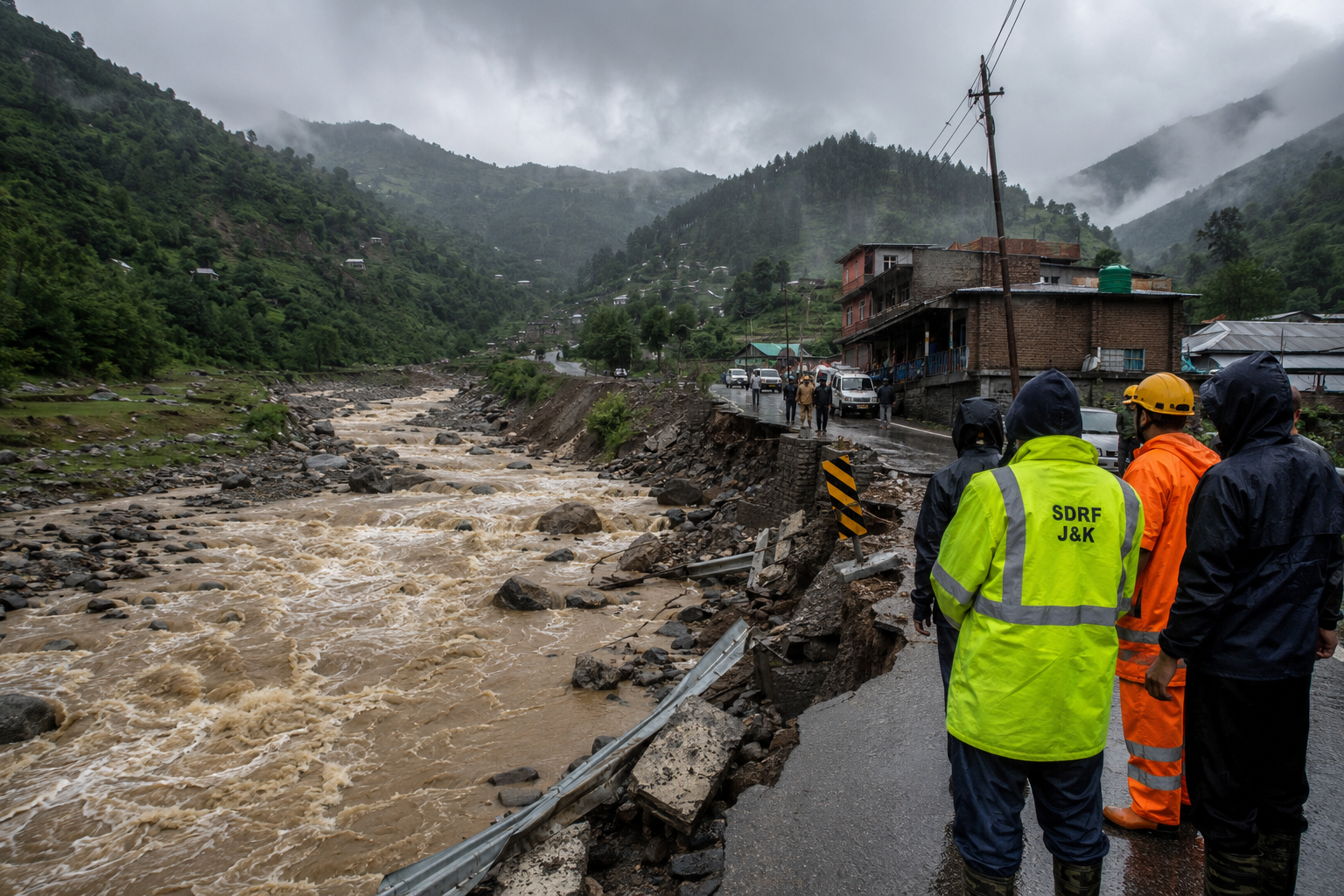
Fresh weather warnings have renewed concern across Poonch as heavy rain and intense showers increase the risk of flash floods, landslides and mudslides in vulnerable parts of Jammu and Kashmir. The warning comes after recent flooding in the district forced rescue teams to evacuate residents from affected areas.
The latest spell of unsettled weather has raised concerns in a mountainous district where steep slopes, narrow valleys and fast-flowing streams can turn intense rainfall into a disaster within a short time. The Poonch weather alert is therefore significant for residents living near rivers, streams and other flood-prone locations.
The Meteorological Centre has forecast increased rainfall activity across Jammu and Kashmir during the current wet spell. Authorities have warned that isolated intense showers could trigger flash floods, landslides and mudslides in vulnerable hilly areas, including parts of the Pir Panjal region.
Poonch heavy rain follows recent flash-flood damage
The latest warning comes after a flash-flood incident in the Ari area of Mendhar subdivision earlier this month. Heavy rainfall caused water levels to rise sharply in streams and low-lying areas.Floodwater entered houses and submerged agricultural fields.
Around 25 people were rescued from affected areas, according to officials quoted in reports. Several houses also suffered damage, while water and debris temporarily blocked a road connecting the affected village.
The incident showed how quickly Poonch heavy rain can disrupt daily life. Residents in mountainous areas often face a narrow window between intense rainfall and dangerous water flow in streams and drainage channels.
Authorities have advised people to avoid unnecessary travel during periods of intense rain. Residents have also been asked to stay away from rivers, nallahs and streams when water levels begin to rise.
Why the Poonch weather alert matters
Poonch’s terrain increases the danger from sudden downpours. Rainfall on steep slopes can produce rapid surface runoff. Water can then move quickly through streams and narrow channels, carrying mud, rocks and debris.
The danger does not come only from flooding. Saturated soil can also weaken mountain slopes and increase the risk of landslides and mudslides. Such incidents can block roads, damage homes and isolate villages.
The weather office has warned of a period of increased rain activity across Jammu and Kashmir. Isolated areas may experience brief but intense showers, particularly during periods when thunderstorms develop.
Poonch flash floods have already tested emergency response
The recent Mendhar flooding also highlighted the role of local rescue operations during extreme weather. Police teams moved into affected areas after residents became stranded by rising water.Officials said around 25 people were safely evacuated.
The administration also continued monitoring vulnerable areas and kept rescue and relief arrangements ready as rainfall continued.The response underlines the importance of early warnings in mountainous districts.
A timely alert can give families enough time to move away from streams and low-lying areas before floodwater reaches homes.At the same time, warnings cannot remove the risks created by poor road access, damaged infrastructure or settlements located close to natural drainage channels.
These factors can make rescue operations more difficult during severe weather.
Weather warning raises concern over landslides
Flooding is not the only threat facing Poonch during the current spell of rain. Landslides remain a serious concern across the hilly belt of Jammu and Kashmir.
The weather department has cautioned that intense rainfall could trigger landslides and mudslides in vulnerable locations. Roads crossing steep slopes face particular risks because falling soil and rocks can quickly block transport routes.
Previous heavy-rain events in the wider Jammu region have also caused road blockages and disruptions linked to landslides. The combination of steep terrain and intense rainfall makes travel conditions difficult to predict.
For residents, the most dangerous period may come during or immediately after intense rainfall. Slopes can remain unstable even when the rain begins to weaken.
Lightning adds another weather danger
Poonch has also recently reported a lightning-related incident involving livestock. More than 60 sheep, along with a buffalo and a dog, were reportedly killed in a lightning strike in the Surankote area. No human casualties were reported in that incident.
The incident highlights another risk during thunderstorms. People and livestock in open areas face greater danger when lightning activity increases.
Authorities generally advise people to move indoors during thunderstorms and avoid exposed locations, isolated trees and open high ground.
What residents should watch for during the rain
People living near streams, rivers and steep slopes should take weather warnings seriously. Sudden changes in water levels can signal a flash flood, even when rainfall at a particular location appears moderate.
Residents should avoid crossing flooded roads or streams. They should also avoid parking or stopping vehicles near drainage channels and unstable slopes during intense rain.Families in vulnerable locations should keep essential documents, medicines and emergency supplies ready.
They should also follow official instructions if local authorities order evacuation.The latest Poonch weather alert comes at a time when the district is already dealing with the effects of recent intense rainfall.
The immediate concern remains whether further heavy showers will create new flooding or landslides in vulnerable areas.With more rain expected across parts of Jammu and Kashmir during the current weather spell, the focus now shifts to local conditions on the ground.
The next few days will test how effectively warnings, monitoring and emergency response can protect communities in Poonch’s most exposed areas.

Curated news reports, in-depth analysis, and special features by India’s Opinion editorial team.