
Gandhian scholar Prasun Latant doesn’t see Gandhi as a figure confined to history books. He sees him in the streets. “The fact that the country is still actively discussing Gandhi shows the enduring relevance of the man,” Latant, convenor of the Mahatma Gandhi Ayojan Samiti, told The Indian Express.
He points to something specific. “We have seen clear reflections of Gandhian methods in the recent protests at Jantar Mantar, and the way climate activist Sonam Wangchuk noted that Gandhi would stay relevant till eternity demonstrates how Gandhi’s idea of civil disobedience is powerful and remains at the core of any peaceful democratic protest,” Latant said.
That conviction is driving a three-day event from August 7 to 9, organised by the Gandhi Peace Foundation to mark Bihar’s Bhagalpur and its deep, often overlooked connection to Gandhi’s own journey.
A Speech That Started It All
The link runs back to October 15, 1917. Gandhi stood before a crowd of students in Bhagalpur and delivered a speech on education, duty and national service. This was just six months after his Champaran Satyagraha. The movement that first proved civil disobedience could work on Indian soil.
“You have as it were chained me to you by inviting me to preside over this session of the Students’ Conference,” Gandhi told the students that day. “For 25 years, I have been in close contact with students… They show me unbounded love. By inviting me to preside over this meeting today and permitting me to speak in Hindi and conduct the proceedings, too, in Hindi, you, students, have given me evidence of your love,” he said.
Four Visits, Four Turning Points
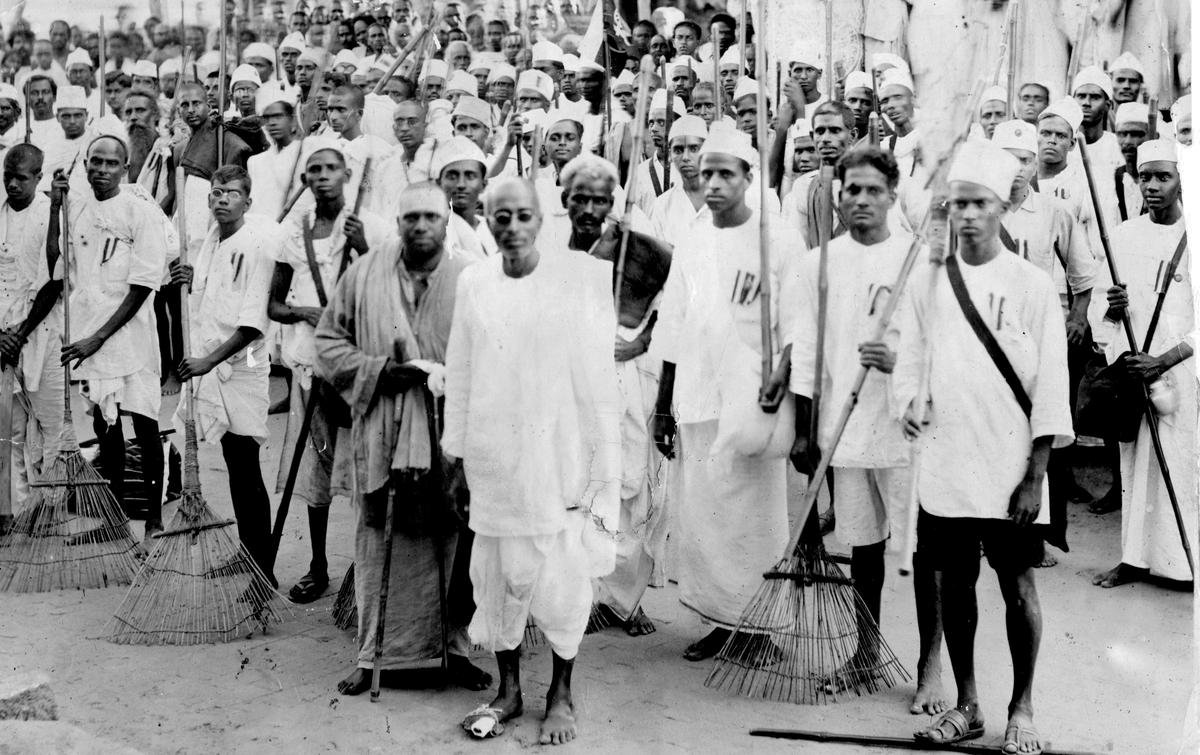
Gandhi returned to Bhagalpur four times between 1917 and 1934, and each visit captured a different phase of his thinking on resistance and reform.
He delivered that first speech at what is now Lajpat Park, on land that belonged to barrister and freedom fighter Deep Narayan Singh. He came back in 1920 to show solidarity with the Swadeshi Movement.
The third visit, in 1925, looked different. It coincided with his 56th birthday and centred on what Gandhi called his “constructive programme,” the social and economic groundwork he believed India needed before it could truly govern itself. He promoted khadi and pushed social reform. Additionally, he addressed a women’s conference where he called for women to take an active role in the freedom movement.
His last visit, in 1934, wasn’t about protest at all. Gandhi joined relief efforts after an earthquake devastated the Nepal-Bihar border region. The disaster killed more than 7,000 people in India and 8,000 in Nepal.
Where the Record Lives
These visits aren’t just local memory. They’re documented across the Collected Works of Mahatma Gandhi, known as Gandhi Wangmay, in Volumes 14, 19, 28 and 57. Gandhi’s own autobiography, The Story of My Experiments with Truth, references them. The detailed diaries kept by his secretary, Mahadev Desai, also document them.
A Tribute Delayed by Five Years
This year’s event follows nine years after Bihar marked the centenary of the Champaran Satyagraha itself. The centenary of Gandhi’s first Bhagalpur visit should have followed soon after. However, the 2020 anniversary never happened, the COVID-19 pandemic got in the way.
“We are now celebrating his legacy by weaving together a rich bouquet of functions on Gandhi’s ideals,” Latant said.
The programme itself reflects that range. Author and litterateur Purushottam Agrawal will deliver the keynote lecture. Organisers will mount an archival exhibition on Gandhi’s life, and folk singer Chandan Tiwari will perform a recital of “Gandhi Sangeet.”
Latant’s framing puts this event on more than nostalgic footing. He’s arguing Gandhi’s method is still active in India’s streets today. Whether that argument lands beyond a room of Gandhian scholars is uncertain. Especially at a moment when protest movements keep invoking his name, this will say a lot about how this Bhagalpur commemoration is remembered once the three days are over.

Curated news reports, in-depth analysis, and special features by India’s Opinion editorial team.