
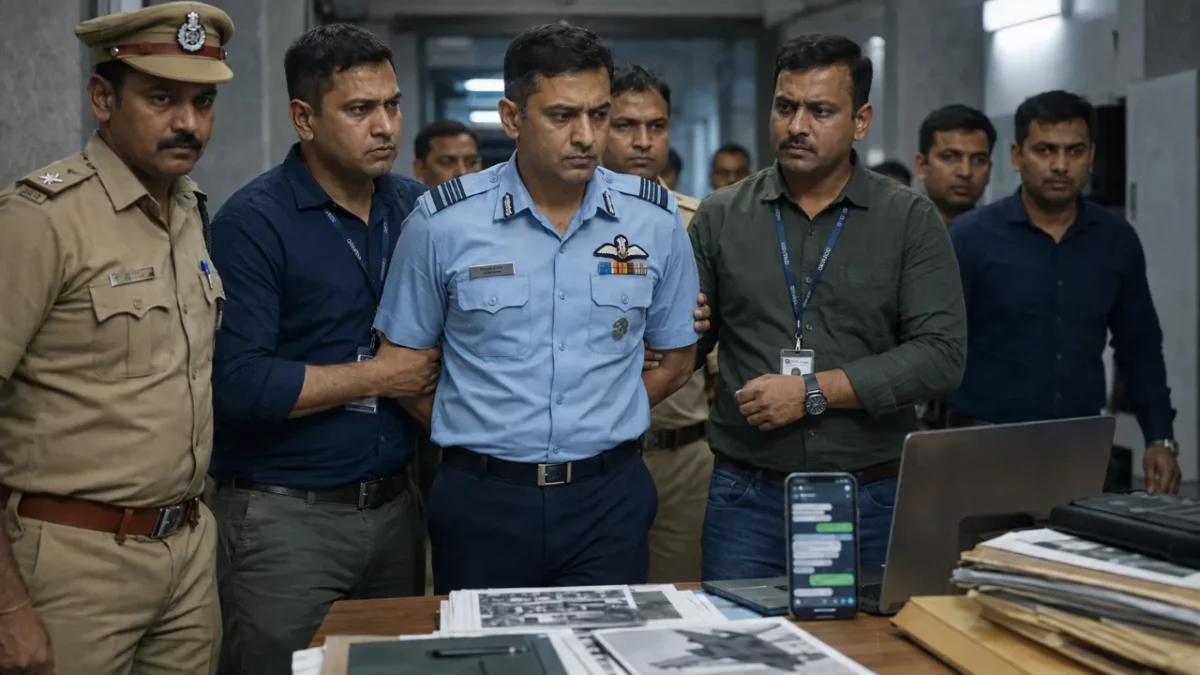
The Delhi Police Special Cell and Crime Branch arrested an Indian Air Force (IAF) Wing Commander for allegedly leaking classified defence secrets to Pakistani intelligence operatives. Investigators confirmed that the officer fell victim to a social media honey-trap operation. This operation was managed by a female alias acting as a front for foreign intelligence handlers. The officer has been booked under the stringent provisions of the Official Secrets Act and is currently in judicial custody at Tihar Jail.
The arrest followed a joint counter-intelligence operation led by the IAF’s internal counter-espionage wing and central agencies. Additionally, officials maintained strict counter-surveillance on the officer’s digital communications after detecting unusual data movement. They also noticed suspicious messaging activity targeting sensitive operational files.
Modus Operandi and Digital Infiltration Attempts
According to police sources, the Pakistani handler befriended the officer on social media platforms using a fake profile. Over months of encrypted online chats, the handler lured the officer into sharing confidential documents and personnel data. Furthermore, the officer gave up strategic deployment details relating to air defense assets.
The officer allegedly received financial remuneration via indirect digital routes for providing sensitive information.
Investigators also revealed that the Wing Commander attempted to compromise other military devices. He allegedly installed data-stealing malware on the mobile phone of a fellow officer. This was in an effort to remotely access and mirror confidential communications from additional defence networks.
Proactive Surveillance and IAF Zero-Tolerance Policy
Addressing the development, Indian Air Force officials reaffirmed a strict zero-tolerance policy against security breaches.
Air Force representatives stated that internal proactive measures flagged the breach early. This allowed intelligence officers to monitor the suspect’s movements before handing him over to civilian law enforcement for formal prosecution.
Central agencies and Delhi Police are currently analyzing seized electronic gadgets, hard drives, and mobile devices. Their goal is to map the full extent of the compromised data.
Investigators are also probing whether the honey-trap operation was part of a broader module. They want to know if it was attempting to infiltrate other branches of the Indian Armed Forces.

Curated news reports, in-depth analysis, and special features by India’s Opinion editorial team.