
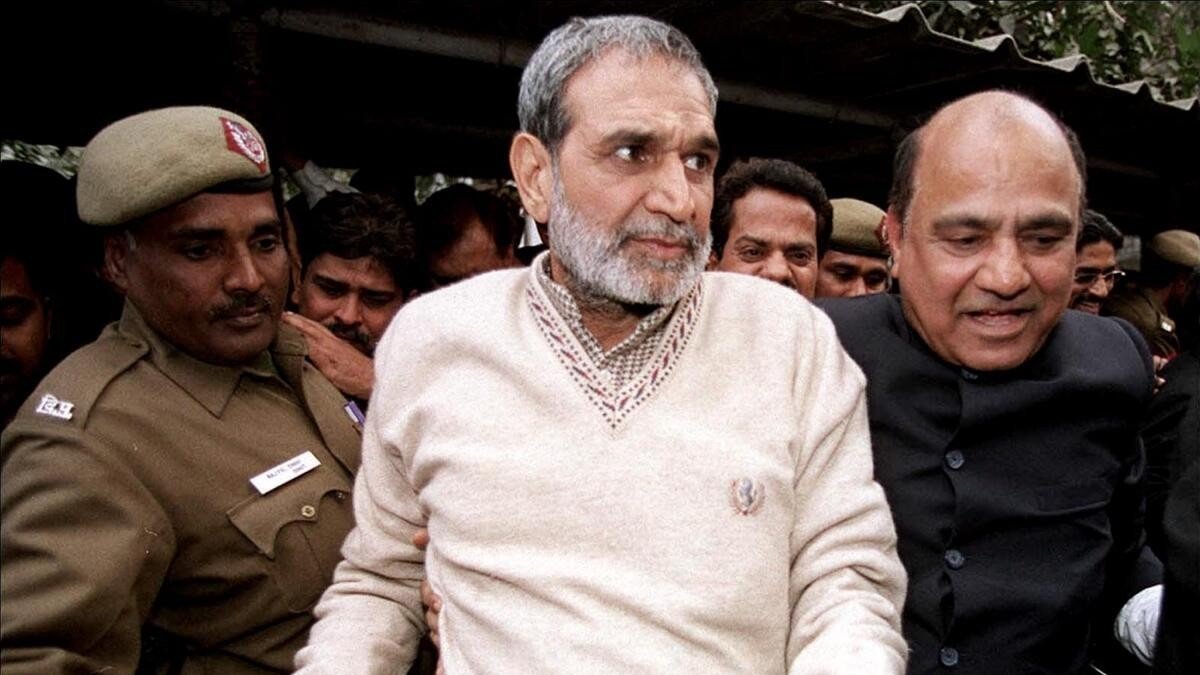
Former Congress parliamentarian Sajjan Kumar, who was serving a life sentence following his conviction in the 1984 anti-Sikh riots cases, died on Thursday in Delhi at the age of 80. Prison authorities rushed the former leader from Tihar Jail to Delhi’s Safdarjung Hospital after his health deteriorated, where attending doctors declared him brought dead.
Kumar remained one of the most prominent political figures prosecuted and convicted for instigating mob violence in the national capital following the assassination of former Prime Minister Indira Gandhi.
Landmark High Court Verdict Overturned Trial Court Acquittal
Kumar’s legal journey reached a decisive turning point in December 2018 when the Delhi High Court sentenced him to imprisonment for the remainder of his natural life, reversing an earlier trial court acquittal, according to.
The High Court bench found him guilty of criminal conspiracy, murder, and promoting enmity between religious groups in connection with the killing of five Sikh family members and the burning of a Gurdwara in Delhi Cantonment’s Raj Nagar on November 1–2, 1984.
Following the historic verdict, Kumar resigned from the primary membership of the Congress party and surrendered before authorities to serve his prison term.
Additional Convictions in 1984 Riots Cases
Special courts in Delhi continued hearing multiple pending trials against Kumar over violence in different parts of the capital.
In February 2025, a Delhi special court awarded him a second life sentence for his involvement in the murder of two Sikh men, Jaswant Singh and Tarun Deep Singh, during mob violence in northwest
Delhi’s Saraswati Vihar. Investigative panels, including the Justice Nanavati Commission, had previously documented witness testimonies linking Kumar to speeches and assemblies that incited attacks against the Sikh community across outer Delhi neighborhoods.
Political Rise and Decades-Long Courtroom Battles
During his active political career, Kumar established himself as a dominant grassroots force in the capital, winning election to the Lok Sabha three times from the Outer Delhi constituency in 1980, 1991, and 2004, highlights.
However, persistent allegations surrounding his role in the 1984 carnage shadowed his public life for over four decades. For the victims’ families who fought through trial courts and appellate benches for decades, his conviction and subsequent imprisonment represented a hard-fought measure of judicial accountability.

Curated news reports, in-depth analysis, and special features by India’s Opinion editorial team.