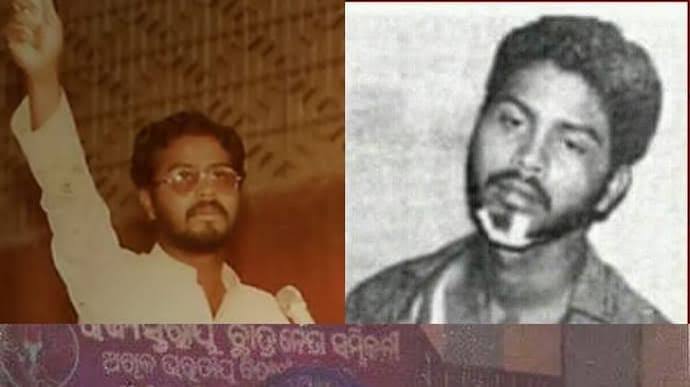
The Dharmendra Pradhan 1997 protest has returned to public attention at a moment when the Union Education Minister faces intense scrutiny over student concerns and examination controversies. Nearly three decades ago, Pradhan was a student leader protesting outside the Odisha Secretariat over an alleged paper leak.
The contrast has become politically powerful. In 1997, Pradhan was an activist demanding accountability from a state government. Today, he occupies the office responsible for overseeing the national education system. That change in position has turned an old episode from his student-politics career into a subject of renewed debate.
The comparison, however, should not be treated as proof that the two cases were identical. The 1997 incident involved a different examination, a different government and a different political context. Available accounts also do not clearly identify the specific examination paper involved.
What happened in the Dharmendra Pradhan 1997 protest?
According to accounts from former associates cited in recent media reports, Pradhan was associated with the Akhil Bharatiya Vidyarthi Parishad, or ABVP, when students protested against an alleged paper leak in Odisha.
The protest took place outside the state Secretariat in Bhubaneswar. Former student activists have recalled that around 1,500 students took part in the demonstration. They said the protest later faced police action.
One former associate, Prashant Rout, told The New Indian Express that the demonstration was organised against the Odisha government. He also claimed that Pradhan suffered injuries during the police action, including fractures. These details have been widely reported through recollections from people associated with Pradhan’s student-politics years. �The Economic Times
The exact examination involved in the 1997 dispute has not been clearly established in the available reports. That gap matters because the episode is now being used to draw comparisons with modern examination controversies.
Why the 1997 paper leak issue matters
Paper leaks have long carried political consequences in India because competitive examinations determine access to jobs, colleges and professional careers.
A leak can damage more than one examination. It can undermine the belief that selection depends on merit.That concern formed the political backdrop of the 1997 protest. Pradhan was then a young student activist. His later career took him from the ABVP to electoral politics and eventually to the Union Cabinet.
The old protest therefore offers a glimpse into the political formation of a leader who built much of his early career through student mobilisation. It also explains why the episode has attracted attention now.
From student activist to Union Education Minister
Pradhan’s political career began in student politics. He served in the ABVP and later moved into the Bharatiya Janata Party’s organisational structure. His political rise eventually took him to Parliament and the Union government.His career also followed a family political legacy.
His father, Debendra Pradhan, was a BJP leader who served as a Union minister during the Atal Bihari Vajpayee government. Dharmendra Pradhan later succeeded his father as a Lok Sabha member from Deogarh in Odisha.
The journey from student activist to Union minister has shaped the way the 1997 protest is now viewed.A demonstration that once formed part of Pradhan’s political past has become relevant to debates about his present responsibilities.
The political irony behind the Dharmendra Pradhan 1997 protest
The strongest political argument surrounding the Dharmendra Pradhan 1997 protest is based on the apparent reversal of roles.
As a young activist, Pradhan reportedly joined students demanding action over an alleged paper leak. Decades later, students and political opponents have invoked that history while criticising the government’s handling of examination-related controversies.
The comparison has emotional force, but it requires context. Protest movements do not automatically establish that two cases are legally or administratively equivalent. The facts, examination systems and government responses may differ substantially.
The historical parallel still matters because it raises a question about political accountability. Leaders who once demanded action from governments can later face similar demands when they become part of the government.
The missing details in the 1997 record
The public discussion about the old protest has also exposed the limits of available documentation. Recent reports describe the alleged paper leak and the police action, but the specific examination paper has not been clearly named in the accounts reviewed for this report.
There is also limited publicly available official documentation about the protest’s exact sequence of events. Much of the current account comes from former associates and media reports based on their recollections.
That distinction is essential. A historical account can be widely reported and still contain details that require independent documentary confirmation.
Why Dharmendra Pradhan’s 1997 protest is back in focus
The Dharmendra Pradhan 1997 protest has gained new political relevance as student demonstrations against examination-related controversies continue in Delhi. The current movement has demanded accountability from the Union government and called for Pradhan’s resignation.
The protests intensified after the Cockroach Janta Party, or CJP, organised demonstrations linked to allegations surrounding the NEET-UG 2026 examination. Protesters have also raised wider concerns about examination integrity, student deaths and the government’s response to allegations of irregularities.
The movement reached a major flashpoint during a march towards Parliament. Police action followed as protesters attempted to move beyond security barricades. Reports said protesters and police personnel were injured during the confrontation. The scale of the injuries and the conduct of the police action have become part of the continuing political dispute. Reuters
Protesters demand Dharmendra Pradhan’s resignation
The CJP has made Pradhan’s resignation one of its principal demands. Its representatives also sought the release of activist Sonam Wangchuk and compensation for families of NEET aspirants who allegedly died by suicide. The group presented its demands to Union Health Minister J.P. Nadda during meetings in July.
The government has not accepted the demand for Pradhan’s resignation. Nadda urged protesters to end their sit-in and help restore normalcy, while reports said the government did not give an assurance on the protesters’ main demands during the initial talks.
The protest has continued to place examination integrity at the centre of a wider political confrontation. The government has indicated that it is willing to engage with protesters, but the protesters have insisted that dialogue must produce concrete action.
The 1997 protest and today’s student movement
This is where Pradhan’s political history has become central to the current debate.
In 1997, he was a student leader associated with the ABVP when he reportedly joined a protest outside the Odisha Secretariat over an alleged paper leak. Former associates have recalled police action against the protesters and said Pradhan was injured during the demonstration.
Today, Pradhan is the Union Education Minister, and protesters are demanding his resignation over their concerns about examination integrity. The contrast between the two moments has created a powerful political narrative.
The comparison, however, has limits. The 1997 episode and the current NEET controversy involve different examinations, institutions and political circumstances. The available accounts also do not clearly establish every detail of the 1997 case, including the specific examination paper involved.
That distinction matters. A historical parallel can explain the political irony of the moment, but it cannot by itself establish responsibility for a current allegation.
From protesting against a paper leak to facing student protests
The political reversal is difficult to ignore. A young Pradhan once stood with students demanding action over an alleged examination leak. Nearly three decades later, students are protesting against a government in which he holds the education portfolio.
For his critics, the 1997 episode represents a test of consistency. They argue that a leader who once demanded accountability from a government should now face similar scrutiny when students raise concerns under his ministerial watch.
Supporters can make a different argument. They may point to Pradhan’s student activism as evidence of his long association with education and youth issues. They can also argue that the facts of the current controversy must be established through investigations rather than political comparisons.
The debate is therefore no longer limited to an old protest in Odisha. The Dharmendra Pradhan 1997 protest has become part of a larger argument about political accountability, examination reform and the public trust placed in India’s competitive testing system.
What happens next in the current protest
The immediate political pressure will depend on whether the government can satisfy protesters’ demands through dialogue, investigations or policy measures. The CJP has continued to demand action against Pradhan, while the Centre has so far stopped short of accepting that demand.
The protest has also moved beyond a single minister’s political future. It has become a test of how the government responds when students challenge the credibility of national examinations. The old 1997 protest now gives that confrontation an added layer of political irony.
For Pradhan, the episode has brought his student-politics past into direct conflict with his present responsibilities. The question that remains is whether the government can restore confidence in the examination system while answering the protesters’ demands with documented action rather than political assurances.

Curated news reports, in-depth analysis, and special features by India’s Opinion editorial team.