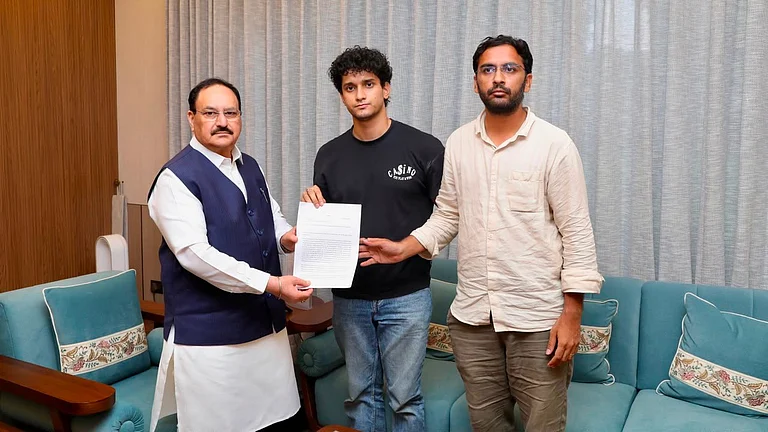
NEW DELHI: CJP leaders Ashutosh Ranka and Saurav Das met Union Health Minister J P Nadda on Monday after a protest march towards Parliament intensified in central Delhi. The meeting came as the Cockroach Janta Party pressed the government over its demands linked to NEET-related concerns and other issues raised by the protesters.
The CJP leaders met Nadda at his residence after waiting for more than two hours, according to reports. The delegation submitted a written letter outlining its demands. The meeting lasted around 10 minutes, The News Minute reported.The meeting followed a tense day in Delhi.
Protesters participating in the CJP’s ‘Chalo Sansad’ march faced heavy police deployment, detentions and clashes with security personnel, according to media reports. The developments brought the protest closer to the centre of national political attention as Parliament’s Monsoon Session began.
CJP leaders submit three key demands
According to CJP spokesperson Ashutosh Ranka, the delegation sought three major actions from the government.The first demand was the immediate release of activist Sonam Wangchuk.
The second called for the resignation of Union Education Minister Dharmendra Pradhan. The third sought compensation of ₹1 crore for the families of NEET aspirants who died by suicide.Ranka said Nadda had asked for time to consult the government leadership on the demands.
The minister’s response did not amount to an acceptance of the demands, and the government has not announced any decision on them.
NEET concerns remain central to the CJP protest
The CJP protest has placed examination accountability at the centre of its campaign. The group has raised concerns over alleged irregularities and accountability in the NEET system while demanding political responsibility from the Union government.
The demand for compensation for families of students who died by suicide adds a wider social dimension to the protest. Such demands require careful examination of individual cases, official records and the legal framework governing compensation.The government’s position on the CJP demands remains subject to further developments.
The meeting with Nadda opened a channel for communication, but no formal settlement emerged from the talks.
Delhi protest raises questions over police action
The meeting took place after a day of heightened tension around the protest march. Reports described heavy security arrangements in central Delhi, including police deployment and the detention of demonstrators.
Some reports also mentioned clashes between protesters and police. The precise circumstances surrounding individual incidents remain subject to competing accounts, and official findings will be important in establishing what happened.The confrontation has added pressure on the authorities to balance public order with the right to peaceful protest.
Any allegations of excessive force or unlawful detention would require investigation based on official records and independent evidence.
What happens after CJP leaders meet JP Nadda
The immediate question is whether the meeting will lead to further talks between the government and the CJP. Ranka indicated that Nadda would consult the government leadership before responding to the demands.The government could face continued pressure if the protest movement maintains its campaign in Delhi.
The CJP, meanwhile, will have to decide whether to continue its demonstrations, seek further dialogue or escalate its political demands.The next steps will depend on the government’s response to the three demands and on developments surrounding the ongoing protest.
For now, the meeting between CJP leaders and JP Nadda has shifted the confrontation from the streets to direct political engagement, without resolving the issues that brought protesters to Parliament.

Curated news reports, in-depth analysis, and special features by India’s Opinion editorial team.