
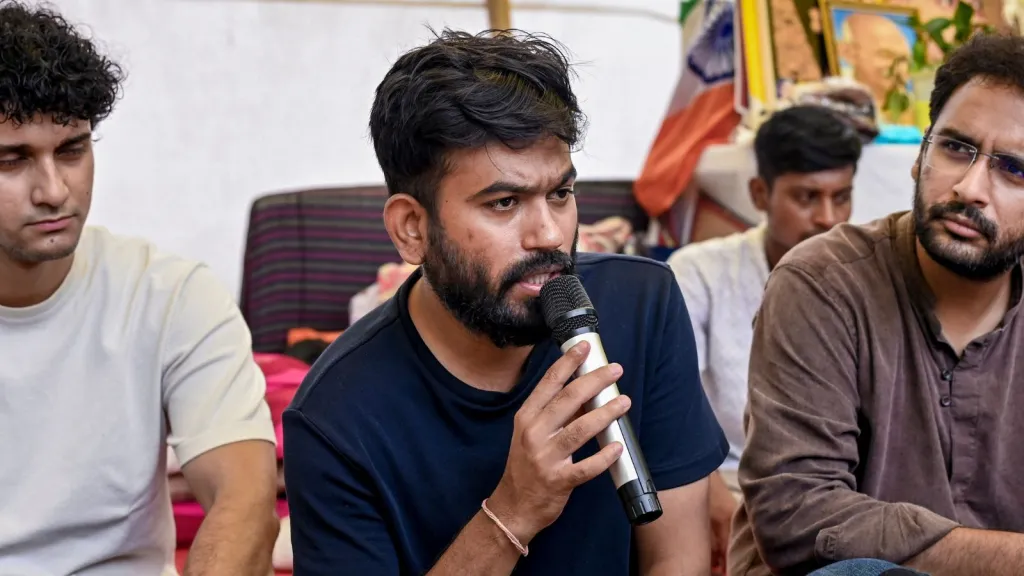
In a decisive statement regarding the future trajectory of India’s fast-growing youth movement. Cockroach Janta Party founder Abhijeet Dipke announced that the organization will function exclusively as a non-electoral pressure group. Rather than transforming into a registered political party, this approach will be followed.
Addressing journalists ahead of a crucial national core team strategy meeting in Chhatrapati Sambhajinagar, Maharashtra. Dipke emphasized that launching a conventional political entity would fundamentally undermine the broad-based coalition of students, job aspirants, and civil society members. These individuals have rallied around the movement’s campaign against institutional corruption and recruitment exam irregularities.
The decision to remain an independent civic pressure group comes as the CJP prepares to expand its operational footprint into eastern India. Specifically, the group is targeting systemic recruitment failures in Jharkhand. Dipke confirmed that CJP delegations are preparing to travel to Ranchi. They aim to join student agitators who have been staging an indefinite sit-in at the Jaipal Singh Munda Stadium.
Intervention in Jharkhand
The protesting job aspirants in Jharkhand are demanding an independent judicial investigation, headed by a panel of retired High Court judges from outside the state. The investigation would look into alleged paper leaks, OMR sheet tampering, and administrative malpractices in the 14th Jharkhand Public Service Commission Combined Preliminary Test. Furthermore, it would examine irregularities in Jharkhand Staff Selection Commission exams.
The CJP’s strategic roadmap involves organizing a nationwide listening tour across multiple states to systematically collect feedback from unemployed youth. Job-seeking candidates have been affected by widespread paper leak scandals, and the roadmap aims to address their concerns.
Environmental activist and Magsaysay Award winner Sonam Wangchuk continues to serve as the movement’s primary mentor. He provides strategic guidance as the youth organization expands its advocacy.
Legal and Mentorship Backing
Senior legal professionals have also stepped forward to support the movement’s legal defense fund. This ensures that students who face administrative retaliation or police charges during peaceful demonstrations receive adequate legal representation in court.
The youth organization originally shot into national prominence following its intensive 36-day protest at New Delhi’s Jantar Mantar regarding the NEET-UG paper leak controversy. There were also widespread irregularities across central education testing bodies.
The movement, which began as a satirical response to derogatory public remarks aimed at unemployed youth, successfully mobilized thousands of students across the country. Furthermore, they maintained continuous pressure on educational policymakers until Union Education Minister Dharmendra Pradhan eventually tendered his resignation.
With its upcoming strategy sessions, the movement aims to consolidate its regional chapters into a unified national coalition. This will help them to hold state governments accountable for fair recruitment practices.

Curated news reports, in-depth analysis, and special features by India’s Opinion editorial team.