Climate activist Sonam Wangchuk was shifted to Safdarjung Hospital on Saturday. His hunger strike at Delhi’s Jantar Mantar had just entered its 21st day.
The New Delhi DCP’s office confirmed the move. Officials said Wangchuk was hospitalised for “essential medical care.” The shift came on Delhi High Court orders. Doctors monitoring him had also advised the move, citing his worsening health.
Wangchuk began the fast on June 28. He is demanding the resignation of Union Education Minister Dharmendra Pradhan. The protest centres on alleged examination paper leaks, including in the NEET exam.
Family demands consent before treatment
Wangchuk’s wife, Gitanjali J. Angmo, reached Safdarjung Hospital soon after he was admitted. She issued a clear instruction to hospital staff.
“Nothing should be administered to him orally or intravenously without taking consent from me, his family and his doctors,” she said. She added that the same doctors had been monitoring his condition for the past 20 days.
Her statement points to a deeper concern. The family appears wary of any medical intervention that could be read as ending the fast without Wangchuk’s consent.
Dipke calls it an RSS tactic, vows to continue
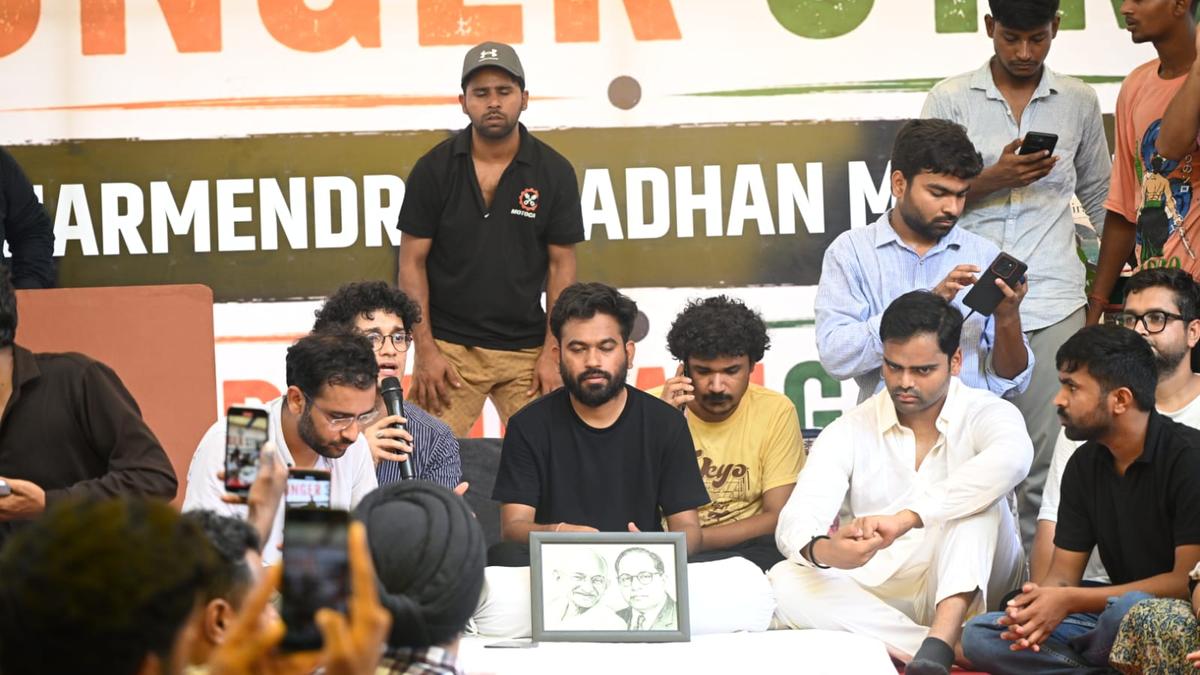
Abhijeet Dipke, founder of the Cockroach Janta Party (CJP), addressed protesters at Jantar Mantar after his own release from detention. He rejected the idea that moving Wangchuk to hospital would end the agitation.
“This antic by the RSS goons, of carrying Sonam-ji out… if they think this will end the protest, it won’t,” Dipke told students gathered at the site. “We will stay right here. And we will march to Parliament from right here on July 20.”
Dipke also escalated the protest’s central demand. He announced that the movement will now call for Prime Minister Narendra Modi’s resignation.
A fast that has drawn national attention
The strike has pulled in support well beyond Jantar Mantar. Jammu and Kashmir Chief Minister Omar Abdullah has criticised the Centre for not engaging with Wangchuk.
AAP national convenor Arvind Kejriwal visited him at the protest site earlier in the strike. The Supreme Court Bar Association has also appealed to Wangchuk to end his fast.
The CJP claims roughly 1.5 lakh people have confirmed participation in the planned July 20 march to Parliament. That figure has not been independently verified.
What happens next
Wangchuk’s health will now be the immediate flashpoint. Doctors have warned that prolonged fasting beyond three weeks can begin affecting vital organs, raising the stakes for whatever the Delhi High Court and his family decide next.
Whether the government responds to the resignation demand, or whether Dipke’s planned march to Parliament goes ahead as announced on July 20, will shape how this protest evolves in the coming days.

Curated news reports, in-depth analysis, and special features by India’s Opinion editorial team.