
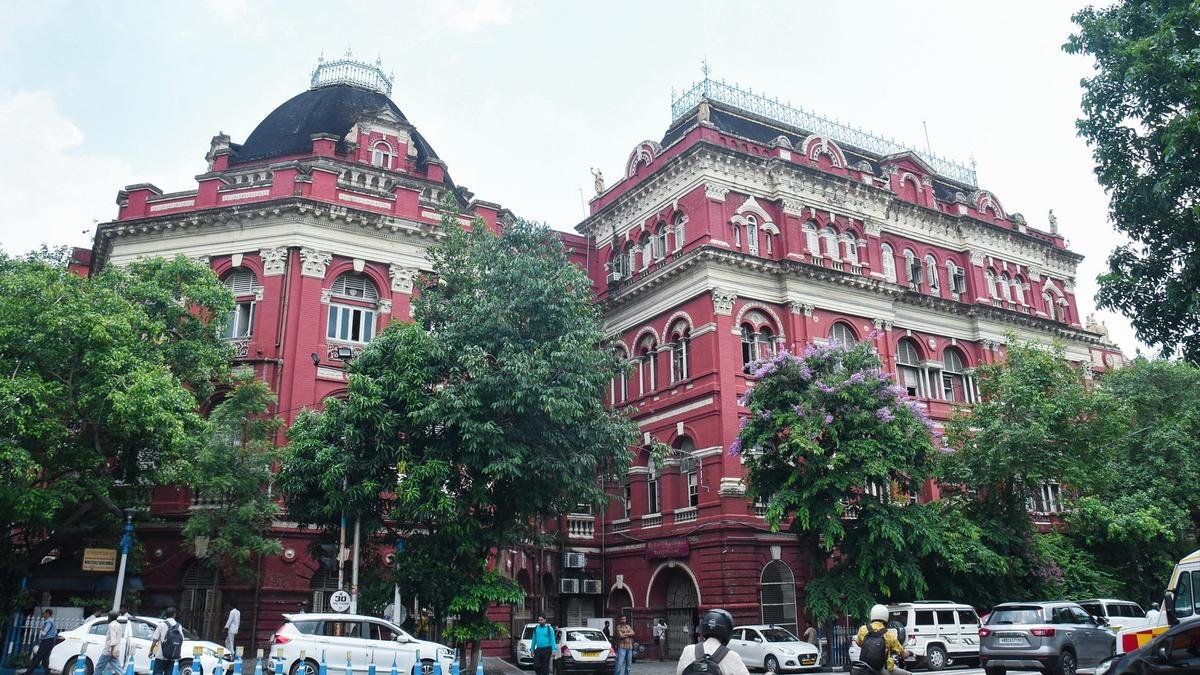
West Bengal’s historic Writers’ Building is preparing to host state ministers’ offices after a thirteen-year absence. For generations, the iconic red-brick edifice in Kolkata served as the bustling nerve center of state governance. Furthermore, authorities have completed extensive structural restoration across major wings of the legendary colonial-era landmark. State officials confirmed that administrative departments will progressively relocate from Howrah’s Nabanna building, reports The Hindu.
The West Bengal administration originally shifted key secretariat operations across the Hooghly river in October 2013. Officials designated the modern fourteen-storey Nabanna complex in Shibpur as a temporary administrative headquarters. However, procedural delays and intricate conservation mandates prolonged the comprehensive renovation schedule for over a decade. Consequently, the celebrated administrative monument stood largely vacated while technicians painstakingly restored its fragile heritage interiors.
Restoration Revives Kolkata’s Heritage Nerve Center
Heritage conservation architects dismantled non-structural concrete partitions added haphazardly over preceding decades. They meticulously restored the building’s neoclassical facade, expansive corridors, and signature Corinthian columns to original specifications. In addition, engineers installed modern fire protection systems, upgraded electrical grids, and integrated energy-efficient climate controls. These crucial structural modernizations ensure the 250-year-old complex satisfies contemporary governance security standards, notes Business Today.
Senior public works engineers have already certified several refurbished office chambers for ministerial occupancy. In addition, government departments will shift their operational headquarters in structured phases to avoid bureaucratic disruption. Therefore, departmental secretariats handling core governance portfolios will take possession of their historic chambers first. Staff members expressed immense excitement about returning to the traditional seat of Bengal’s executive authority.
Economic Boost for Local BBD Bagh Ecosystem
The relocation brings tremendous relief to hundreds of local informal vendors operating around Binoy Badal Dinesh Bagh. Street food stall operators, tea vendors, and transport workers experienced severe economic hardship after the 2013 evacuation. Moreover, dozens of legacy commercial establishments in the central business district suffered prolonged revenue stagnation. Small shopkeepers now eagerly anticipate substantial sales growth as thousands of civil servants return daily.
Local transport unions are coordinating with municipal authorities to accommodate anticipated commuter increases around central Kolkata. Bus operators plan to expand feeder services connecting major suburban rail terminals to Dalhousie Square. In addition, Kolkata traffic police officials are designing revised vehicular circulation plans to minimize downtown congestion. Consequently, the surrounding urban infrastructure will witness comprehensive operational renewal alongside the secretariat’s revival.
Rich Political History of Mahakaran
Originally constructed in 1777 for East India Company clerks, Writers’ Building witnessed India’s epic freedom struggles. Renowned revolutionaries Benoy Basu, Badal Gupta, and Dinesh Gupta famously stormed the citadel in December 1930. Furthermore, legendary chief ministers like Bidhan Chandra Roy, Jyoti Basu, and Buddhadeb Bhattacharjee governed from these halls, explains Wikipedia. The imposing landmark remains deeply intertwined with Bengal’s twentieth-century political evolution and popular consciousness.
The Trinamool Congress administration governed from Writers’ Building briefly before initiating the Nabanna relocation. Critics frequently debated whether modern administrative functions could realistically thrive inside complex colonial heritage structures. Nevertheless, state conservationists demonstrated that sensitive engineering can harmonize historical preservation with dynamic modern governance needs. The successful structural rejuvenation preserves Bengal’s tangible heritage while restoring its vital civic purpose, observes ETV Bharat.
Phased Transition from Nabanna Secretariat
Administrative teams are preparing comprehensive equipment inventories to ensure seamless ministerial relocations over coming weeks. Officials will maintain contingency communication networks between Nabanna and Writers’ Building throughout the transition period. Meanwhile, technical support personnel are installing high-speed optical fiber backbones to support advanced digital governance platforms. Consequently, this dual-facility operational model prevents administrative backlogs while offices complete their physical movements.
The historic return marks a symbolic milestone for Kolkata’s architectural identity and administrative pride. Citizens and civil society organizations warmly welcome the revitalization of their cherished municipal centerpiece. Furthermore, urban planners praise the initiative as a benchmark model for adaptive heritage reuse nationwide. Writers’ Building now stands ready to author an inspiring new chapter in Bengal’s administrative history.

Curated news reports, in-depth analysis, and special features by India’s Opinion editorial team.