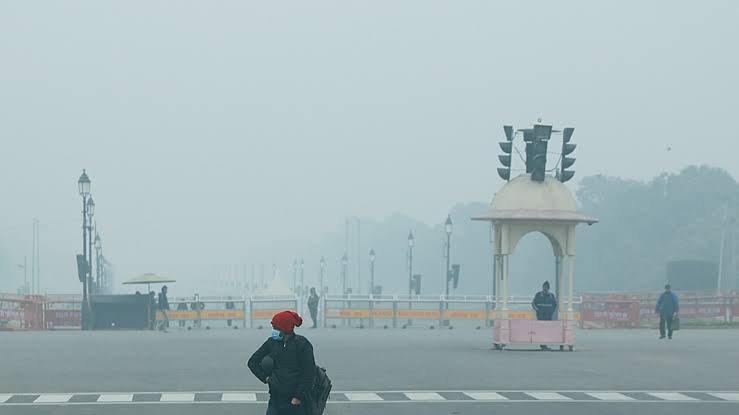
Air quality across the national capital deteriorated into the “poor” category on Thursday morning. The Central Pollution Control Board (CPCB) recorded an Air Quality Index (AQI) of 244 in Delhi. The drop marks the onset of the winter pollution cycle following post-monsoon weather shifts.
The city had enjoyed “moderate” air quality throughout early October due to scattered rain showers. However, plunging nighttime temperatures and calm surface winds trapped localized pollutants near ground level. According to environmental monitoring updates published by The Hindu, particulate matter (PM2.5 and PM10) concentrations spiked across industrial hotspots. Areas including Anand Vihar, Jahangirpuri, and Bawana recorded dense morning haze. Therefore, health experts advised vulnerable citizens and senior residents to avoid strenuous outdoor morning exercises.
Air Quality Panel Imposes GRAP Stage 1 Measures
Reacting to the deteriorating air metrics, the Commission for Air Quality Management (CAQM) invoked Stage 1 of the Graded Response Action Plan (GRAP). The emergency measures apply across Delhi and surrounding National Capital Region (NCR) districts.
Civic agencies initiated daily mechanized road sweeping and water sprinkling along busy traffic corridors. As detailed by Livemint, authorities mandated strict dust-suppression screens at all construction and demolition sites. Furthermore, transport departments deployed flying inspection squads to penalize visibly polluting commercial vehicles. Municipal bodies also enforced strict bans on open biomass and waste burning in public parks. Consequently, municipal commissioners received directions to ensure uninterrupted electricity supplies to discourage private diesel generator usage.
Coastal Sea Breezes Shield Mumbai in Moderate Zone
In contrast to northern cities, financial capital Mumbai maintained relatively cleaner air on Thursday. The metropolis recorded an overall AQI of 142, keeping its atmosphere firmly in the “moderate” category.
Active maritime breezes from the Arabian Sea helped disperse vehicle exhaust and industrial emissions. Detailed regional monitoring by Mid-Day showed satisfactory air readings across south Mumbai and coastal suburbs. Meanwhile, eastern suburbs like Chembur and Kurla logged slightly elevated particulate readings due to construction dust. In addition, the Brihanmumbai Municipal Corporation continued washing major arterial highways to control road silt. As a result, coastal Maharashtra avoided the severe smog spikes currently affecting inland northern cities.
Forecast Warns of Sticky Pollution as Winter Approaches
Meteorologists warned that northern India faces persistent air quality challenges over the coming weeks. The Indian Institute of Tropical Meteorology’s early warning system predicted sustained “poor” air until late October.
Wind directions have shifted to northwesterlies, carrying agricultural stubble smoke from Punjab and Haryana into the Delhi basin. Reporting by Hindustan Times indicated that upcoming Diwali festival celebrations could push pollution levels into the “very poor” bracket. On the other hand, environmental authorities urged residents to adopt mass transit like the Delhi Metro. Moreover, civic agencies readied smog guns around high-density intersections. Strict adherence to pollution control norms remains critical to prevent severe public health emergencies this winter.

Curated news reports, in-depth analysis, and special features by India’s Opinion editorial team.