
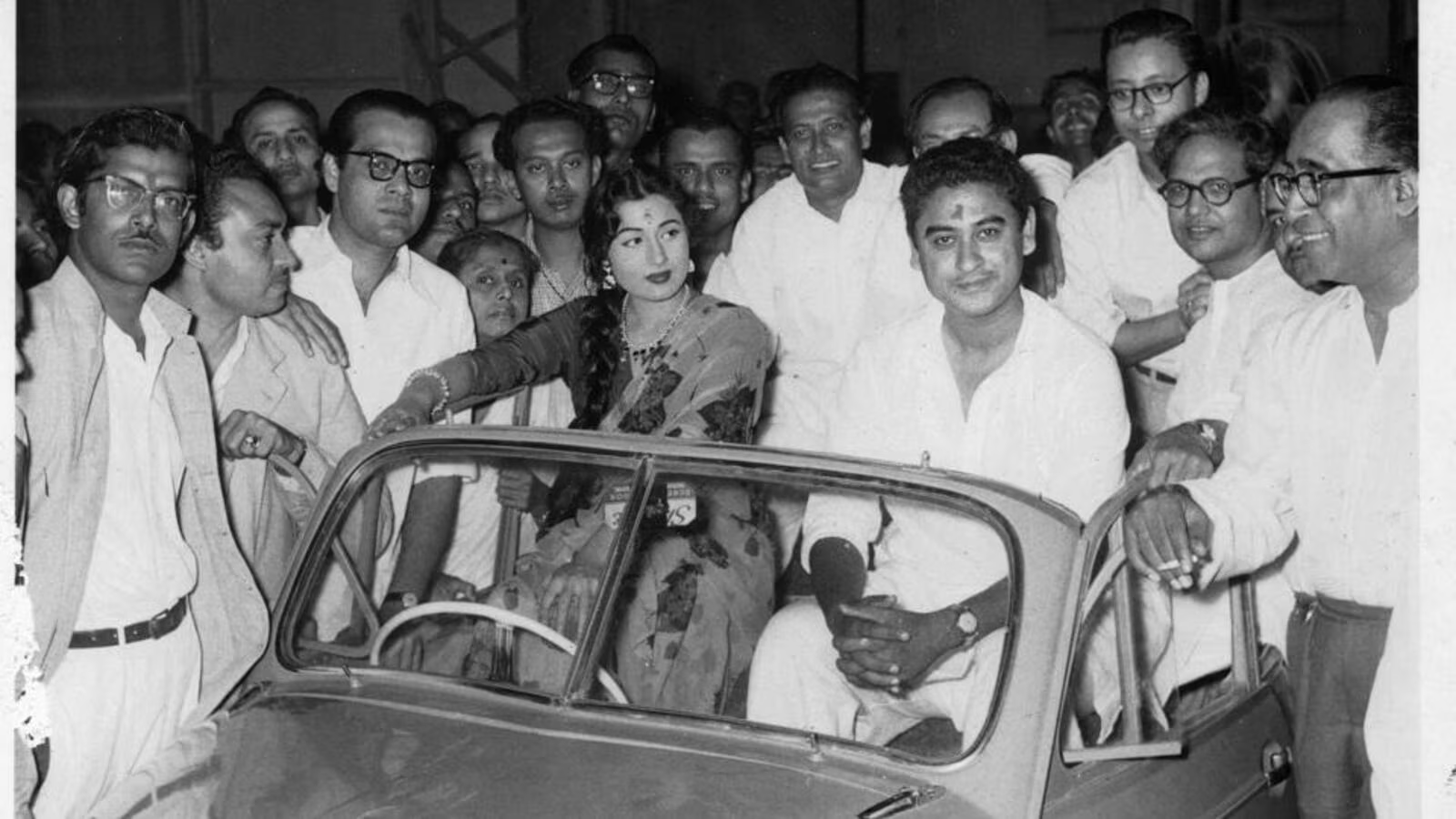
The Patna High Court has initiated judicial scrutiny over a prestigious cultural honor awarded by the central government. Justice Ajit Kumar issued formal notices to the Union Information and Broadcasting Ministry and film development authorities. Furthermore, the petition challenges the decision to confer the Best Book on Cinema award upon a singer’s biography. The controversial litigation questions whether a musical biography meets statutory literary standards for cinematic scholarship, according to The Indian Express.
The legal dispute challenges the Golden Lotus awarded during the seventieth National Film Awards ceremony. Authors Anirudha Bhattacharjee and Parthiv Dhar penned Kishore Kumar: The Ultimate Biography, published through HarperCollins. However, a rival author argues that personal artist chronicles cannot substitute for substantive cinema literature. Consequently, the High Court asked central regulators to explain the selection criteria governing national film honors.
Petitioner Challenges Category Error in Awards
Patna-based author Anant Prasad Sinha filed the writ petition contesting the national cultural selection. Writing under the pen name ‘Anant’, Sinha authored the acclaimed Hindi cinema volume Do Gulfamo Ki Teesri Kasam. In addition, his book meticulously analyzes the literary adaptation of Phanishwar Nath Renu’s famous short story. The non-fiction work chronicles lyricist Shailendra’s six-year struggle producing the classic 1966 Bollywood film Teesri Kasam.
Sinha contends that selecting an individual musician’s biography constitutes a fundamental category error by award jurors. Therefore, the petitioner drew sharp historical parallels to demonstrate his core constitutional and linguistic objections. He argued that celebrating Ambedkar’s personal life differs profoundly from analyzing the Indian Constitution’s legal architecture. Furthermore, he insisted that cinema awards must honor works analyzing filmmaking technique, aesthetics, and cinematic craft.
Notices Issued to Ministry and Award Jurors
Justice Ajit Kumar examined preliminary arguments regarding the selection parameters applied by federal jury panels. The bench issued formal show-cause notices returnable before the next scheduled hearing on October 8. Moreover, the court directed the National Film Development Corporation to explain its administrative screening mechanisms, reports Hindustan Times. Legal notices also target the jury members who evaluated eligible entries published throughout calendar year 2022.
The Best Book on Cinema category carries the prestigious Swarna Kamal and a one-lakh rupee cash prize. Sinha had previously petitioned ministerial officials to review the selection before approaching the high court. In addition, the petitioner claimed that administrative authorities dismissed his statutory representations without providing written reasons. Consequently, judicial intervention remains his sole remaining avenue to enforce published eligibility norms.
Debating the Definition of Cinema Literature
The petition revives an enduring intellectual debate within India’s film study and academic publishing communities. Cultural critics question whether biographical retrospectives on prominent film playback singers represent authentic cinema studies. Kishore Kumar undeniably shaped popular Hindi film music across four glorious decades of musical innovation. Nevertheless, purists maintain that music biographies explore personal eccentricities rather than film grammar and visual storytelling.
Supporters of the awarded biography emphasize Kishore Kumar’s multidimensional contributions as director, producer, and actor. They argue that film soundtracks constitute an inseparable pillar of India’s unique cinematic storytelling tradition. Furthermore, thorough biographical research into prominent film personalities offers profound historical insights into studio eras. Both perspectives highlight divergent philosophical approaches toward evaluating specialized arts literature.
Wider Implications for National Film Honours
The judicial challenge could establish binding legal precedents governing future cultural evaluations across India. Legal scholars observe that courts traditionally avoid interfering with expert artistic jury determinations. However, judges may intervene when statutory guidelines appear arbitrarily bypassed during public selection procedures. Consequently, administrative transparency in evaluating national cultural submissions faces unprecedented judicial scrutiny.
All eyes now turn to the scheduled Patna High Court proceedings on October 8. Central government counsels must formally explain how jury panels interpreted cinema literature criteria during deliberations. Meanwhile, film enthusiasts and authors eagerly await clarity on eligibility definitions for prestigious cultural honors. The verdict promises to redefine boundaries between popular biography and serious cinematic scholarship in India.

Curated news reports, in-depth analysis, and special features by India’s Opinion editorial team.