India is increasingly using culture to tell its story abroad, and the effort now sits closer to the centre of its diplomatic ambitions.
From artists and musicians to cinema, heritage and traditional performing arts, cultural exchange has become one of the tools New Delhi uses to build familiarity with India beyond formal diplomacy.
The Ministry of External Affairs describes cultural diplomacy as an important dimension of a country’s soft power.
The government has also expanded programmes designed to project Indian culture overseas through the Indian Council for Cultural Relations, or ICCR.
The idea matters because influence between countries does not always begin with trade agreements or strategic partnerships. Sometimes it starts with what people watch, listen to, study and experience.
India’s soft power has deeper roots than modern diplomacy
India’s cultural influence abroad did not begin with the arrival of social media or Bollywood’s global popularity.
Indian philosophy, Buddhism, yoga, classical music, dance and literature have travelled across borders for centuries.
Buddhism, for example, created enduring cultural links between India and large parts of Asia.Independent India later institutionalised some of those connections.
The ICCR, established in 1950, became a major vehicle for cultural relations and international exchanges.
The Ministry of External Affairs says ICCR sponsors Indian artists to perform overseas and hosts foreign artists in India.
A March 2026 parliamentary response also highlighted these activities as part of the country’s cultural outreach.This gives India’s soft power an institutional structure.
Cultural influence is no longer limited to spontaneous interest in Indian traditions. Government-backed programmes now help carry that culture into foreign societies.
Art can open diplomatic doors
Art occupies an unusual place in international relations because it can create contact without requiring agreement on contentious political questions.
An Indian classical dance performance does not require two governments to settle a border dispute. A museum exhibition can bring audiences together even when diplomatic relations remain complicated.
That makes cultural diplomacy useful for countries seeking broader public engagement.The Indian government has explicitly described cultural diplomacy as part of its soft-power strategy.
Official MEA material says India’s cultural assets, including Bollywood, have contributed to its international influence.The approach also gives diplomats another way to introduce India’s diversity.
India’s soft power extends beyond Bollywood
Cinema remains one of India’s most recognisable cultural exports, but the country’s international cultural presence is much broader.
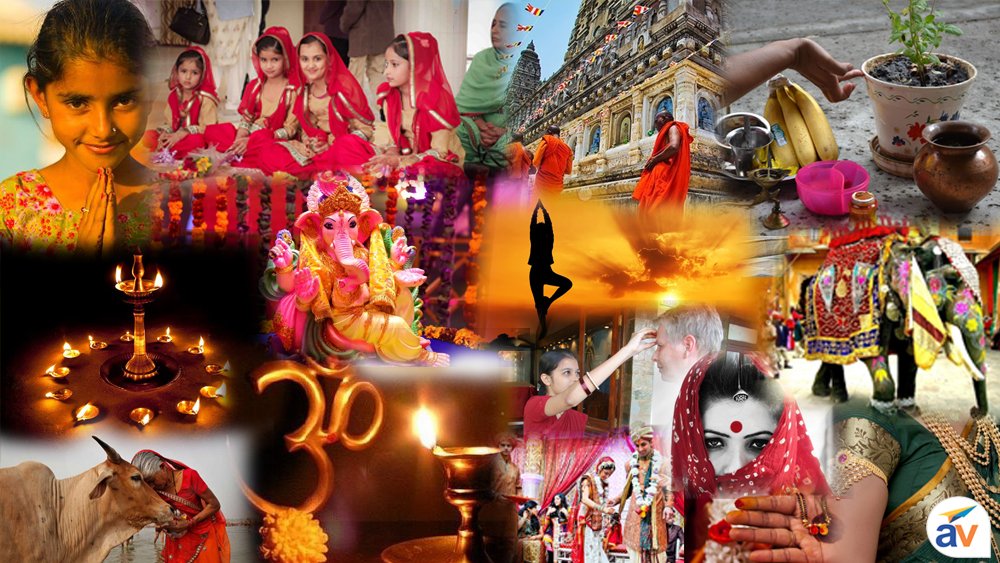
Indian food, yoga, classical dance, music, handicrafts, literature and festivals all contribute to how foreign audiences encounter the country.
Tourism adds another layer. The government’s Incredible India platform promotes destinations, cultural events, crafts and experiences as part of India’s international tourism identity.
Heritage can also become a diplomatic asset.Sarnath’s inscription on the UNESCO World Heritage List in 2026 added another internationally recognised Indian cultural site to the global heritage map.
The inscription took India’s total number of UNESCO World Heritage sites to 45, according to reports on the decision.
Such recognition does not automatically translate into diplomatic influence. It does, however, give India another opportunity to connect heritage, tourism and international cultural engagement.
Why culture matters in geopolitical competition
The competition between major powers increasingly involves narratives as well as military and economic strength.
Countries want international audiences to understand their history, values and ambitions on their own terms.
Cultural diplomacy provides a relatively low-cost way to build that familiarity.This is where India’s soft power intersects with geopolitics.
India seeks deeper relationships with countries across Asia, Africa, Europe, the Middle East and the Americas.
Cultural programmes can create people-to-people links that complement formal diplomatic engagement.
The government has also linked ICCR’s cultural initiatives to the broader goal of projecting India as a global power by 2047.
A parliamentary response published in August 2026 described ICCR’s cultural diplomacy initiatives as part of India’s soft-power efforts under the Viksit Bharat 2047 vision.
That framing shows how cultural outreach has moved beyond symbolism.
India’s soft power faces limits
Cultural influence, however, has clear limits.A country can attract admiration for its films, cuisine or music without automatically gaining support for its foreign-policy positions.
Public opinion can also change quickly when political controversies dominate international coverage.Soft power works differently from economic pressure or military deterrence.
It depends heavily on credibility, attraction and sustained engagement.
The distinction matters because governments can promote culture, but they cannot completely control how foreign audiences interpret it.
There is also an internal challenge. India’s cultural identity is exceptionally diverse, covering hundreds of languages, regional traditions and artistic forms.
Any official cultural campaign must decide which aspects receive international attention.A narrow presentation could weaken the very diversity that makes Indian culture attractive.
The diaspora adds another layer
The Indian diaspora also plays an important role in cultural diplomacy, although diaspora communities operate independently of the Indian state.
Indian-origin communities have established cultural institutions, restaurants, religious centres, businesses and artistic organisations across the world.
These networks help maintain connections with India while introducing local populations to Indian traditions.This creates a broader ecosystem around India’s soft power.
Government programmes can support cultural exchanges, but the country’s international image is also shaped by ordinary citizens, entrepreneurs, artists, students and diaspora communities.
Can cultural influence become strategic influence?
The harder question is whether cultural popularity can produce measurable diplomatic gains.
There is no simple formula connecting the popularity of Indian cinema or yoga with a favourable vote at an international organisation.
Foreign-policy decisions usually depend on security interests, economics, domestic politics and strategic calculations.Still, cultural familiarity can make diplomatic relationships easier to sustain.
A foreign audience that already knows Indian music, films or food may have a more accessible entry point into understanding the country itself.
That does not guarantee political alignment, but it can create space for dialogue.
For New Delhi, that makes India’s soft power a useful complement to traditional diplomacy.
The challenge will be consistency. Cultural diplomacy requires long-term investment rather than occasional festivals or headline events.
It also depends on allowing artists and cultural institutions enough space to build genuine relationships rather than turning every exchange into official messaging.
Umar Khan is a writer driven by curiosity and a passion for understanding the world. Through thoughtful analysis and evocative storytelling, he seeks to make complex ideas accessible, inspire meaningful conversations, and encourage fresh perspectives on the people, places, and issues that shape our shared future.