
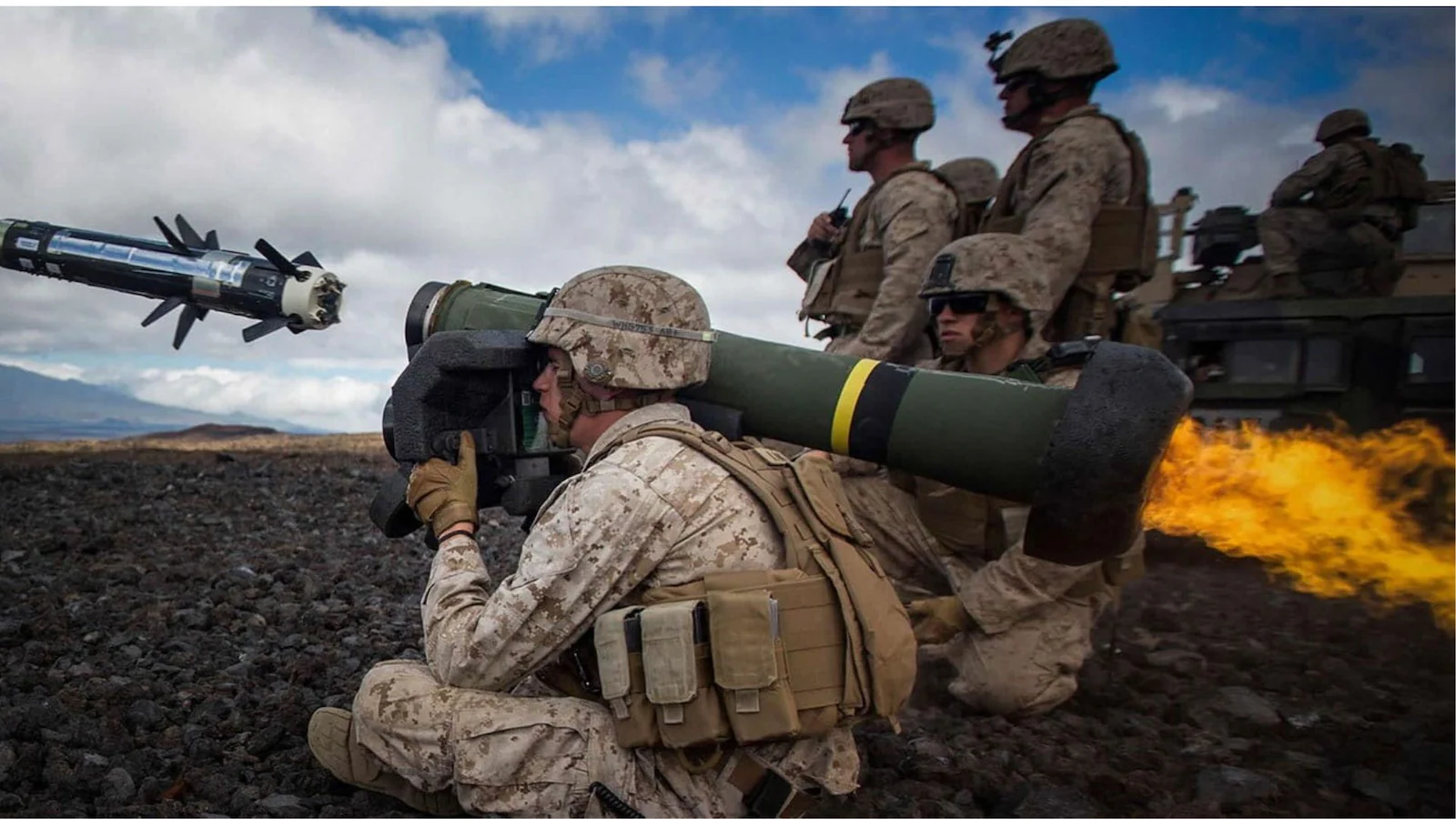
Tata Advanced Systems Limited (TASL) has signed a Memorandum of Understanding (MoU) with the Javelin Joint Venture (JJV). The venture brings together two of America’s largest aerospace and defence majors: Lockheed Martin and Raytheon.
The strategic pact lays the groundwork to co-produce the battle-tested Javelin anti-tank guided missile (ATGM) weapon system within India. The collaboration aims to serve the long-term modernization needs of the Indian Armed Forces. Additionally, it unlocks export opportunities across partner nations.
The Scope and Framework of the Agreement
The MoU establishes a clear framework for establishing a dedicated final assembly, integration, and testing facility for the Javelin All Up Round (AUR) on Indian soil.
TASL was selected as the prime Indian industrial partner after a rigorous technical evaluation process involving several Indian defence firms. Under the agreement, the collaboration will also explore setting up domestic component manufacturing pipelines. Moreover, it will consider test bench infrastructure and lifecycle support networks.
How the US-India Co-Production Model Works
The manufacturing model directly connects primary American defence production lines with Indian facilities:
- Sub-Assembly Kits: Lockheed Martin will fabricate missile components and airframe sub-assemblies at its facility in Troy, Alabama.
- Guidance & Seeker Units: Raytheon will produce the electro-optical tracking, guidance electronics, and seeker systems at its manufacturing hub in Tucson, Arizona.
- Final Assembly & Integration: These critical systems will be shipped to India, where TASL will carry out final missile integration, system verification, quality checks, and operational testing.
The co-production structure allows India to absorb advanced missile assembly know-how. At the same time, it keeps core component lines active in the United States.
Strengthening Operational Readiness for the Indian Army
The tie-up comes on the heels of the Indian Army signing a Letter of Offer and Acceptance (LOA) to procure Javelin weapon systems through the US Foreign Military Sales (FMS) route.
Sukaran Singh, CEO and Managing Director of TASL, emphasized that local assembly will drastically cut replenishment lead times and give frontline units faster access to mission-ready armaments. He noted that establishing deep-tier industrial capacity inside India aligns directly with the nation’s self-reliance objectives in defence production.
Why the Javelin Missile Remains a Benchmark
The FGM-148 Javelin is a man-portable, medium-range, fire-and-forget anti-tank guided weapon system.
- Targeting Capability: The weapon uses automatic infrared guidance, allowing the operator to seek cover immediately after launch without guiding the missile manually.
- Attack Profiles: It offers both direct attack for bunkers and fortifications, and top-attack mode to strike the thinnest armor of modern main battle tanks.
- Proven Track Record: Over 55,000 Javelin missiles and more than 12,000 Command Launch Units have been delivered globally.
Setting up a co-production line in India helps ease strained global defence supply chains. Furthermore, it builds strategic inventory depth and expands defence technology collaboration between New Delhi and Washington.

Curated news reports, in-depth analysis, and special features by India’s Opinion editorial team.