
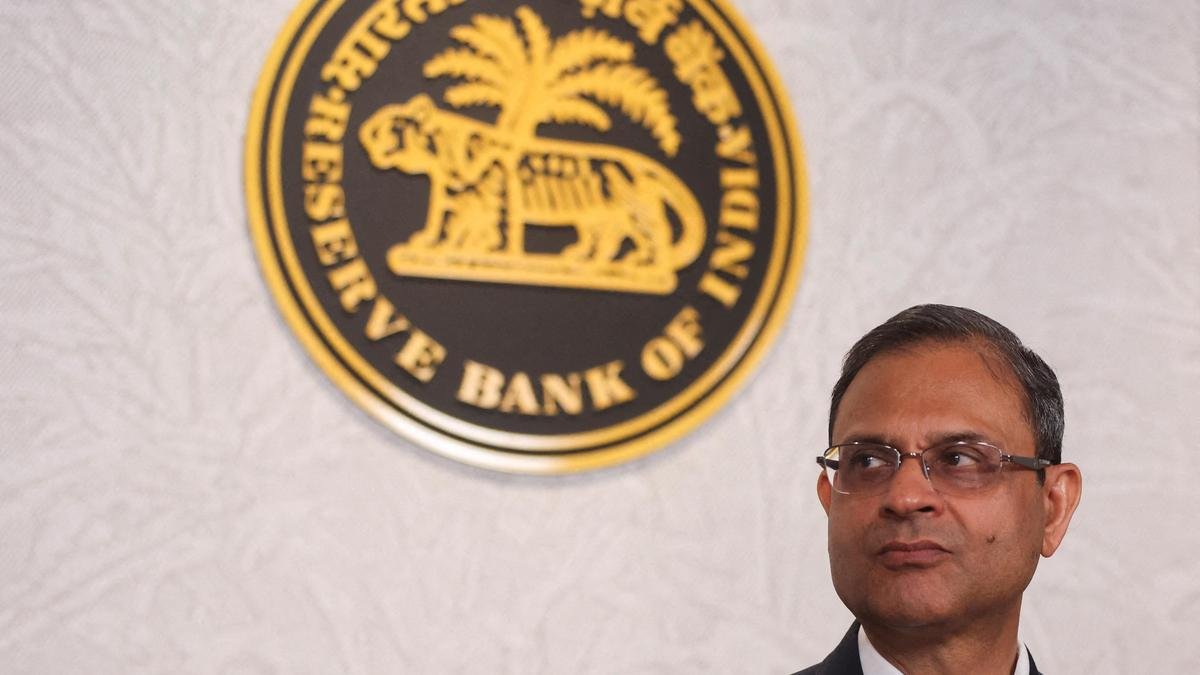
The Reserve Bank of India kept its repo rate unchanged at 5.25 percent on Wednesday, extending its pause for a fourth consecutive policy review. Announcing the decision after Policy Committee meeting, RBI Governor Sanjay Malhotra said India remains the world’s fastest growing large economy.
Malhotra flagged inflation as the immediate concern to watch. “Headline inflation will rise in near term, fuelled by higher oil and food prices. It will peak in the third quarter before starting to decline,” he said.
Inflation Pressure Is Sectoral, Not Broad-Based
The Governor was careful to frame the nature of the inflation pressure. He said the rise was being driven by food and fuel prices specifically, rather than reflecting a broader, economy-wide trend, implying the pressure was sectoral rather than systemic.
That framing lines up with the RBI’s own data. CPI inflation rose to 4.4 percent in June, its first uptick after staying below target for 16 straight months, driven by food and fuel. Core inflation, by contrast, held steady at 3.9 percent through both May and June, reinforcing the Governor’s point that the broader inflation picture remains contained.
The West Asia Conflict Looms Large
Malhotra devoted a significant part of his address to the external environment, and the West Asia conflict in particular. “The West Asia conflict continues to challenge the global economy by disrupting key trade routes and supply chains, amplifying market volatility and depressing business sentiment.
Trade uncertainty persists as the US has imposed fresh tariffs. The global economic environment has become increasingly unstable,” he said.
He added that global growth is expected to soften, while inflation is likely to run higher in 2026 compared to 2025. “While some central banks have tightened monetary policy, others remain vigilant.
Crude oil prices, currencies and financial markets continue to remain volatile, fluctuating in line with the changing intensity and uncertainties of the West Asia conflict,” Malhotra said.
The Domestic Economy Holding Steady
Despite the global turbulence, Malhotra painted a resilient picture of the domestic economy. He said the MPC’s decision came after assessing both evolving domestic macroeconomic conditions and the global outlook, and that India’s economy had performed better than expected in the first quarter.
“Private consumption continued to be driven by buoyant discretionary spending. Investment activity remains steady on the back of robust government spending on infrastructure and construction.
Merchandise exports rebounded with double-digit growth. Services exports growth sustained its momentum. Overall, the Indian economy performed better than expected in Q1,” Malhotra said.
He also flagged El Niño’s continuing impact as a major risk to watch, alongside persistently volatile global oil prices.
What Happens Next
With rates held steady for a fourth straight meeting and inflation expected to peak in the third quarter before easing, the RBI’s next moves will likely hinge on how the West Asia conflict evolves and whether that third-quarter inflation peak plays out as projected.
For now, the central bank appears content to stay watchful rather than shift its stance, betting that India’s underlying growth momentum can absorb the external shocks without needing a policy response just yet.

Curated news reports, in-depth analysis, and special features by India’s Opinion editorial team.