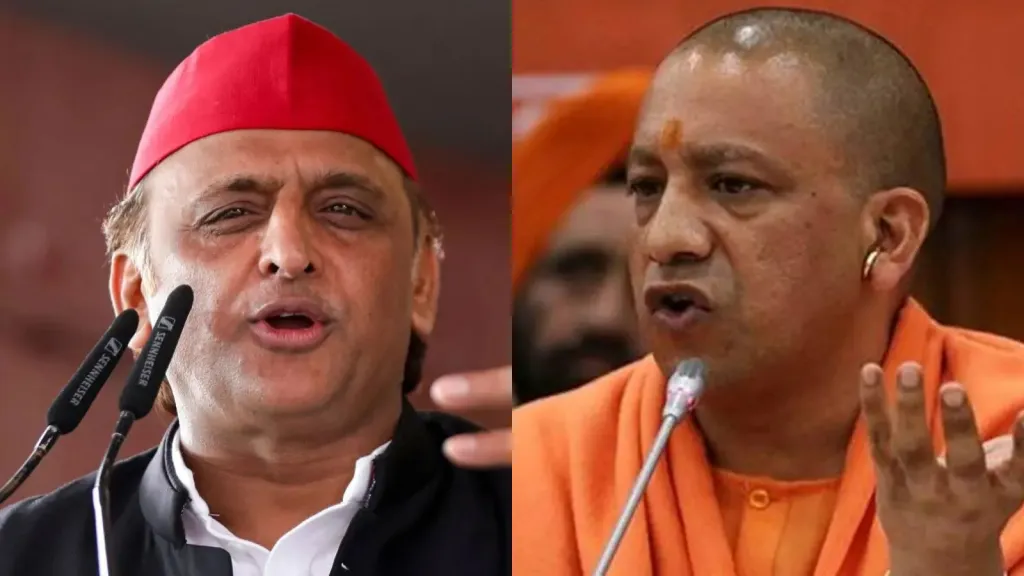
The Ayodhya Assembly constituency has returned to the center of Uttar Pradesh politics. A high-voltage verbal clash between Chief Minister Yogi Adityanath and Samajwadi Party (SP) chief Akhilesh Yadav triggered the debate. The duel began when Akhilesh visited Ayodhya to attend a religious function organized by former SP legislator Tej Narayan Pandey.
During the visit, Akhilesh dared the Chief Minister to contest the upcoming 2027 state elections directly from Ayodhya. He claimed the Samajwadi Party would defeat him on home turf. However, Adityanath quickly accepted the challenge on Sunday. As reported by The Hindu, Adityanath urged Akhilesh to enter the electoral contest personally rather than hiding behind party proxies.
Lingering Shadow of the 2024 Faizabad Defeat
The sharp exchanges stem directly from the 2024 Lok Sabha election results. In that contest, the Bharatiya Janata Party (BJP) suffered a stunning loss in the Faizabad parliamentary seat. SP candidate Awadhesh Prasad won the parliamentary constituency despite the grand opening of the Ram Temple.
The defeat dealt a major symbolic blow to the ruling party in its ideological heartland. Consequently, the BJP wants to regain unquestioned dominance in the holy city. Detailed political reporting by The Indian Express notes that party strategists treat Ayodhya as a prestige battle. Therefore, state leaders view the seat as crucial to demonstrate popular faith in their cultural agenda.
Competing Social Math Shapes Temple Town Contest
The assembly seat features a complex social landscape that defies simple religious polarization. While BJP leader Ved Prakash Gupta won the seat in 2017 and 2022, Samajwadi Party candidate Pawan Pandey had won it earlier in 2012.
The constituency holds sizable numbers of Dalit, backward-caste, and minority voters alongside traditional upper-caste communities. Meanwhile, Akhilesh relies heavily on his backward, Dalit, and minority coalition to build momentum. In addition, local SP workers actively engage rural pockets outside the main temple corridor. As a result, both sides are testing their grassroots alliances well ahead of the election cycle.
Local Grievances Fuel Fierce Political Rivalry
Beyond ideological messaging, local civic issues heavily influence public opinion across Ayodhya. Rapid infrastructure projects have widened major roads and built grand public corridors. However, these construction drives also displaced hundreds of small shopkeepers and local homeowners.
Opposition leaders routinely highlight delays in land compensation and civic disruptions caused by aggressive urban remodeling. Furthermore, local merchants have voiced worries over rising municipal levies and property reassessments. On the other hand, the state government points to booming religious tourism and massive job creation. Moreover, the administration insists that world-class connectivity benefits every local resident.
Ayodhya as the Decisive Battleground for 2027
The political sparring indicates that the 2027 campaign narrative will revolve tightly around Ayodhya. For the BJP, securing a commanding victory in the temple seat is vital to project unshakeable authority.
For the Samajwadi Party, another upset victory would dismantle the ruling party’s core narrative. Therefore, both camps are deploying senior leaders and intensifying ground outreach across every ward. The battle for Ayodhya has moved far beyond symbolic rhetoric, setting up a defining political showdown for Uttar Pradesh.

Curated news reports, in-depth analysis, and special features by India’s Opinion editorial team.