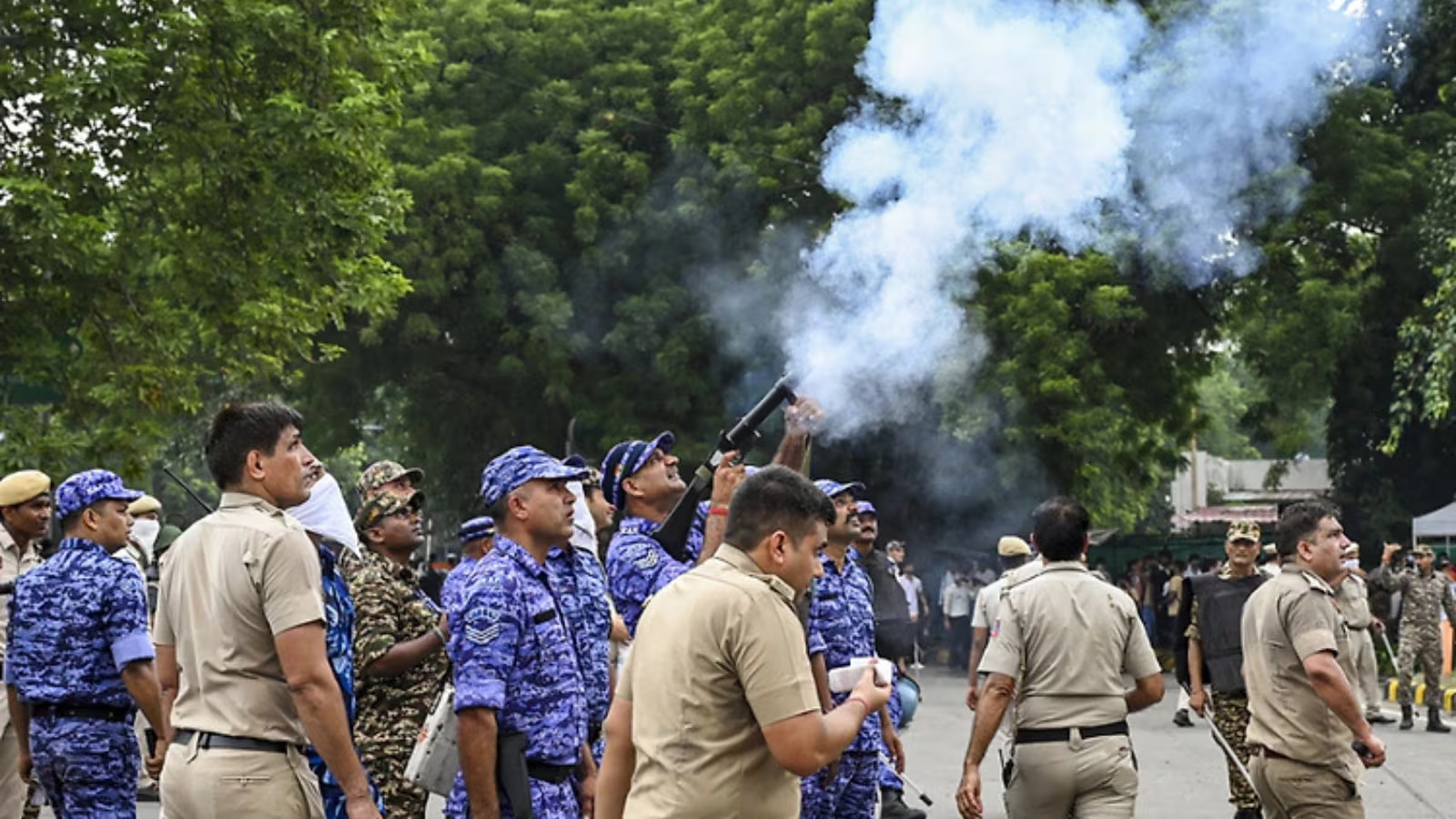
The Supreme Court of India has intervened in the ongoing controversy surrounding the use of pellet guns during civilian protests. In response to a petition filed by former IPS officer Yashovardhan Azad and two victims of pellet injuries, the apex court issued a formal notice to the Centre. Furthermore, the Court has directed the government to preserve the ammunition logs of Rapid Action Force (RAF) personnel deployed at Jantar Mantar during the recent demonstrations. This judicial directive marks a significant development in the legal battle against the use of “less lethal” weapons for crowd control.
Petitioners Challenge “Less Lethal” Status of Pellet Guns
The petitioners have strongly challenged the categorization of pellet guns as non-lethal alternatives to firearms. They argue that when fired at close range into dense crowds, these weapons cause severe, life-altering injuries to vital organs.
As primary evidence, they highlighted the case of 19-year-old Sahil Lochab, who suffered a traumatic eye injury during the firing incident on July 20. Legal counsel for the petitioners emphasized that such weapons inflict brutal and grievous harm. Furthermore, this contradicts the safety claims often cited by law enforcement agencies.
Constitutional and International Human Rights Concerns
The legal challenge draws heavily from the United Nations Guidelines on Less Lethal Weapons in Law Enforcement. The petitioners contended that using pellet guns—particularly those loaded with metallic pellets—for dispersing civilian crowds fails to meet the constitutional standards of “necessity, proportionality, and reasonableness.”
” They argued that international standards explicitly caution against the use of projectile-activated weapons in civilian settings. Moreover, they asserted that their deployment constitutes an excessive use of force that violates fundamental rights to safety and peaceful assembly.
Victims Detail Indiscriminate Use of Force
The petition includes testimonies from individuals who claim they were bystanders or peaceful participants when struck by pellets. Prashant Kumar Singh, a 25-year-old artist and co-petitioner, stated he was present at the ‘Sansad Chalo’ march on July 20 when he sustained injuries from RAF firing. He emphasized this occurred despite showing no aggression.
Similarly, 26-year-old Sheikh Irshad Mansoori alleged he was injured by pellet fire while near Connaught Place for personal visa-related work. These accounts aim to demonstrate that the force used was indiscriminate. Therefore, it affected citizens who were not part of any violent disruption.

Curated news reports, in-depth analysis, and special features by India’s Opinion editorial team.