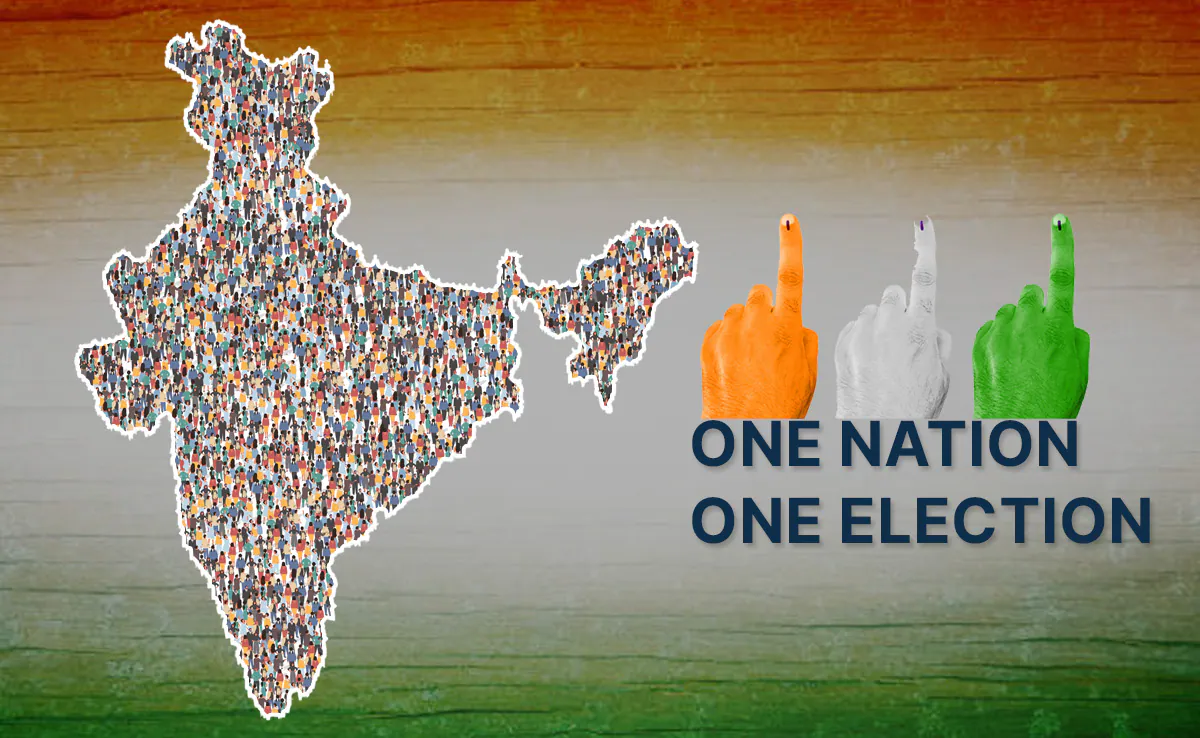
The National Democratic Alliance (NDA) is drafting an accelerated roadmap for simultaneous elections across India. The government is evaluating a plan to conduct assembly elections for 22 States and Union Territories alongside the 2029 Lok Sabha polls. The original timeline in the pending Bills anticipated full synchronization only by 2034.
However, top policymakers want to fast-track the process for willing states. This ambitious move represents one of the biggest electoral reforms in modern Indian history.
Advancing the Simultaneous Polls Roadmap from 2034 to 2029
The constitutional amendment bills originally introduced an ‘appointed date’ formula to adjust assembly tenures. Under that mechanism, the complete transition would take two full election cycles until 2034. But the Joint Parliamentary Committee (JPC) examining the bills is exploring an earlier rollout.
JPC Chairperson P.P. Chaudhary stated that Chief Ministers can voluntarily align their state election schedules. If NDA-ruled states and other willing assemblies agree, over two-thirds of the country could vote together in 2029.
The 22 States in Scope and the Kovind Panel Recommendations
The transition framework draws heavily from the recommendations of the high-level committee headed by former President Ram Nath Kovind. The 22 states and Union Territories include regions where assemblies were elected between 2024 and 2028.
States with elections scheduled in 2027 and 2028, such as Uttar Pradesh, Gujarat, and Rajasthan, could voluntarily curtail their terms.
Under the Kovind panel blueprint, the first step aligns national and state assembly elections. The second step synchronizes local body and panchayat polls within 100 days of the general elections.
Economic Rationale: Curbing ₹7 Lakh Crore in Losses
Government strategists emphasize that endless election cycles cause severe economic disruption across the country. Economic research presented to the Kovind committee estimated that separate elections cost the national economy nearly ₹7 lakh crore.
Repeated enforcement of the Model Code of Conduct also paralyzes welfare delivery and administrative decision-making. In addition, holding joint elections will drastically reduce the cost of moving paramilitary forces and election machinery.
The Election Commission of India has already confirmed its technical capability to conduct simultaneous polls with adequate advance notice.
Constitutional Hurdles, Single Electoral Roll, and Opposition Pushback
Implementing the reform requires key amendments to Article 83 and Article 172 of the Constitution. The government also plans to introduce a single common electoral roll and unified voter ID under Article 325.
However, the opposition INDIA bloc strongly opposes the legislation. Opposition parties argue that altering elected state tenures damages India’s federal structure.
They also argue that national issues will overshadow local state priorities. Because constitutional amendments require a two-thirds majority in Parliament, the JPC is holding cross-party consultations before submitting its final report during the Winter Session.

Curated news reports, in-depth analysis, and special features by India’s Opinion editorial team.