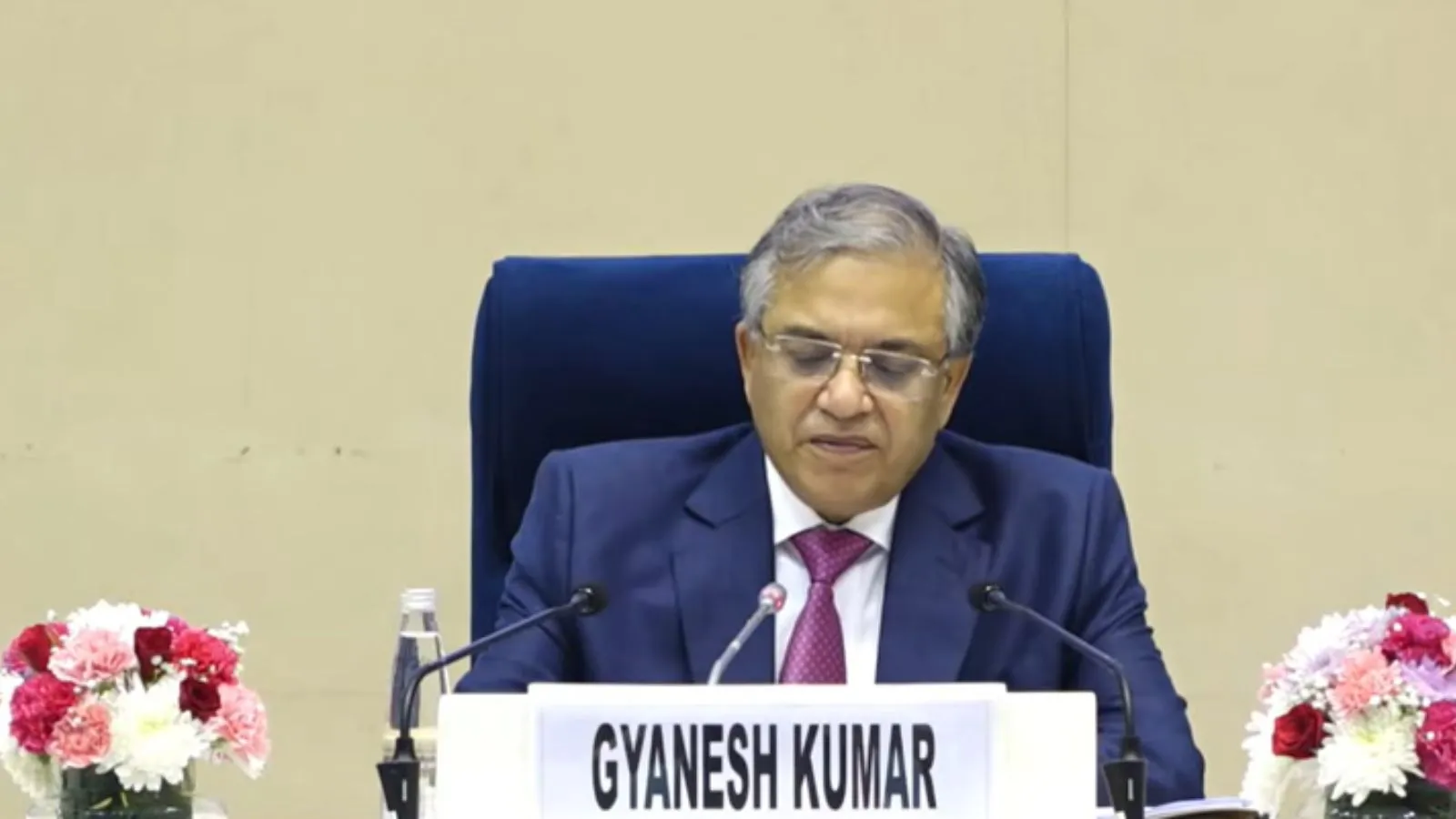
The Kerala government has decided to reopen a dormant 2006 corruption investigation involving Chief Election Commissioner (CEC) Gyanesh Kumar. The decades-old case involves financial irregularities in a World Bank-funded highway project that culminated in the tragic suicide of a foreign project engineer.
Gyanesh Kumar, a 1988-batch Kerala-cadre IAS officer, served as the Project Director of the Kerala State Transport Project (KSTP) during the period under review. Furthermore, state authorities instructed the Vigilance and Anti-Corruption Bureau (VACB) to re-examine archival case diaries and financial audits, according to a report by The Indian Express.
Allegations of Bribery and a Tragic Suicide
The controversy dates back to 2006, when a Malaysian engineering joint venture was executing major road corridors across Kerala. The firm’s chief project manager, an engineer named B. Radhakrishnan, died by suicide in his local residence.
Before his death, the engineer left behind an extensive note alleging systematic harassment and extortion by state bureaucrats. The letter claimed that senior project administrators withheld legitimate contract payments while demanding massive financial kickbacks.
The ensuing public outcry forced the state government to abruptly transfer Kumar from the KSTP leadership. However, subsequent vigilance inquiries into the contractor’s allegations stalled over the years without conclusive prosecution, as detailed by Mathrubhumi English.
Political Flashpoint Amid National Election Commission Row
The decision to reopen the investigation arrives amid intense national scrutiny surrounding Gyanesh Kumar’s role as Chief Election Commissioner. Opposition parties across India are protesting against the Special Intensive Revision (SIR) of voter lists.
Senior Left leaders in Kerala brought the historical case back into the spotlight. Former state finance minister T.M. Thomas Isaac publicly questioned how a civil servant previously named in a suicide note rose to head the nation’s premier election watchdog.
Consequently, the ruling Left Democratic Front (LDF) administration directed vigilance officials to review primary evidence that earlier investigators had set aside, according to coverage by The Indian Express.
Focus of the Reopened Vigilance Inquiry
The state vigilance bureau will scrutinize tender evaluations, bill certifications, and correspondence between KSTP executives and the Malaysian construction firm.
Detectives plan to examine whether project managers deliberately delayed contractor disbursements to extract illicit commissions. In addition, investigators will review original bank accounts and communication logs tied to the infrastructure tenders.
Therefore, the inquiry aims to determine whether administrative negligence or active corruption contributed to the contractor’s death, as reported by Mathrubhumi English.
Escalating Pressure on the Election Authority
The revival of the 2006 graft probe significantly increases legal and political heat on the Chief Election Commissioner.
While ruling party leaders in New Delhi dismissed the state probe as politically motivated vendetta, opposition groups described it as vital accountability. With the Supreme Court already set to review Kumar’s administrative decisions this week, the re-opened corruption files add a complex legal challenge.
Ultimately, this decades-old highway scandal demonstrates how unaddressed bureaucratic controversies can resurface to test high constitutional offices years later.

Curated news reports, in-depth analysis, and special features by India’s Opinion editorial team.