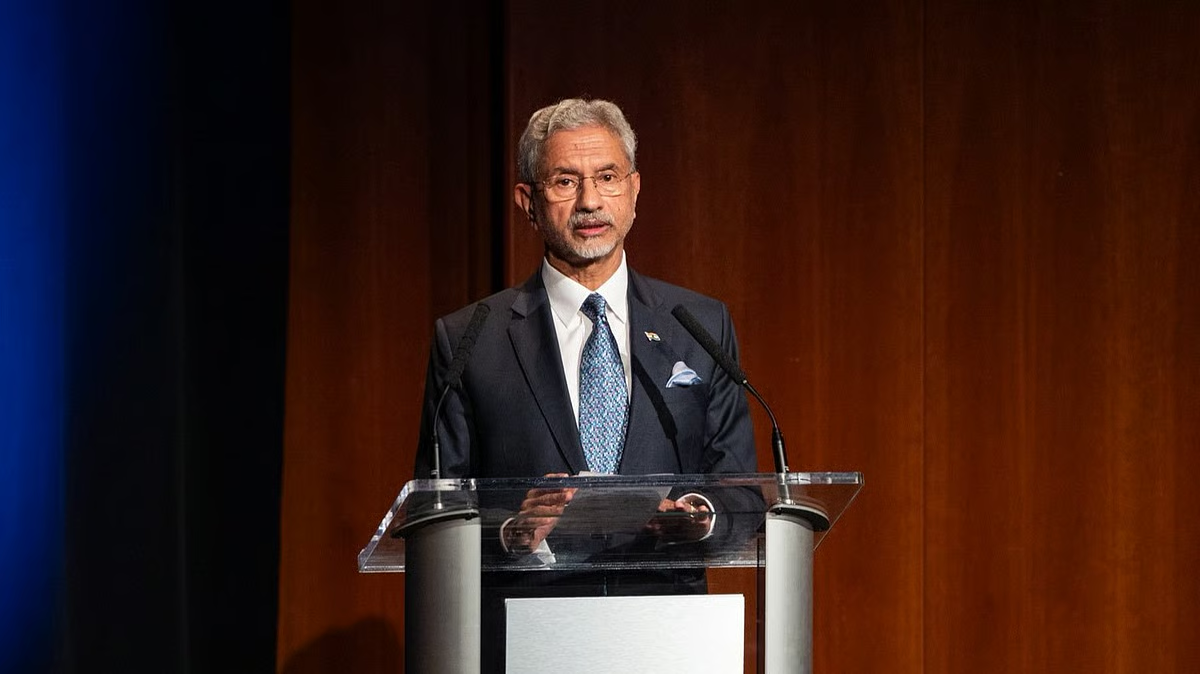
External Affairs Minister S. Jaishankar has weighed in on the high-profile summit between US President Donald Trump and Chinese President Xi Jinping. He pointed out that structural competition defines the ties between the two superpowers. As reported by The Hindu, Jaishankar stated there are clear limits to what Washington and Beijing can resolve between themselves regarding the rest of the planet.
Speaking to an audience of the Indian-American community, the minister explained how international dynamics are evolving. He noted that the world is moving toward visible multipolarity. The United States and China may find brief moments of alignment. However, their primary relationship remains an ongoing rivalry. Consequently, other nations must actively secure their own strategic interests.
The Reality Behind the ‘G2’ Dialogue
The recent bilateral talks between Donald Trump and Xi Jinping drew intense global attention. Many observers questioned whether the two leaders would forge a shared roadmap for international affairs. Jaishankar dismissed the idea of a bilateral duopoly dictating world order. He noted that when the top two global economies sit down, competitive friction naturally outweighs cooperation.
According to coverage in The Indian Express, Jaishankar emphasized that neither power can settle the fates of third nations. The minister remarked that there are clear boundaries to what the two leaders can negotiate vis-à-vis other countries. Their bilateral conversations leave the rest of the international community facing a very different America. As a result, countries across Asia, Europe, and the Global South are making their own sovereign diplomatic arrangements.
Multipolarity and the Shift in US Foreign Policy
Jaishankar also reflected on the broader posture of the United States in modern geopolitics. For decades, American alliances provided a predictable anchor for international systems. That landscape is now undergoing deep changes. The minister observed an erosion in traditional alliances. He also pointed out a growing American inclination to pursue independent pathways.
Details highlighted by Business Standard show how these trends reshape global strategies. Major capitals cannot rely on static geopolitical models. Instead, middle powers and rising economies are broadening their options. They are forming new regional partnerships and bilateral pacts to hedge against uncertainty.
Improving Trajectory in India-China Relations
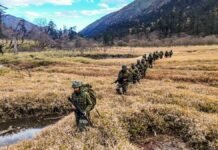
Turning to regional affairs, Jaishankar provided a frank assessment of ties between New Delhi and Beijing. He described current relations as noticeably better than they were two years ago. The gradual de-escalation along the Line of Actual Control (LAC) played a decisive role in cooling bilateral friction.
As reported by Deccan Chronicle, the minister reiterated that border tranquility remains fundamental to normal ties. Once border standoffs reach practical resolutions, broader diplomatic discussions can resume naturally. Recent high-level engagements have contributed to rebuilding structured communication between the two Asian neighbors.
Strategic Autonomy in an Unpredictable World
India continues to pursue an independent foreign policy amid rapid global realignments. Jaishankar reiterated that New Delhi will keep engaging multiple power centers on equal terms. India maintains strong bilateral momentum with Washington across technology, defense, and trade. At the same time, it preserves its strategic space to manage regional border dynamics and energy partnerships.
The minister concluded that global players must adapt quickly to the shifting balance of power. The world no longer answers to a single or dual authority. Instead, resilient diplomacy requires balancing multiple partnerships simultaneously without locking into rigid blocs.

Curated news reports, in-depth analysis, and special features by India’s Opinion editorial team.