
Indian community in China raises visa and employment concerns
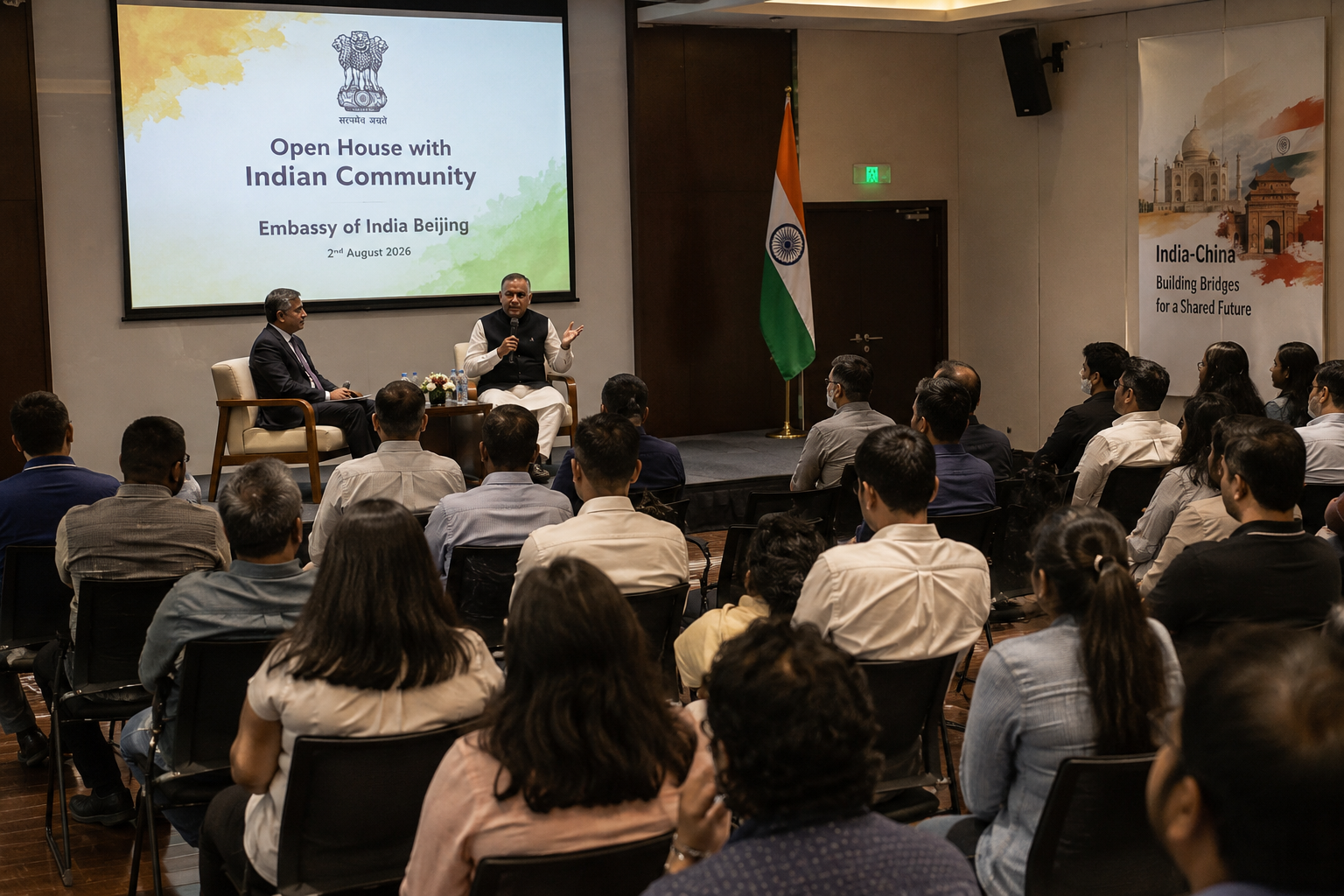
Members of the Indian community in China have raised concerns about work visas, restrictions on spouses and abusive anti-India material on Chinese social media. The complaints came at the Indian Embassy in Beijing’s first Open House in several years. The meeting gave diplomats a direct account of problems affecting Indian professionals and their families.
The meeting comes at a delicate point in India-China ties. New Delhi and Beijing have spent the past year trying to stabilise relations after years of friction. The embassy’s outreach suggests that better diplomatic contact will also require attention to the practical problems faced by Indians living and working in China.
Participants told embassy officials that the availability of Chinese work visas for Indian professionals has declined. They also raised restrictions that can prevent spouses of Indian workers from taking employment. Difficulties linked to consular services were another concern.
The complaints matter because visa policy directly affects the ability of companies, universities and other institutions to move Indian professionals into China. For families, restrictions on spousal employment can also make an overseas posting harder to sustain.
The embassy has not publicly provided figures showing the scale of the reported decline in work visas. Therefore, the community’s assessment should be treated as a reported concern rather than a verified nationwide statistic.
Ambassador Vikram Doraiswami said the mission plans to create a mechanism with legal professionals to help Indians facing work-related problems. He also said Open House meetings would take place periodically. That would give residents a regular channel to raise consular and employment issues.
Indian community in China faces online hostility
The Indian community in China also raised concerns about abusive content aimed at Indians on Chinese social media platforms. According to reports from the embassy meeting, some posts target Indian food, culture and other aspects of everyday life.
Online hostility is not a new feature of India-China relations. Social media exchanges have often reflected wider political tensions, particularly during periods of diplomatic strain. Yet online comments do not automatically represent the views of the Chinese public or the Chinese government.
Doraiswami said the Chinese government was also concerned about the rise in negative and abusive material. He said the Indian mission was responding by sharing factual information through its own social media accounts.The embassy’s response reflects a broader challenge for Indian diplomacy in China.
Chinese platforms operate within a tightly regulated information environment. Indian diplomatic missions, meanwhile, have limited ability to directly influence content produced by individual users.
A changing India-China relationship
The concerns raised by the Indian community in China come as both governments seek to restore more regular engagement. Relations deteriorated sharply after the 2020 Galwan Valley clash, which led to a prolonged military standoff along the Line of Actual Control.Since then, diplomatic and military channels have gradually worked toward reducing tensions.
The two sides have also taken steps to revive travel and people-to-people contacts, although movement between the countries remains more restricted than it was before the 2020 crisis.Doraiswami’s appointment has added a new public-facing element to that effort.
In May, he attracted attention on Chinese social media after posting a Mandarin-language video tour of the Indian Embassy in Beijing. The video highlighted historical and cultural links between the two countries and drew calls online for easier travel arrangements.
The contrast is revealing. Positive engagement can gain attention quickly, but it does not erase the practical barriers that residents face. Visa access, employment rules and the tone of online discourse can shape how relations are experienced beyond government meetings.
India signals easier visa procedures for Chinese visitors
At the Open House, Doraiswami said documentation for Chinese nationals applying for Indian visas would be simplified from the following week. The measure is intended to make travel to India easier and support greater people-to-people contact.
The move also provides a reciprocal signal. Easier travel can help students, researchers, businesspeople, tourists and cultural groups rebuild connections that weakened during the years of tension.For the Indian community in China, however, the more immediate concern remains access to Chinese work visas and employment opportunities for accompanying family members.
Those questions depend largely on Chinese immigration and labour rules. The Indian embassy can advocate for residents, but it cannot change those regulations on its own.
Cultural outreach and consular support
The embassy also plans to expand cultural events, building on programmes such as the Vasant Mela. Such events can offer a softer channel for engagement when political issues dominate bilateral coverage.For the Indian community in China, regular contact with the mission may prove equally important.
Open House meetings can help diplomats identify recurring problems before they become larger disputes. Legal support could also give workers clearer guidance when employment conflicts arise.The embassy’s approach shows the limits of public diplomacy.
Cultural programmes can improve familiarity, but they cannot substitute for predictable visa procedures or clear employment rights. The concerns raised in Beijing therefore involve both perception and policy.
What happens next
The next test will be whether the embassy’s commitments translate into practical improvements. Regular outreach could provide better information about visa procedures. Legal assistance may also help Indian professionals understand their options when workplace disputes occur.
The social media issue will be harder to measure. A rise in abusive posts can be difficult to quantify without independent data covering platforms, users and time periods. Until such evidence becomes available, claims about the scale of anti-India sentiment should remain carefully qualified.For India-China relations, the episode carries a wider lesson.
Diplomatic ties are shaped not only by leaders and strategic negotiations but also by citizens who cross the border for work, study and family reasons. The Indian community in China is now asking whether the improving tone between the governments can produce more predictable conditions on the ground.

Curated news reports, in-depth analysis, and special features by India’s Opinion editorial team.