
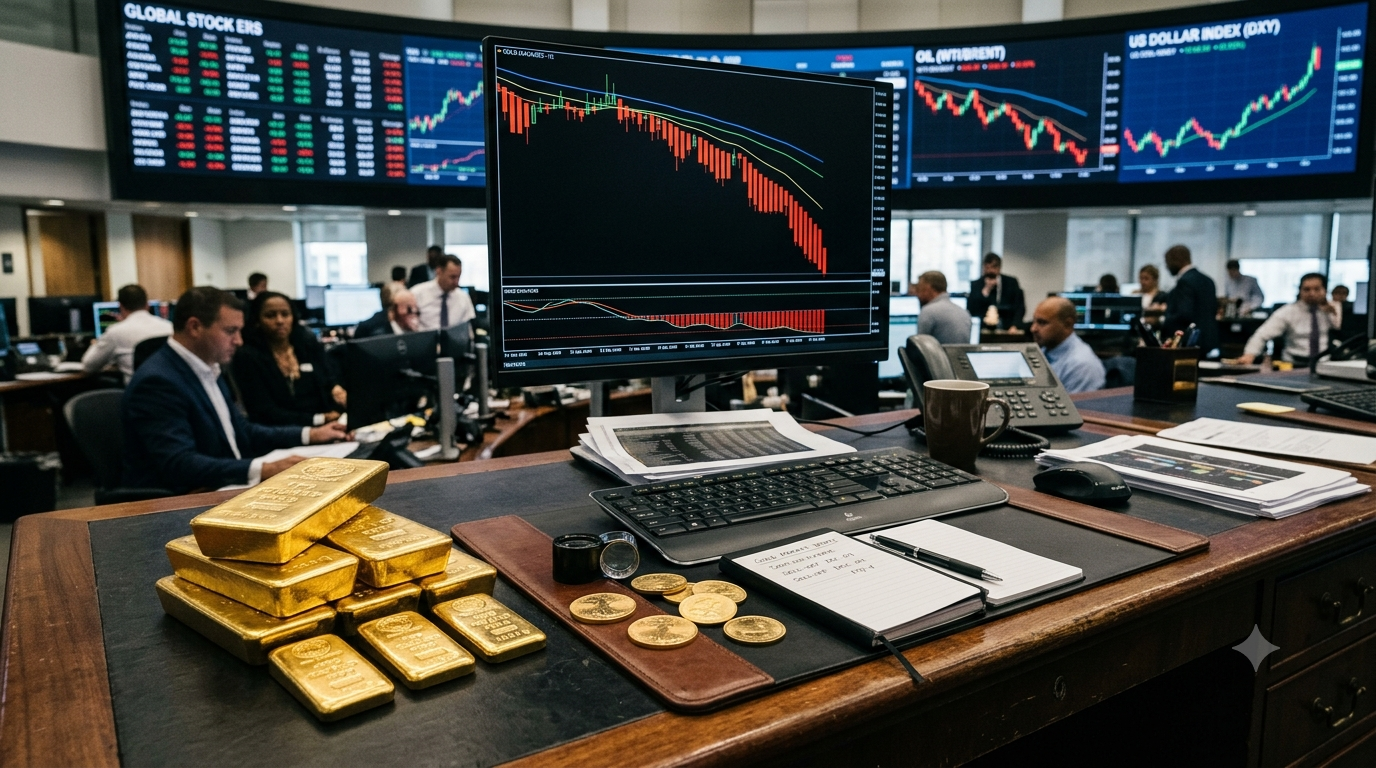
September 28, hitting their lowest level in more than seven weeks. Rising oil prices intensified inflation concerns and strengthened expectations that US interest rates could remain higher for longer.
Spot gold fell 3.1% to around $4,155.67 per ounce by 1031 GMT, after touching its lowest level since August 5. US gold futures for December delivery also declined 3.1% to $4,188.10.
The sharp decline came as higher energy prices pushed investors to reassess the outlook for inflation and monetary policy.
The US dollar remained firm, while Treasury yields also moved higher, adding further pressure to the non-yielding precious metal.
Why Is Gold Falling?
One of the main factors behind Monday’s decline was the renewed rise in oil prices. Brent crude rebounded after US President Donald Trump rejected a proposal from Iran concerning the reopening of the Strait of Hormuz.
The development raised concerns about oil supplies through the strategically important shipping route. Higher oil prices can increase inflation by raising transportation, production and other costs across the economy.
That can make central banks more cautious about cutting interest rates. UBS analyst Giovanni Staunovo said higher oil prices and increased expectations of further US rate hikes were key drivers of gold’s recent weakness.
Higher interest rates generally reduce the appeal of gold because the metal does not generate interest income. When government bond yields rise, investors can receive higher returns from interest-bearing assets, increasing the opportunity cost of holding bullion.
US Rate Expectations Put Pressure on Bullion
The Federal Reserve raised its benchmark interest-rate target earlier this month by a quarter percentage point to a range of 3.75% to 4%.
Markets are now closely watching whether persistent energy-driven inflation could encourage the Fed to raise rates again. According to CME FedWatch data cited by Reuters, traders were pricing in a 66% probability of another US rate increase in October earlier on Monday.
That expectation has helped push US Treasury yields higher, creating another headwind for gold. Gold is often viewed as a store of value and a hedge against inflation.
However, when inflation concerns are accompanied by rising interest rates and higher real yields, the metal can lose some of its appeal.
Stronger Dollar Adds to Gold’s Problems
The US dollar also remained firm on Monday. Because gold is priced internationally in dollars, a stronger US currency generally makes bullion more expensive for buyers using other currencies.
This can weigh on international demand. The combination of a stronger dollar, higher bond yields and rising oil prices therefore created a difficult environment for precious metals.
Reuters reported that silver also fell sharply, while platinum and palladium declined as well.
Gold Prices in India Also Fall
The decline has also been visible in India’s domestic futures market. Business Standard reported that the benchmark October gold contract on the Multi Commodity Exchange opened ₹751 lower at ₹1,50,100 per 10 grams.
It later traded around ₹1,48,100, down ₹2,781 from the previous close at the time of its report. MCX silver also declined sharply, trading below ₹2.30 lakh per kilogram.
Domestic prices are influenced not only by international bullion prices but also by movements in the Indian rupee, import costs and local demand.
For Indian investors and consumers, therefore, changes in global gold prices do not always translate into an identical percentage move in domestic retail prices.
Investors Await Key US Economic Data
Markets are now preparing for several important US economic indicators later this week.
Investors will monitor labour-market figures, the ADP employment report, the Personal Consumption Expenditures inflation index and nonfarm payroll data.
The results could influence expectations about the Federal Reserve’s next decisions. Stronger-than-expected inflation or employment data could reinforce expectations for higher interest rates and potentially add further pressure on gold.
Conversely, weaker economic data could reduce rate-hike expectations and provide some support to bullion.
Gold’s Recent Volatility
Monday’s decline follows a period of significant volatility in the gold market.
Gold had rebounded earlier in September when oil prices eased and the dollar weakened. On September 17, spot gold gained more than 2% to around $4,360 per ounce.
The metal subsequently came under renewed pressure as energy prices increased and markets began pricing in a higher-for-longer interest-rate environment.
The latest move therefore represents another major reversal in a market that has been highly sensitive to changes in interest rates, currencies and geopolitical developments.
What Could Determine Gold’s Next Move?
The immediate direction of gold prices is likely to depend on several factors. Oil prices will remain important because another sustained increase could keep inflation expectations elevated.
The US dollar and Treasury yields will also influence the attractiveness of bullion. At the same time, investors will watch economic data for clues about the Federal Reserve’s next move.
The situation remains fluid. A decline in oil prices, weaker economic data or lower bond yields could ease some of the pressure on gold. A further increase in energy prices combined with stronger inflation data could have the opposite effect.
For now, however, gold is facing a combination of higher oil prices, a firm dollar and rising expectations for US interest rates. Monday’s more-than-3% decline shows how quickly those forces can affect the precious-metal market.
With gold touching its lowest level since early August, investors are now turning their attention to the next round of US economic data. They are looking for clues about whether the sell-off will continue or begin to stabilise.

Curated news reports, in-depth analysis, and special features by India’s Opinion editorial team.