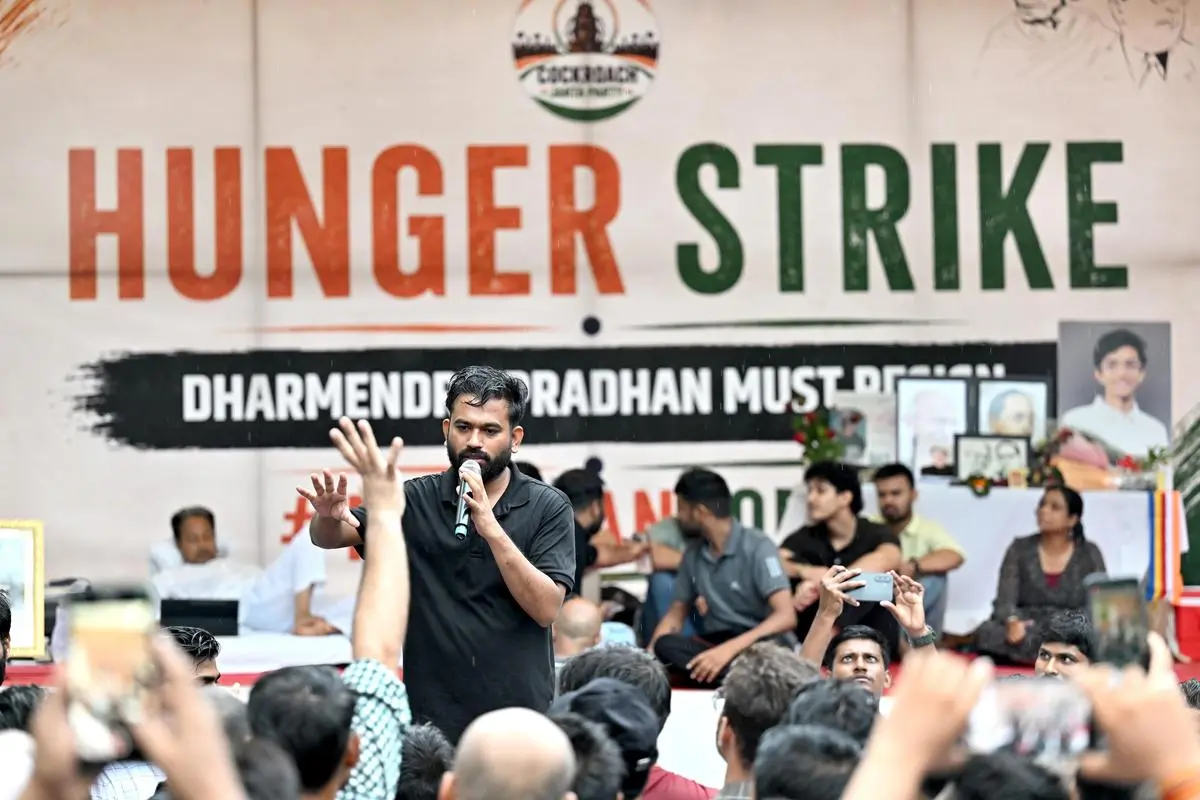
The resignation of Union Education Minister Dharmendra Pradhan has met one of the central demands of the Cockroach Janta Party-led protest. However, it has not ended the dispute. The CJP demands after Pradhan resignation include continued pressure on the government for compensation for families of students who died by suicide. Moreover, they want the withdrawal of legal cases against protesters and wider reforms to prevent examination leaks. Hindustan Times
The development follows weeks of demonstrations over examination integrity and the handling of the NEET paper leak controversy. The resignation marked a major turning point in the protest. However, the remaining CJP demands now determine whether the movement’s political victory will translate into concrete government action.
CJP demands after Pradhan resignation remain focused on accountability
Before Pradhan resigned, the CJP had described his removal as a non-negotiable demand. The organisation had also called for financial support for families affected by student deaths and protection from legal action against protesters. Government representatives held multiple rounds of talks with CJP representatives. The pressure was mounting at Jantar Mantar. The Indian Express
With the resignation now secured, the protest group has shifted its attention to the demands that remain unresolved or require implementation. The CJP’s updated position places compensation, the handling of protest-related cases and examination reforms at the centre of the next phase.
Compensation demand remains a major issue
One of the most politically sensitive demands concerns compensation for families of students who died by suicide after the examination crisis. The disruption was caused by paper leaks and related controversies.
The CJP has sought compensation of ₹1 crore for affected families. Reports on the government’s position indicate that compensation was discussed as part of the negotiations. However, the precise mechanism, eligibility criteria and implementation process remain central to the dispute.
The issue also raises a wider question about institutional responsibility. A compensation package would not, by itself, settle questions about accountability for examination failures. Families and student groups are likely to continue seeking clarity. They want to know how the government will identify eligible cases and process payments.
Protester cases and legal action are another pending CJP demand
The CJP has also demanded that legal action against students and other protesters be withdrawn. The demand became particularly important after the prolonged demonstrations and confrontations surrounding the protest movement.
Government representatives had indicated during talks that the issue of legal action against protesters was being considered. The CJP later said the government had given assurances regarding the withdrawal of cases. Nevertheless, implementation remains the test of that commitment.
The issue has broader consequences for the future of student protests. Protest leaders argue that students should not face lasting legal consequences for participating in demonstrations over a matter that directly affected their education and examinations. However, the government must still determine how any withdrawal process will operate within the legal system.
Exam reform is at the centre of the remaining demands
The dispute began with concerns about the integrity of competitive examinations. The resignation of a minister may satisfy a political demand. However, it does not automatically fix the systems that allowed examination controversies to escalate.
The CJP has called for sweeping reforms to examination procedures, including stronger safeguards against paper leaks and greater accountability in the examination system. The group had earlier submitted a broader charter focused on examination reforms.
The government has already taken steps related to examination security and leak investigations. However, the larger question is whether reforms will produce a system that students trust. That trust will depend on transparent investigations, clear responsibility and safeguards that work before an examination paper reaches candidates.
Why the CJP demands matter after Pradhan’s resignation
The resignation has changed the political equation around the protest. Before Saturday, the CJP’s central demand remained unanswered. After Pradhan stepped down, the government faces a different challenge. Now it must prove that the resignation was followed by measurable action on the issues that triggered the movement.
The talks between the government and CJP representatives showed that the protest had moved beyond street demonstrations. It shifted into direct negotiations with senior Union ministers. The government now has to manage the expectations created by those discussions.
For the CJP, the next phase may prove more difficult than securing the resignation itself. Political demands can be resolved through a single decision. Compensation, case withdrawals and examination reforms require administrative orders, legal processes and sustained monitoring.
What happens next after the Pradhan resignation
The immediate focus will be on whether the government implements its assurances on compensation and legal cases within clearly defined timelines. The examination reform agenda will likely require a longer process. This process would involve the education ministry, examination authorities and other institutions.
The CJP has announced the withdrawal of its Jantar Mantar agitation after the resignation and government assurances. However, the movement’s remaining demands continue to shape the political debate. The success of the protest will ultimately be judged not only by the minister’s departure. It will also depend on whether affected families receive support, protesters avoid prolonged legal battles and students see credible changes in examination administration.
The resignation has therefore closed one chapter of the confrontation. The government’s response to the remaining CJP demands will determine whether the crisis ends with a change in leadership or leads to deeper reforms in India’s examination system.

Curated news reports, in-depth analysis, and special features by India’s Opinion editorial team.